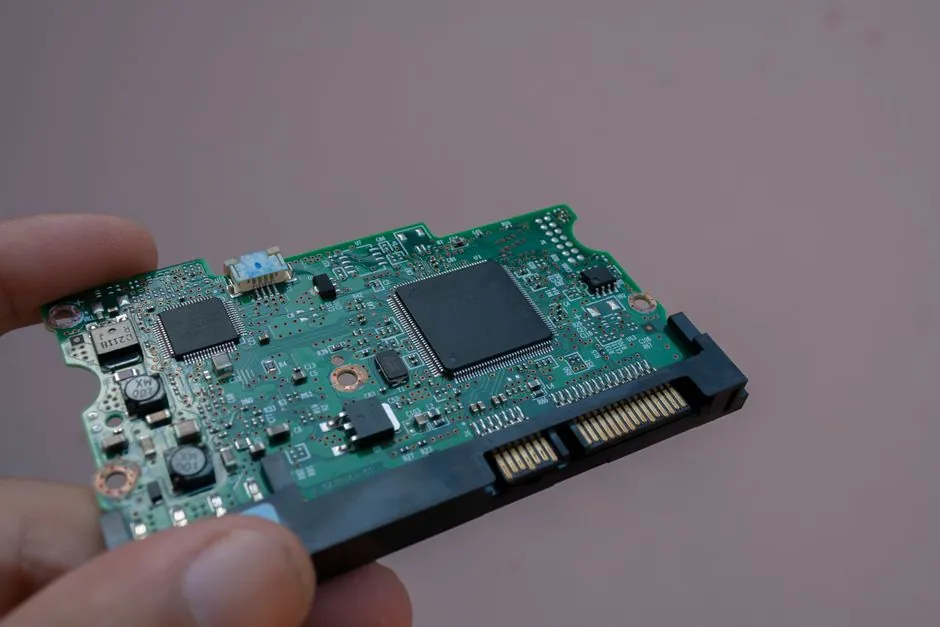
The global flexible PCB market reached $31.07 billion in 2026, a 9.5% year-over-year increase from $28.36B in 2025, with North America alone projected to grow from $1.7B (2025) to $2.9B (2030) at a 10.9% CAGR [S3]. That scale is reshaping how industrial buyers rank their panel of qualified fabricators.
Three publisher rankings in 2026 [S1][S2][S3] converge on the same conclusion: there is no single "best" PCB vendor, only a fit between your stack-up, volume, and certification target. The breakdown of 2026 tier 1 suppliers splits cleanly between Japanese premium houses and Chinese integrated manufacturers, and the decision drivers now read more like a pressure transmitter qualification matrix than a simple price list.
How the 2026 Tier 1 Ranking Is Actually Built
Supplier rankings in the 2026 flexible PCB market use a weighted scoring framework rather than a single metric [S1]. The four canonical weights are market share (30-35%), technology and innovation (25-30%), customer reputation and quality (20-25%), and export scale (15-20%) [S1]. A fabricator capable of polyimide (PI) flexible LED PCBs with minimum line width of 0.05 mm is treated as a direct proxy for tier 1 fabrication technology [S1].
Certification gating is non-negotiable for industrial buyers. UL file E530809 and IATF 16949:2016 certificate T184452 are cited as the baseline quality credentials that separate qualified tier 1 vendors from prototype shops [S1]. For buyers comparing this with their flow meter vendor audits, the same logic applies: a paper certificate is only a starting point, and DFM review depth is what separates a real partner from a board house.
Tier 1 vs Tier 2 vs Tier 3: What Each Group Actually Delivers
Tier 1 international premium brands named in the 2026 ranking are Nippon Mektron, Fujikura, and Sumitomo Electric Industries, all Japanese-headquartered, all focused on ultra-high-density designs, advanced substrate materials, and flagship consumer or automotive applications with premium pricing and global R&D networks [S1].
Tier 2 Chinese high-value and integrated manufacturers named in the same ranking are M2PCB (founded 2000), Avary Holdings (Shenzhen), and Shenzhen Kinwong Electronic [S1]. Their differentiator is the source-factory model: integrated solution design, R&D sampling, board production, SMT processing, and PCBA testing under one roof, which compresses R&D-to-production lead time and removes multi-supplier coordination overhead [S1].
Tier 3 covers regional and niche specialists across Taiwan, South Korea, and Southeast Asia [S1]. The 2026 ranking treats this tier as outside the core sourcing panel for industrial programs that demand IATF 16949 traceability, though they remain relevant for prototyping and short-run specialty work. For comparison against industrial valve sourcing, the same tiering pattern holds: premium global brands for critical service, integrated mid-tier for cost-engineered volume, and regional shops for fast-turn or non-critical builds.
Side-by-Side Comparison: Where Each 2026 PCB Vendor Fits

The 2026 vendor-fit matrix from one independent ranking [S2] lines up ten fabricators against six buyer criteria: process coverage, MOQ flexibility, lead time, certification, assembly capability, and engineering support. JLCPCB leads on cheap fast prototypes with no MOQ and 24-48 h turnaround, but its process ceiling stops at standard HDI, no blind/buried microvias, and no tight impedance control [S2]. PCBWay covers the broadest one-stop process: rigid, FPC, rigid-flex, high HDI, high-frequency, metal-core, plus SMT/THT assembly, BOM sourcing, and functional test, at higher per-board cost than JLCPCB [S2].
ALLPCB targets certified industrial, IoT, and medical builds with multi-layer, heavy copper, and controlled-impedance work, with 12-24 h rush available on a limited stack set [S2]. RapidDirect sits at 1-32 layer rigid, HDI, flex-rigid-flex, metal-core, ceramic, and high-frequency, with 12 h prototype turnaround and full turnkey PCBA including mechatronics [S2]. A-Tech Circuits is positioned for high-reliability medical and automotive with PTFE, HDI, and metal-core capability [S2]. For industrial buyers already managing PLC integration, the relevant question is which PCB house will hold impedance and DFM discipline on a 12-layer controlled-impedance build, not which one ships fastest.
Total-Cost-of-Ownership Shift in U.S. Procurement
U.S. procurement teams in 2026 have moved away from unit-price selection toward total-cost-of-ownership, weighting fabrication quality, certification rigor, engineering support, supply chain stability, and long-term partnership viability alongside unit economics [S3].
The "nearshoring plus" hybrid model is gaining ground in medical device, automotive, and industrial sectors: domestic manufacturers for speed and IP protection, qualified offshore partners for scale and cost efficiency [S3]. Domestic flex circuit vendors cite 20 years of ISO, IATF, SGS, and UL certification history as their anchor pitch for this hybrid sourcing pattern [S3]. For buyers who also spec servo motors and pressure sensors for the same production line, the same audit checklist applies: certification currency, DFM support depth, and traceable supply chain.
Selection Criteria Buyers Should Score Before Shortlisting
Six buyer-side criteria emerge consistently across the 2026 rankings: process coverage (layer count, HDI, flex/rigid-flex, metal-core, high-frequency Rogers/PTFE) must match the stack-up before price is discussed; MOQ flexibility (1-10 pieces vs panel minimum) decides whether a vendor is usable for prototype work; lead time split between standard and rush, where 24 h rush is real but limited to standard stacks; certification set (UL, IATF 16949, ISO 13485, ISO 9001) that matches the end market; assembly capability (bare board only vs SMT/THT plus BOM sourcing plus functional test); and engineering support with built-in DFM review and a human contact [S2].
Score the project against these six first, then read the vendor table, not the other way around [S2]. A vendor that ships a million consumer boards a month will reject a 5-piece prototype; a rapid-iteration platform will not hold tolerance on a 20-layer RF board [S2]. The same risk asymmetry applies to pressure sensor sourcing: high-volume automation lines and low-volume precision instrumentation rarely share a vendor.
Limits, Failure Modes, and Sourcing Risks
The 2026 ranking does not invent a single dominant winner, and that itself is a finding [S1][S2]. JLCPCB and PCBWay both run EDA-ecosystem lock-in, which lowers friction for solo engineers but caps process ceiling on HDI microvias, tight impedance, and specialty RF laminates [S2]. JLCPCB is also electronic-only with no mechanical counterpart, so enclosures and brackets come from a second supplier [S2].
Tier 2 Chinese integrated vendors reduce multi-supplier coordination risk but raise IP exposure for U.S. and EU defense and medical programs, which is why the "nearshoring plus" hybrid model exists in the first place [S3]. Tier 1 Japanese houses command premium pricing and longer lead times, which is acceptable for flagship consumer or automotive programs but painful for fast-turn industrial retrofit work [S1]. The honest failure mode in 2026 is mismatch: a tier 1 Japanese house spec'd onto a prototype run wastes cost, and a tier 2 Chinese house spec'd onto a 20-layer RF build wastes a re-spin.
Watch three signals over the next two quarters: certification renewal cadence on the named tier 1 certificates (UL E530809, IATF 16949:2016 T184452), any disclosed capacity expansion announcements from Avary, Kinwong, or M2PCB, and the next published U.S. flex PCB market sizing update against the $1.7B (2025) to $2.9B (2030) baseline. For background on adjacent electronic-component supply chains, the silicon wafer supply chain map and the AI accelerator manufacturing equipment station guide frame the upstream pressure on PCB fab capacity heading into late 2026.