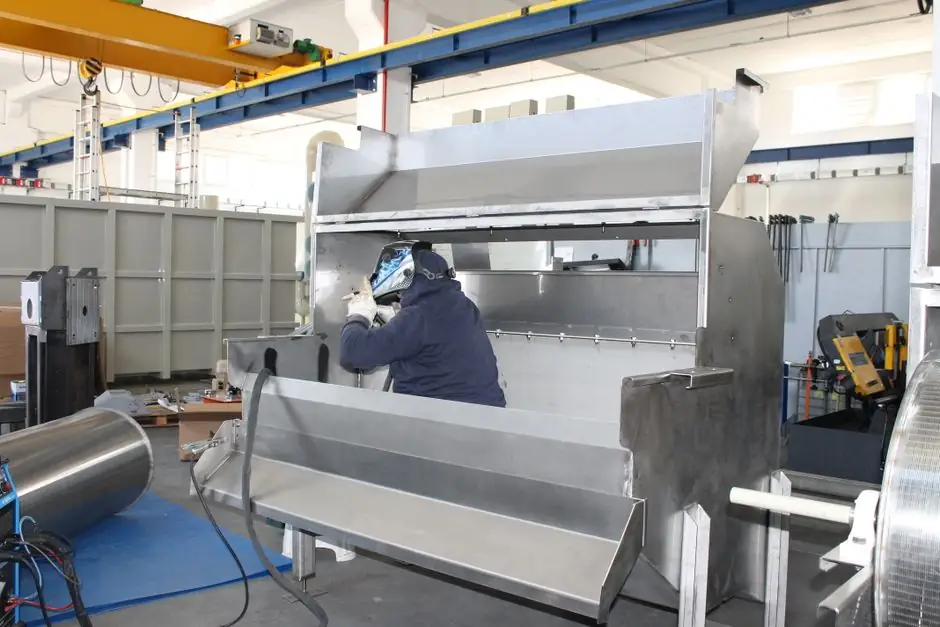
TIG (GTAW) and arc (SMAW, stick) both join metal with an electric arc, yet the electrode, the shielding approach, and the resulting bead quality separate the two processes in any spec-driven shop [S1][S2].
Choosing between them hinges on four spec variables: electrode type (non-consumable tungsten vs consumable flux-coated stick), shielding gas (external argon/helium vs flux-bound gas), material thickness range, and operator skill cost [S2][S3]. The reference points in this guide derive from the process family rather than any single vendor, so the criteria apply across industrial, repair, and fabrication work.
Process Definition and Core Mechanism
Arc welding is the umbrella term for any process that uses a high-electric current in the 10 to 100s of amps range to form an arc between the welding probe and the metal, melting the workpiece and a filler to form a bond [S2]. Within that umbrella, stick welding is also called shielded metal arc welding (SMAW) or manual metal arc welding (MMAW) [S2].
TIG, formally gas tungsten arc welding (GTAW), falls inside the arc family as a specialty variant: the electrode is tungsten, the arc forms between a non-consumable tungsten tip and the workpiece, and an inert gas (argon or helium) is delivered through the torch to prevent oxidation [S1][S2]. Stick welding does not need an external gas supply because the flux coating on the consumable electrode releases shielding gas when it burns [S2].
Electrode and Consumable Comparison
The deciding mechanical difference is the electrode. TIG uses a tungsten electrode that produces the electric arc between the torch and the metal workpiece; tungsten's melting point sits above 6,000°F, so the tip is not consumed and the arc stays stable [S2]. Arc (stick) uses a consumable electrode that acts as the filler rod, melting into the weld pool while the flux coating vaporises to shield the weld [S2].
This drives three downstream spec outcomes. First, TIG requires a separate filler rod hand-fed by the operator, while stick welding feeds itself. Second, TIG requires an external argon or helium cylinder plus a regulator; stick only needs the electrode and a stinger/ground clamp. Third, tungsten electrodes cost more per part than mild-steel stick rods, but they are reused for hundreds of arcs, while a stick rod is gone in one pass [S2][S3].
Decision Matrix: TIG vs Arc Across Four Spec Criteria
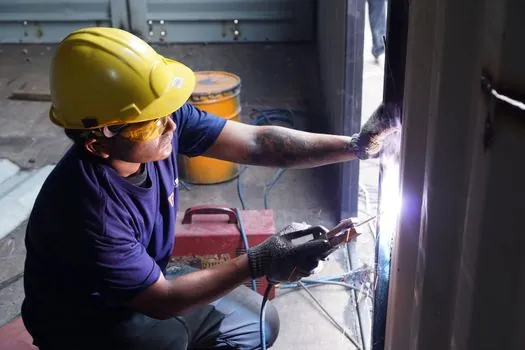
Material thickness is the first cut. MIG and stick handle 26-gauge sheet up to heavy structural plate, while TIG is preferred on thin and non-ferrous metals, especially where the operator is fusing two pieces directly together without a heavy filler feed [S1][S4]. For plate over 3/16 inch (4.8 mm) on structural carbon steel, stick is the default low-cost path.
Position and environment come next. Stick welding tolerates wind, dirty or rusty steel, and outdoor or field conditions because the flux coating shields the pool; TIG demands a clean workpiece and a calm gas envelope, which is why a TIG job is usually a shop job or a wind-shielded field job [S1][S2].
Bead quality and rework: TIG produces a clean, precise, strong weld with no slag and minimal spatter, which removes the post-weld grinding step common to stick [S2]. Stick routinely leaves slag that must be chipped away and a rougher bead, which means more cleanup on cosmetic or code-critical welds [S1][S2].
Operator skill and cost: TIG is harder to learn and slower, which extends lead time and inflates labour cost per joint, while stick is the most beginner-friendly arc process and the cheapest to set up [S1][S3]. American Torch Tip frames the cost trade as equipment plus consumables plus throughput: MIG machines and wire are cheaper than TIG packages, and TIG is slower than MIG, so any per-joint cost argument that ignores cycle time understates the real gap [S4].
Use-Case Fit and Real Applications
TIG fits aerospace, pharmaceutical, food-grade stainless, thin-wall tube, and aluminium or other non-ferrous jobs where the bead is visible or code-tested, per the precision framing in The Crucible's process matrix [S1]. A typical shop pairs a TIG welder with a cutting machine for thin-plate fit-up work, and a core machine for stud or boss welding in the same cell.
Stick (arc) fits structural steel, ship hull plate, pipeline tie-ins, construction-site repair, and farm or field fabrication where portability and weather tolerance outweigh cosmetic finish [S1][S3]. A fabrication yard running an arc welder for primary joints usually pulls a welding cutting tool for back-gouging and slag prep, plus a coding machine for pipe and flange traceability before final weld.
Limitations, Failure Modes, and Spec Watchouts
TIG failure modes cluster around gas coverage: a contaminated tungsten tip, a breached gas lens, or a draft over the joint can produce porosity, colour shift on stainless, or oxidation on titanium and aluminium. Tungsten inclusions occur if the tip touches the pool, which is a code-weld reject on most pressure-pipe specs. [S1]
Stick failure modes cluster around slag and hydrogen: flux-coated rods can leave slag pockets if the bead is not cleaned between passes, and low-hydrogen (e.g. E7018) rods are required on thick or high-strength steel to avoid underbead cracking. The Crucible notes that consumable electrodes have to be frequently replaced and slag must be chipped away, which extends cycle time on multi-pass joints [S1]. For deep, multi-pass structural welds, the DTH drilling rig vs top hammer spec map shows a similar pattern of process trade-offs that parallel TIG vs stick decisions on thick sections.
Standards, Sourcing, and Spec Anchors
Both processes are covered by AWS A5.1 (carbon-steel stick electrodes), AWS A5.18 (carbon-steel MIG/TIG wire), AWS A5.28 (low-alloy stick/TIG), and the ASME Section IX weld procedure qualification framework, which is the usual code citation for procedure and performance qualification on any arc process. Shielding-gas selection (typically argon for steel and stainless, helium or argon-helium mixes for aluminium and copper) is covered by AWS C5.3 / C5.6 industry guidance for gas delivery and purity. [S4]
On procurement, source TIG packages against the rated amperage range (commonly 5–250 A DC, with AC added for aluminium), duty cycle at the rated output (e.g. 60% at 200 A), and torch cooling (air vs water). Source stick packages against the same duty cycle and open-circuit voltage limits, plus rod-oven capacity for low-hydrogen consumables. The Crucible's matrix gives the beginner-cost and consumable-cost framing for both, and American Torch Tip gives the throughput-cost framing that should anchor any per-joint economics [S1][S4]. For buying decisions at the workshop level, the circular saw TCO breakdown is a useful reference because both TIG and stick follow the same TCO logic: purchase price is small, consumables and labour are large.
Trackable next nodes: AWS and ISO committee updates to A5.1/A5.18, the 2026 model-year releases of inverter TIG/stick packages with pulse-on-pulse and adaptive arc control, and the shift in field-fabrication codes toward low-hydrogen E7018/E8018 stick consumables for thick-section structural work. Verify the cited amperage, duty cycle, and shielding-gas spec on each shortlisted machine's nameplate before locking in a vendor.