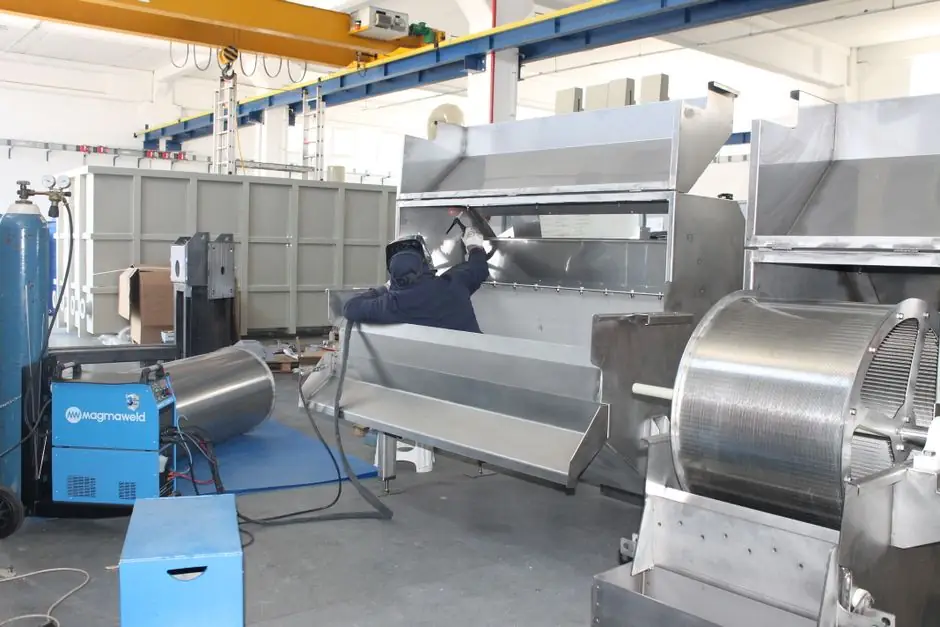
For interior finishing, a 160-225A AC/DC TIG inverter on 110/220V dual-voltage input is the typical baseline, with high-frequency start, adjustable AC balance, and a published 60% duty cycle at the working amperage [S1][S6].
DC-only units cap the work envelope at mild steel, stainless steel, chromoly, copper, and titanium; aluminum, magnesium, and any anodized or powder-coated trim require AC output to break the oxide layer [S5][S6]. TIG welder selection on interior fit-out jobs is therefore driven first by the metal list, not by the price.
Match Current Type to the Metal List Before Anything Else
AC/DC machines weld the full interior metal set, including 5052 and 6061 aluminum panels, 304 stainless handrails, and cold-rolled steel frames, in a single platform [S5][S6]. DC-only inverters cost less and suit shops that only run steel or stainless cabinetry and cannot justify the AC premium.
For shop-fit cabinets, decorative panels, and architectural metal trim where the metal list mixes stainless reveals with aluminum cladding, a DC-only machine will force subcontracting or hand-off to a second process, eroding any cost advantage. Reference projects in this segment frequently cite amperage ranges of 5-20A for 22-24 gauge sheet, 80-130A for 1/16" to 1/8" steel, and 160-200A+ for 1/4" steel or 1/8" to 3/16" aluminum in a single pass [S7].
Amperage Headroom, Duty Cycle, and Input Power
A 200A-class machine is the practical ceiling for most garage and small-shop fabricators running interior finishing work, delivering enough power without stepping into industrial 415V territory [S7]. Above 5mm of material thickness, Foster Industrial's buying guide states that a 415V input becomes effectively mandatory, and these units generally require water cooling and trolley gear for the gas bottle [S5].
Dual-voltage 110/220V input remains the dominant specification for portable interior work, but the plug rating matters: a 16A circuit at 110V caps output, while a 32A 220V feed unlocks the upper amperage band [S5]. A rough sizing rule of thumb is 35A per millimetre of material to be welded, and duty cycle must be evaluated at the actual operating amperage, not the peak nameplate figure [S5].
Arc Starting: HF, Lift Arc, and Scratch Start on Site
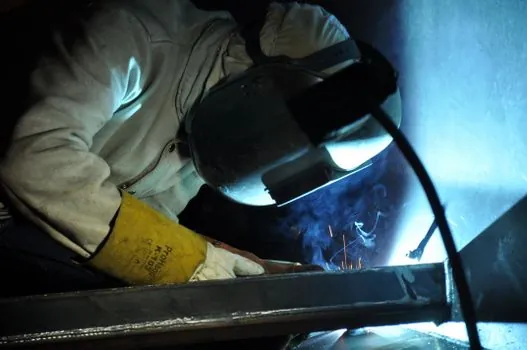
High-frequency (HF) start is the cleanest option for visible interior welds because it avoids the tungsten contamination that scratch start leaves on the electrode tip [S4][S5]. Lift-arc start is the typical compromise for shop environments where HF noise interferes with CNC controls, phone systems, or sensitive finishing equipment in adjacent rooms [S5].
Scratch start is the lowest-cost option but is rarely specified for interior finishing because the included strike mark is visible on polished stainless, anodized aluminum, and any decorative trim. For architectural metal trim, where the bead is part of the aesthetic, the additional cost of HF start pays back in reduced rework on visible welds. The matching welding cutting tool family also includes tungsten grinder fixtures, which are mandatory for restoring HF-started electrodes between color-critical passes.
Pulse, AC Balance, and Foot-Pedal Control
Pulse TIG reduces heat input, which limits distortion on thin-gauge interior panels and allows vertical-up and overhead beads on ceiling soffits and bulkhead reveals to be placed with reduced spatter [S5]. High-speed pulsing can raise travel speed by up to 45%, which is meaningful on long runs of handrail or repetitive trim sections [S5].
AC balance and AC frequency are the two AC-specific controls that govern oxide cleaning and arc cone width on aluminum; without them, bead appearance on architectural aluminum trim is essentially uncontrolled [S5]. A foot pedal provides instantaneous and complete control over arc length and amperage, which is the single most cited ergonomic requirement for finish-pass work on cabinets, stairs, and reveals [S5]. For shops running through several metal thicknesses in a single shift, a memory feature for storing parameter sets and a synergic control mode that pre-selects gas, thickness, and material are now standard expectations on mid-range AC/DC units [S2].
Side-by-Side Selection Criteria for Interior Finishing
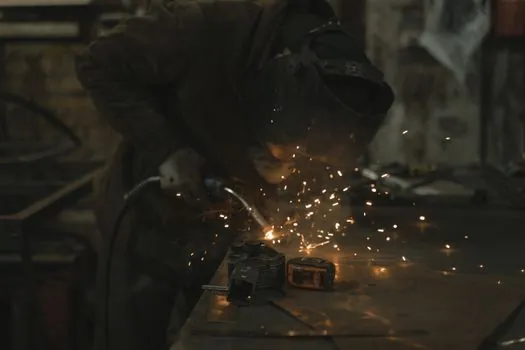
The main options for interior finishing work line up as follows on the four decision criteria that drive the spec:
1) Hobby 160-200A DC-only inverter: cheapest, lightest, but aluminum work is excluded. 2) 200A AC/DC dual-voltage inverter: covers the full interior metal list on 110/220V with HF start, pulse, and foot pedal. 3) 200-225A AC/DC with synergic control: adds preset libraries and memory slots, which is useful for shops repeating the same trim profile across multiple units of a fit-out. 4) 300A+ 415V water-cooled unit: oversized for most interior finishing unless the scope includes structural stainless or heavy aluminum plate.
For interior finishing specifically, the unit category that hits the cost-to-capability sweet spot is the 200-225A AC/DC dual-voltage inverter with HF start, pulse, and at least 60% duty cycle at the rated amperage. The same finishing material logic that drives cabinet and trim selection also drives welder spec: visible work demands process control, not raw amperage.
Where Interior Finishing Differs From Heavy Fabrication
Interior finishing is dominated by thin-gauge work: 22-24 gauge trim at 5-20A, 1/16" to 1/8" steel at 80-130A, and 1/8" to 3/16" aluminum at 160-200A+ in a single pass [S7]. Heavy fabrication and structural welding sit one tier up, where water cooling, 415V input, and a trolley become mandatory above 5mm of material thickness [S5].
Field installations on occupied sites add two constraints that spec sheets rarely capture: noise from HF start can disrupt adjacent tenants, which pushes contractors toward lift-arc start in finished buildings, and post-flow gas timing must be long enough to protect the tungsten and the bead during cool-down on stainless reveals where discoloration is unacceptable. For road-side and outdoor heavy welding outside the interior scope, the duty cycle and material thickness gates tighten considerably, as covered in road maintenance TIG welder specs.
Process Discipline and Consumables That Decide Weld Quality
A 2% lanthanated or ceriated tungsten is the typical all-around choice for both DC and AC work, ground to a point for steel and stainless and balled for aluminum AC, with a dedicated tungsten grinder fixture for tip restoration between color-critical passes [S4]. Argon is the default shielding gas; argon-helium mixes appear only on thicker aluminum plate work that is uncommon in interior finishing.
Post-flow gas timer, gas solenoid, and a regulated flowmeter sized to the torch cup are non-negotiable; cutting post-flow short to save argon is the most common cause of oxidized, discolored stainless and anodized aluminum trim. Filler rod selection must match the base metal: 308L for 304 stainless, 4043 or 5356 for 5052/6061 aluminum, and ER70S for mild steel. Beyond the welder itself, the broader coding machine and cutting machine line on a finishing shop floor should be specced with the same input-power and duty-cycle discipline, since 110V outlet sharing across multiple inverter loads is a common field-trip cause.
Track these signals before placing the next order: published 60% duty cycle at the operating amperage (not the peak), confirmed AC balance range on aluminum settings, foot-pedal inclusion rather than an add-on, and a documented gas post-flow range of at least 5-15 seconds for stainless and aluminum trim.