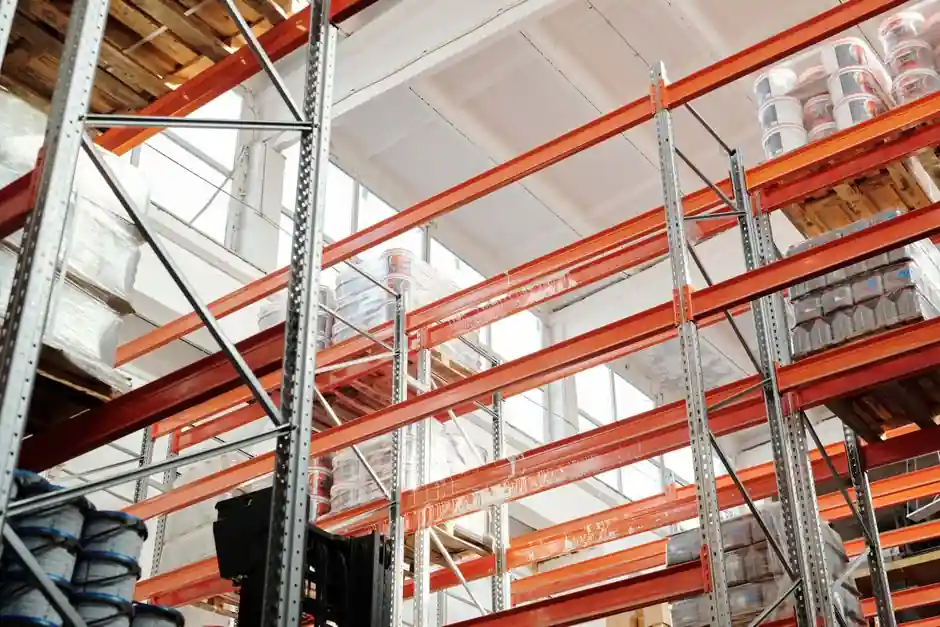
C905 and C907 are the workhorse cast tin bronzes for warehouse hardware (pump bodies, valve housings, worm gears, general castings), with C93200 / SAE 660 the default leaded bearing bronze for bushings, washers and thrust plates, and CuSn10 / CuSn12 the European equivalents for the same duty [S1][S5].
Within the UNS copper-tin family, tin content is the main lever: roughly 83% Cu / 7% Sn / 7% Pb / 7% Zn for C93200, versus the higher-tin C90500 and C90700 grades that warehouse buyers specify when wear life and load capacity matter more than free-machining [S2][S5].
Where tin bronze sits against phosphor, aluminum, silicon and manganese bronze
Standard tin bronze is the better choice for general-purpose castings where cost matters and the part does not see cyclical loading, casting and machining well without the price premium of aluminum bronze [S1]. In a like-for-like comparison table, C905 (tin bronze) lands at 44,000 to 50,000 psi tensile, 18,000 to 22,000 psi yield, 70 to 80 Brinell, 65 machinability rating, good corrosion resistance and fair seawater performance, against C954 aluminum bronze at 85,000 to 120,000 psi tensile, 170 to 210 Brinell, 60 machinability, excellent corrosion and excellent seawater performance, and C932 bearing bronze at 35,000 to 40,000 psi tensile, 17,000 to 20,000 psi yield, 65 to 75 Brinell, 80 machinability and moderate corrosion resistance [S1]. For warehouse service the practical read is: pick tin bronze where the load is moderate and the part is a static casting, aluminum bronze where corrosion or wear is the dominant failure mode and the budget allows the higher unit price, and C93200 where the surface is sliding against steel. Phosphor bronze (C510 / C521 / C544, 0.01 to 0.35% P) is reserved for springs, electrical contacts and sensor housings rather than warehouse castings because its stiffness and wear gain comes at a price premium that warehouse specs rarely justify [S1].
C90500 and C90700: high-tin grades for heavy-load warehouse hardware
C90500 and C90700 are the high-strength tin bronzes that show up in heavy-load warehouse components where a standard C932 bushing would creep under the radial load [S5]. Compared with C93200 at 35,000 psi minimum tensile and 55 to 65 Brinell, the higher-tin C905 and C907 push strength and hardness up while keeping the same Cu-Sn system, so they remain compatible with steel shafts and standard warehouse lubricants [S1][S2]. Typical warehouse uses for these higher-tin grades include worm gear blanks, large valve bodies, low-speed heavy-duty bearings on conveyors and crane slewing rings, where the load is the limiting factor and not the surface speed [S5]. For buyers sourcing to European drawings, the same duty band is covered by CuSn10 and CuSn12, which sit in the same C905 / C907 family on the EN / DIN side and are commonly stocked by custom tin bronze bushing manufacturers [S5].
C93200 / SAE 660: the default warehouse bushing and wear-plate alloy
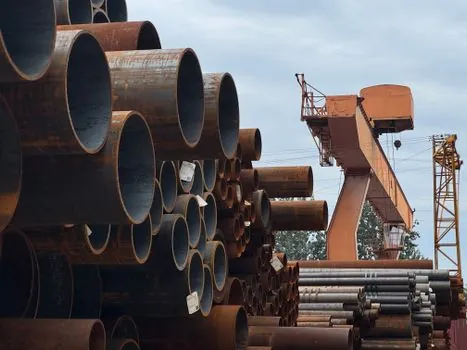
C93200 (SAE 660) is the workhorse leaded tin bronze for warehouse bushings, with 83% Cu / 7% Sn / 7% Pb / 7% Zn, 35,000 psi minimum tensile, 20,000 psi minimum yield, 10% minimum elongation in 2 inches, and 55 to 65 Brinell hardness per ASTM B505 [S2]. The 7% lead content is what makes the alloy effectively self-lubricating at the sliding interface, which is why C93200 is the typical default for sleeve bushings, flanged bushings, thrust washers and wear plates on conveyor drives, palletiser gearboxes, forklift mast pivots and overhead crane sheaves [S2][S3]. When the warehouse environment is dry, dusty, or the grease interval is long, the leaded variant of tin bronze is the safer pick over a lead-free C905 / C907 because the lubricant-starvation failure mode is built into the alloy rather than into the maintenance schedule [S1][S2]. For stock sizing, C93200 is commonly available as round bar from 0.375 inch diameter, as tube from 1.000 inch ID x 1.500 inch OD, and as rectangle from 0.250 x 2.000 inch, with metric sizes produced to order [S2].
CuSn10 and CuSn12: European equivalents and when to dual-list them
For warehouses that buy through European supply chains, CuSn10 and CuSn12 are the EN / DIN equivalents of the C90500 and C90700 families and are commonly dual-listed by custom tin bronze bushing manufacturers alongside the UNS grades [S5]. The selection logic does not change: CuSn10 is the standard 10% tin grade for general castings and medium-duty bushings, while CuSn12 is the higher-tin option for slow-moving, high-load sliding contacts where wear life and resistance to deformation matter more than ductility [S5]. When a drawing carries a CuSn designation, the same warehouse failure modes apply as for the UNS grades, so the same speed, load and lubrication checks should be applied before releasing the PO [S5].
Manufacturing and inspection constraints for warehouse-procured tin bronze parts
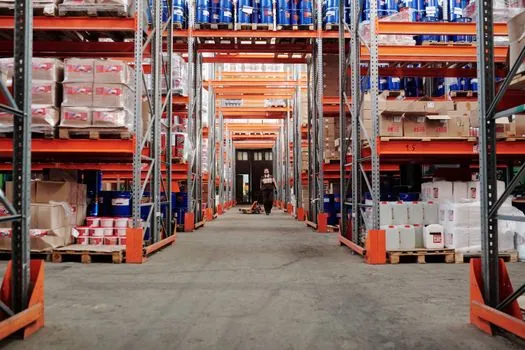
For finished and machined tin bronze parts (sleeves, flanged bushings, thrust washers, wear plates) the warehouse buyer's real selection pressure is not the alloy chemistry but the supplier's machining and inspection capability [S5]. Custom tin bronze bushing manufacturers typically work to drawings and quote on a 1,500 t/year casting plus machining capacity, with large-part capability up to about Ø5000 x 1000 mm and two large CMMs for dimensional inspection of ID, OD, length, flange size, oil grooves and oil holes [S5]. For warehouse equipment, the practical custom machining options to specify on the drawing are straight or spiral oil grooves, oil holes, flanges, chamfers, and graphite plug holes for low-speed applications where regular lubrication is unreliable, all of which the same tin bronze grade can carry without changing the material call-out [S5]. A mill test certificate to ASTM B505 and a CMM dimensional report are the two documents a warehouse QA system should require on the first article for any custom tin bronze bushing order, because they are the cheapest way to catch a wrong heat of C93200 or a mis-machined oil groove before the part goes into a conveyor drive [S2][S5].
Selection flow and what to track on the next PO
A defensible tin bronze call-out for a warehouse component reads in this order: confirm the part is a casting versus a sliding contact; if casting, default to C905 / C907 (or CuSn10 / CuSn12); if sliding contact at low to moderate speed, default to C93200 / SAE 660 per ASTM B505; if corrosion or seawater exposure is the dominant risk, escalate the call to C954 aluminum bronze instead of upgrading within the tin bronze family [S1][S2][S5]. Two signals to track on the next PO cycle: whether the warehouse has any Class A bearing surfaces currently running on grease intervals longer than 6 months (which favours a switch from C905 to C93200), and whether the in-house drawing system still lists manganese bronze (C863) for any part in a sustained-moisture warehouse yard, since C863 is susceptible to dezincification and the safer drop-in for those parts is a tin or aluminum bronze rather than another manganese bronze heat [S1]. Buyers standardising warehouse spares can also cross-check the same load-bearing logic on adjacent wear components, for example by reviewing the sleeve bushing call-out on a forklift mast against the bushing logic in spherical plain bearing selection for wind power and the sealing logic in oil seal selection: spec-first guide for shaft, bore, lip, and material, which use the same load, speed and lubrication criteria. For warehouses that also handle medical-grade spares or paperwork overlap with hospital maintenance, the same C93200 / C90500 / CuSn10 / CuSn12 selection logic is laid out for medical-grade components in tin bronze for hospitals, which is a useful cross-check for any QA team that shares a vendor list between sites.
Detailed specification references: tin bronze, pressure transmitter, and flow meter.