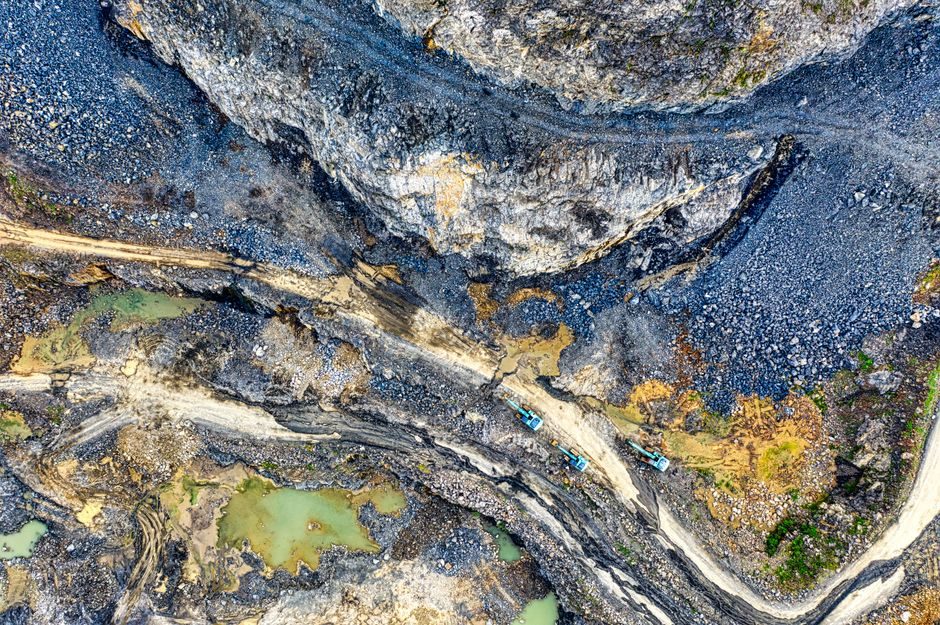
China consumed a cumulative 1.2×10⁸ t of manganese metal between 2001 and 2017, with a further 1.8×10⁸ t projected through 2035, while domestic comprehensive guarantee and accumulative guarantee rates for 2025 and 2030 are assessed as low, keeping external dependence high and supply pressure rising [S1].
On 30 July 2026 the spot market in China was actively quoting South African lumpy 28–30% Mn, South African 38% Mn, Australian lumpy 46% Mn, Australian 45% Mn, Australian 48% Mn sands, and Gabonese 45% Mn side-by-side, confirming multi-origin dependency rather than a single-source concentration [S3].
Why the 2026 Shortage Is Structural, Not Cyclical
Manganese is classified as a strategic mineral and basic bulk raw material for iron and steel, with downstream use also extending into new-energy battery cathode chemistries and new materials, meaning a supply shock propagates well beyond the alloy sector [S1].
China is simultaneously the world's largest consumer, the largest importer, the largest producer and exporter of electrolytic manganese metal, and the largest producer of silicon-manganese alloys, which is why domestic resource scarcity translates directly into import-driven price risk [S1]. Four super-large concealed manganese deposits have been delineated in the Tongren–Songtao national exploration district in Guizhou, but development and utilization have been slow because of resource characteristics, policy, and processing constraints, so they have not yet eased the supply gap [S1].
Ore Grade Bands and Origin Stack in 2026
The active spot-price stack on 30 July 2026 covers six spec bands: Australian lumpy 46% Mn, Gabonese 45% Mn, Australian 45% Mn lump, Australian 48% Mn sands, South African 38% Mn, and South African lumpy 28–30% Mn, each priced independently by origin and grade [S3].
Side-by-side with alloy products, SiliconManganese 6014# and 6517# were also quoted on 29 and 30 July 2026, allowing direct cost-pass-through tracking from ore spec to ferroalloy spec on the same trading day [S3]. Historical price reference points from January 2018 show the same multi-origin ladder — Brazilian 44–45% Mn, Gabonese 44–45% Mn, Australian 45% Mn and 48% Mn sands, South African 38% Mn, South African lumpy 28–30% Mn, and Malaysian 32% Mn — confirming that origin diversification has been a persistent structural feature of the China import book, not a 2026 anomaly [S2].
Risk Layer Map: Resource, Logistics, and Environmental

Three distinct risk layers are visible in the supply chain. First, a resource layer: domestic high-grade ore is increasingly tight, and external dependence is structurally high through 2030, with the cumulative guarantee rate assessed as low by the Strategic Research Center for Mineral Resources of the Chinese Academy of Geological Sciences [S1].
Second, a logistics and origin layer: simultaneous reliance on South Africa, Australia, Gabon, and Brazil exposes buyers to port, rail, and weather disruption in any single node, and concentrate grade differences (28–30% up to 48% Mn) mean substitution is technically constrained by alloy-furnace Mn/Fe ratio and Si requirements [S3]. Third, an environmental and policy layer: domestic overcapacity, manganese-slag pollution, and scattered, disorderly development are still classed as prominent industry problems despite multiple rounds of pollution control and structural adjustment [S1]. Comparable battery-metal supply risk controls are documented in the cobalt sulfate supply chain 2026 spec map, where the same multi-origin, grade-banded logic applies.
Decision Criteria for Specifying 2026 Manganese Ore
Four engineering criteria govern ore selection in 2026: Mn grade, Mn/Fe and Mn/Si ratio suitability for the target alloy, impurity limits (P, S, Al₂O₃, SiO₂), and origin security including shipping route and political-stability exposure [S1][S3].
For silicon-manganese production under the 6517# and 6014# specs quoted on 30 July 2026, high-grade Australian lumpy 46% Mn and Australian 48% Mn sands are typically preferred for their Mn/Fe ratio and low phosphorus, while South African 38% Mn and lumpy 28–30% Mn are used as bulk, lower-cost tonnage [S3]. For electrolytic manganese metal and high-carbon ferromanganese, the higher-Mn Gabonese 45% and Australian 45% bands dominate because the process tolerates lower Fe but is sensitive to P, S, and heavy-metal impurities [S3]. Grade-to-spec compliance is the same type of decision logic that drives rare earth process control and spec boundaries, where separation efficiency is set by input grade before any reagent or sensor tuning.
Industrial Chain Pressure Points and Who Is Exposed

The most exposed segments in 2026 are integrated steel mills, silicon-manganese and high-carbon ferromanganese smelters, electrolytic manganese metal producers, and downstream new-energy cathode-precursor plants that consume manganese sulphate [S1].
Buyers running single-origin contracts are the most exposed; the spot stack of 30 July 2026 still shows six origin-grade combinations actively tradable, which means a blended procurement book of two or three origins is the lowest-risk posture [S3]. The 2016 spot-market commentary — when high-grade Australian and high-Fe South African material was "sharply increased due to no big volume available for sale" — is a documented precedent of how quickly the same multi-origin book can compress, particularly on the high-grade end (2025-08 historical reference) [S6]. Procurement teams should treat the six-band stack as a real-time signal: when the spread between South African lumpy 28–30% Mn and Australian 48% Mn sands widens, the high-grade end is tightening first [S3].
Standards, Classification, and Compliance Anchors
Manganese ore is classed as a non-combustible solid (WGK Germany 2, German water hazard class 2) and carries inhalation and oral Acute Tox. 4 plus STOT RE 2 inhalation hazard classifications for the bulk dust-handling context, which mandates local exhaust ventilation and respiratory PPE at port, stockpile, and crushing nodes [S4].
Storage class 13 (non-combustible solids) applies to dry lump and fines, and EINECS registration data are available for downstream REACH compliance when ore or its derivatives enter the EU [S4]. The strategic-mineral status confirmed by the Chinese Academy of Engineering consulting project underpins the 2025 and 2030 guarantee assessments used in this article, and the same engineering-academy framing of "security of industrial chain" is the policy backbone for stockpiling and overseas-asset strategies [S1]. Comparable downstream price-stack references for adjacent bulk metals in 2026 are documented in the aluminum ingot 2026 price stack and grade band map.
Trackable Signals for the Next 90 Days
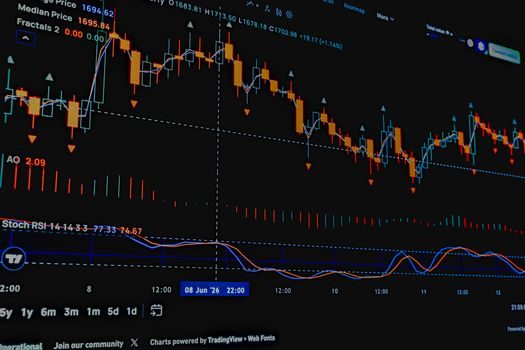
Three signals are worth monitoring after 30 July 2026: the daily spread between Australian 48% Mn sands and South African lumpy 28–30% Mn on the ferro-alloys.com price list, the publication cadence of Tongren–Songtao district feasibility and processing studies, and any change in the number of active origin-grade bands on the daily quote page — a drop in active bands typically precedes a freight or political disruption affecting the missing origin [S1][S3].
The underlying component specifications are covered under dc power supply, switching power supply, and industrial ups.