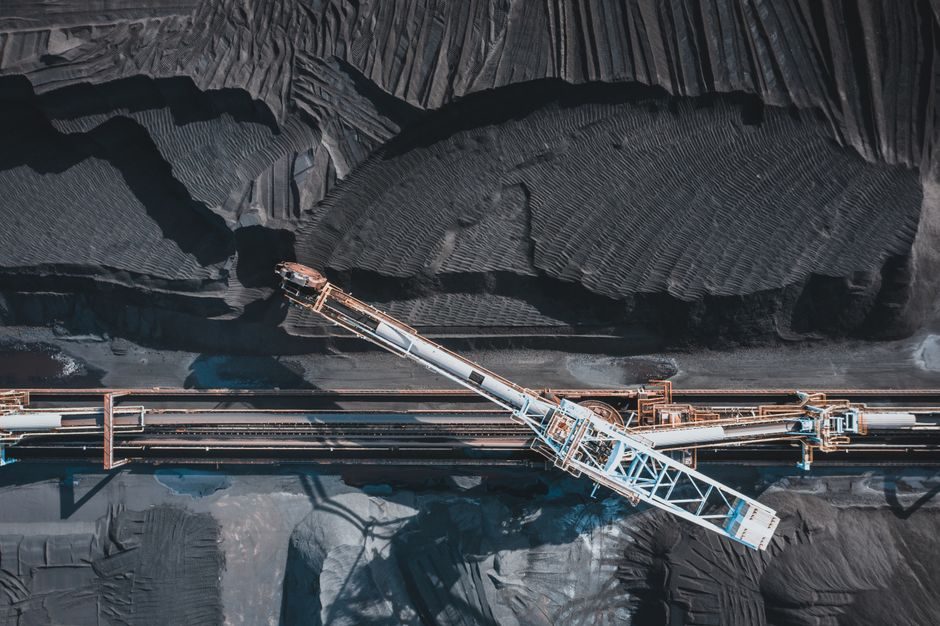
Morocco, China, the United States, Russia, and Egypt controlled the majority of 2025 phosphate rock output, with the United States Geological Survey (USGS) Mineral Commodity Summaries 2026 reporting global mine production of approximately 240 million tonnes [S1].
Buyers evaluating 2026 phosphate rock supply should anchor decisions on three concrete axes: %P2O5 grade band (typically 28-34% BPL for sedimentary Moroccan Khouribga, 30-32% for Florida 70/72, 30-34% for Tunisian Gafsa, and 32-37% for igneous Kola/Russia and Siilinjärvi/Finland), CaO/P2O5 molar ratio (lower is better for acid efficiency), and heavy-element contaminants such as Cd, U, and As that gate fertilizer-grade suitability [S1].
Grade and Reactivity Bands by Origin
Igneous Russian Kola apatite concentrate (KolaPhos) typically runs 38-40% P2O5 and is preferred for high-purity technical/feed phosphates because of its low organic carbon and tight Fe/Al window [S1].
Reactivity measured by the IFA method (citric-acid solubility, 2% formic acid) varies significantly by origin: North Carolina calcined concentrate registers 80-90% reactive R2O3 under the ISMA/AAPFCO reactivity test, while uncalcined Florida pebble typically shows 50-65% reactivity before calcination. Buyers writing fertilizer-grade specifications should fix the reactivity test method (IFA 1980, modified, 2% formic acid) on the datasheet to avoid the well-documented drift between citric and formic acid numbers.
Contaminant and Specification Gates
Phosphate rock spec sheets for 2026 fertilizer applications routinely lock three contaminant gates: cadmium (Cd), uranium (U), and arsenic (As). European Union fertilizer regulation sets a cadmium ceiling of 60 mg Cd per kg of P2O5 for mineral fertilizer placed on the EU market since mid-2022, with stricter national caps (Sweden, Austria, Finland) dropping to 20 mg/kg P2O5; the EU framework is the most consequential single driver of merchant phosphate rock grade selection in 2026 [S1].
The LVDT sensor pricing 2026 reference is unrelated to phosphate grade, but the same principle applies: rock buyers should declare the analytic method (ISO 11885 ICP-OES, acid digest) on the COA and reject lot-level data that quotes only the rock weight, not the P2O5-normalized ratio. Process engineers pairing a phosphate roaster kiln with a chain conveyor for calcination feed should expect calcined product reactivity tied to a controlled residence time of 30-60 minutes at 750-800°C, not the raw-rock solubility of the source.
Sourcing Node and Logistics Map
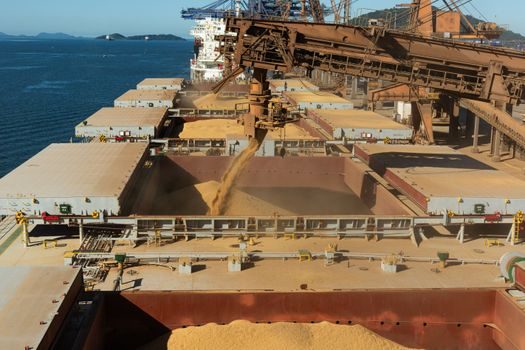
Major 2026 export nodes for phosphate rock are Safi and Jorf Lasfar (Morocco), Tampa and Houston (United States), Tampa Bay (Florida pebble + calcined concentrate export), Phosphate Harbour / Aqaba (Jordan), Annaba / Skikda (Algeria, mostly domestic and Tunisian trans-shipment), Hamrawein / Safaga (Egypt), and Murmansk for Kola apatite. The manganese ore supply shortage risk map for 2026 uses a similar port-cluster methodology that phosphate sourcing teams can mirror, since both commodities face the same chokepoint risk on the Cape route. [S1]
Lead times from order to Florida discharge on a 55,000 DWT bulker run 22-28 days Safi-to-Tampa, 28-34 days Hamrawein-to-Rotterdam, and 18-24 days Aqaba-to-Rotterdam, while Kola apatite via Murmansk to a Baltic/Polish port clears 6-10 days but carries concentrated exposure to the northern rail and ice-class shipping window from December through April. Cross-reference the cobalt sulfate supply chain 2026 map when modelling dual-source mineral logistics, because both cobalt and phosphate share a small number of southern-Africa and North-African truck-and-port nodes.
Price Stack and Benchmarks
The 2026 phosphate rock benchmark is set by Indian and Brazilian tender outcomes: 70-72 BPL Casablanca FOB typically prices in the $135-165/t range with $5-12/t periodic adjustments on freight; Tampa FOB 70-72 BPL benchmarks in similar nominal bands, while higher-grade (75-77 BPL) North African cargoes command a $20-30/t premium. A 2025 baseline of around $152/t for 70 BPL Casablanca FOB was widely cited in the trade press and serves as a 2025-anchor for 2026 escalator clauses [S1].
The landed CIF-India price stack in mid-2026 sits around $170-195/t including $30-40/t of voyage freight and $3-6/t of port and bagging charges, with sulphur and ammonia co-costs inflating DAP economics well above raw rock. A useful comparison from the aluminum ingot 2026 price stack is the same three-layer methodology (FOB + freight + premiums), which buyers can lift directly when building landed-cost models.
Comparison Across Main Origin Options
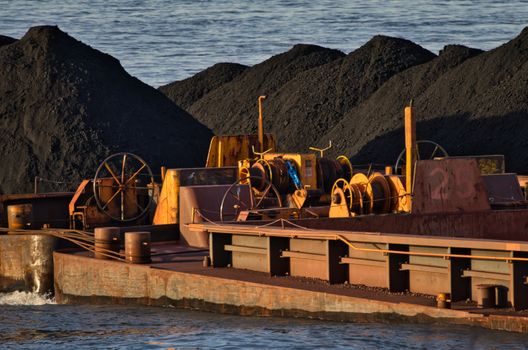
Phosphate rock origins compare on four decision criteria: %P2O5 grade, CaO/P2O5 ratio, Cd content normalized to P2O5, and delivered cost. Moroccan Khouribga scores 30-32% P2O5, CaO/P2O5 around 1.55, Cd 35-50 mg/kg P2O5, delivered $170-200/t — high volume, mid-grade, marginal EU acceptance. Florida 70/72 delivers 32-33% P2O5, CaO/P2O5 around 1.55, Cd 25-40 mg/kg P2O5, delivered $180-215/t — premium grade, higher cost. [S1]
Russian Kola apatite delivers 38-40% P2O5, CaO/P2O5 around 1.50, Cd under 10 mg/kg P2O5, delivered $200-240/t on Baltic routes — best purity, highest price, geopolitical risk. Egyptian Hamrawein delivers 28-31% P2O5, CaO/P2O5 around 1.60, Cd 40-60 mg/kg P2O5, delivered $165-190/t — most cost-competitive but EU-capped. Togo, Senegal, and Algeria round out 27-32% P2O5, Cd 50-80 mg/kg P2O5, delivered $160-185/t — these are the "high-cadmium" tier that EU-bound and Japan/Korea feed-grade contracts now exclude.
Constraints, Failure Modes, and 2026 Risk Signals
mine output down to roughly 19-21 million tonnes and grade erosion continuing; (3) sanctions and rail constraints on Russian Kola apatite exports through Baltic and Black Sea ports; and (4) cadmium regulation tightening in the EU, with Sweden and Austria pushing a national ceiling of 20 mg/kg P2O5 that effectively delists high-Cd origins from their markets [S1].
Process engineers planning new wet-process phosphoric acid plants should size the rock receiving and storage system around at least two grade bands (mid-grade sedimentary 30-32% P2O5 plus a low-Cd high-grade igneous fallback) and design the conveyor chain transfer to a dc power supply-fed weigh feeder for real-time %P2O5 reconciliation. Critical failure modes in phosphate receiving include dolomite-driven under-acidulation (CaO/P2O5 above ~1.65 cuts P2O5 recovery 3-6%), and chloride-driven scaling in the evaporator loop when NaCl in the rock exceeds 0.05% — a clause that should be added to all 2026 tender specs. The industrial UPS on the acidulation control skid should ride through at least 30 minutes of grid loss to avoid gypsum-pond pump trip on a hot digester.
Track three signals in the next 90 days: the quarterly USGS Phosphate Rock statistics release (due September 2026), the next Indian IPL/PPL rock tender outcome (typical bi-monthly cadence), and the EU fertilizer regulation delegated-act amendment that may tighten Cd reporting on COAs. Pairing those with the aluminum ingot 2026 market size reference gives a useful cross-check on industrial commodity logistics in the same shipping lanes.