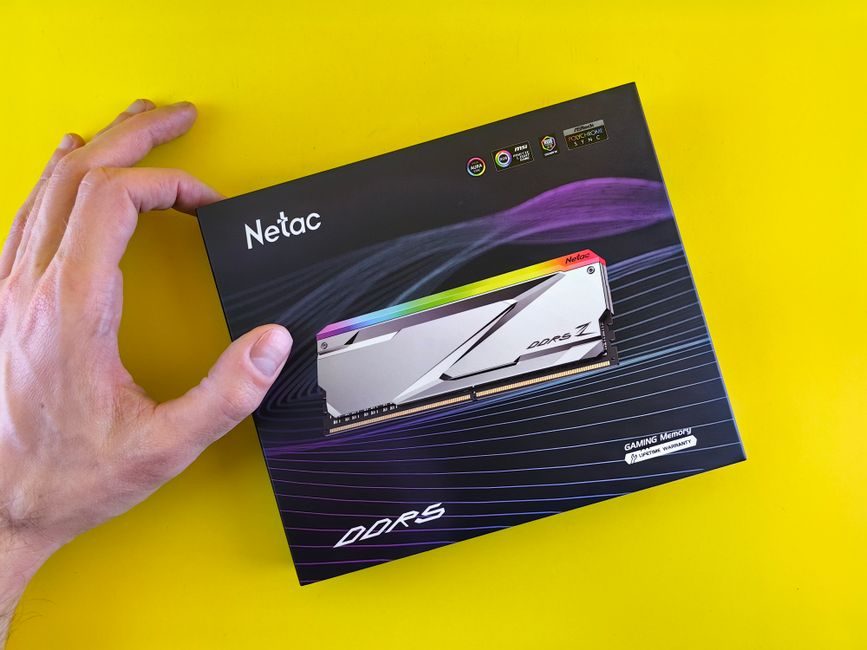
Samsung, SK hynix, and Micron are the three DRAM suppliers controlling essentially all advanced-node merchant wafer output in 2026, with combined 2026 capacity projected at 18 million wafers — a year-on-year increase of roughly 5% [S5].
That headline figure hides the binding constraint: Omdia data cited on 2026-06-01 still shows the three majors unable to fully close the supply gap, because AI-server demand is pulling DDR5 and HBM bit-consumption faster than the majors can convert fab space [S5]. For buyers specifying memory into industrial PLC backplanes, server-class controllers, and edge-AI gateways, this is the single most important supply-side fact for the year.
Capacity by Supplier: 2026 Wafer Output and Plant Source
Samsung is set to lift output from 7.59 million wafers to 7.93 million wafers, with the increment coming from its Pyeongtaek line releasing additional clean-room volume in 2026 [S5]. SK hynix will move from 5.97 million wafers to 6.48 million wafers, driven by the Cheongju M15X expansion [S5]. Micron is holding roughly flat at around 3.60 million wafers in 2026, with its next material capacity step not landing until 2027–2028 [S5].
Together the three majors account for the entire 18 million-wafer 2026 number, and no fourth merchant DRAM maker is on track to materially shift that concentration inside the calendar year [S5]. The practical effect for a procurement team is that any DDR4 or DDR5 spot buy above a few thousand units per month is still effectively a three-vendor negotiation.
Why the Supply Gap Persists Despite a 5% Capacity Bump
The 5% year-on-year capacity lift sounds generous until it is set against bit-demand growth from AI training and inference fleets, where HBM3E and HBM4 stack-die bit counts are growing at a much higher rate than the underlying wafer count [S5]. Each high-end AI accelerator typically pulls multiple HBM stacks per device, and each HBM die consumes several times the wafer area of a comparable DDR5 die.
The secondary channel pulling on the same fabs is DDR5 ramp for server and high-end desktop platforms, where 4800 MT/s and 5600 MT/s modules are now the mainstream speed grades listed on Chinese supplier channels [S2]. When the same three fabs have to split wafer starts between HBM, DDR5, and the residual DDR3/DDR4 book, a 5% capacity bump cannot keep up with AI-weighted bit demand — which is the exact conclusion Omdia draws in the 2026-06-01 dataset [S5].
Product Spread: From Legacy DDR3 to HBM-Class AI Memory
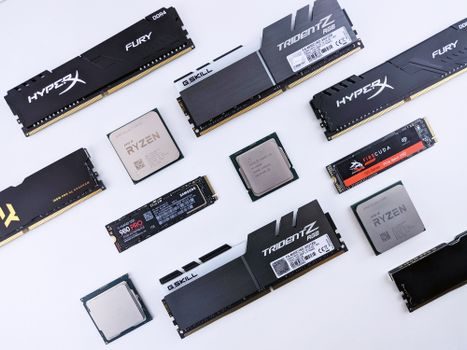
On the merchant module side, the 2026 catalogue still spans the full generational curve. Desktop and server modules from Chinese suppliers ship at 1600 MHz, 2400 MHz, 3200 MHz, 4800 MHz, and 5600 MHz, with module densities from 4 GB through 64 GB and pin counts covering both 204-pin laptop SO-DIMM form factors and 240-pin server RDIMMs [S2]. 16 GB registered ECC DDR3 1600 (PC3-12800) server modules list at US$32–39 per piece at MOQ 1, and 16 GB DDR3 1333 (PC3-10600) RDIMMs at US$75–82 per piece — a useful live reference for industrial buyers pricing legacy spares [S2].
Laptop-grade DDR3 1333/1600 at 1.35 V sits at the budget end around US$5.76–5.80 per piece, while OEM DDR3 1600 MHz 204-pin SO-DIMMs are quoted at US$11–11.50 per piece at MOQ 100 [S2]. For industrial buyers the takeaway is that the DDR3 long tail is still actively stocked, but the pricing gradient from legacy DDR3 to mainstream DDR5 reflects the same capacity allocation problem: more fab hours are going to the AI end of the curve, so the legacy tail is supported by inventory rather than new wafer starts.
Decision Criteria for Specifying DRAM in 2026
Buyers should match four criteria against the 2026 supply reality: required speed grade, module density, error-correction needs, and qualified vendor list. On speed grade, anything from DDR3-1600 up to DDR5-5600 is currently listed across desktop, laptop, and server modules [S2]. On density, 4 GB, 8 GB, 16 GB, 32 GB, and 64 GB are the five stocked capacities that ship with the shortest lead time [S2].
For ECC/registered server memory, the price band runs roughly US$32–82 per piece at MOQ 1 depending on speed and density, versus US$5.76–11.50 for unbuffered laptop/desktop DDR3 [S2]. Because the three majors are supply-constrained at the wafer level, qualification of a second DRAM source — typically via a module house that bins and tests OEM-grade die — is the single most effective risk action a buyer can take this year, rather than chasing the lowest spot price.
Adjacent Context: Where DRAM Fits Inside the Wider 2026 Stack
DRAM is one node in a much larger 2026 electronics-procurement picture, and the same supply tightness is visible across adjacent component categories. Buyers who are sizing server memory for an industrial AI gateway will also be evaluating PLC backplane controllers, pressure transmitters for the process side, and flow meters on the field-instrument side — and they should plan for parallel lead-time pressure on each. [S2]
For context on how the AI-driven bit-demand story is reshaping the broader 2026 component landscape, the top advanced-packaging companies 2026 roundup maps the upstream-downstream split between food/pharma packaging and semiconductor back-end lines, and the lithography-equipment sourcing stack shows where the wafer-side tool bottleneck sits upstream of these three DRAM majors.
What to Track Next: 2026 H2 and 2027 Signals
Three signals will define whether the 2026 supply gap closes or widens: SK hynix's Cheongju M15X ramp curve as it moves from 5.97M to 6.48M wafers, Samsung's Pyeongtaek clean-room yield at the 7.93M-wafer target, and Micron's first 2027 capex disclosure for the deferred 3.60M→higher step [S5]. A fourth, harder-to-track signal is HBM4 yield at the three majors, because every wafer reassigned from DDR5 to HBM tightens the DDR5 merchant pool further [S5].
For industrial procurement teams, the working assumption through end-2026 is that DDR5 server modules and any HBM-equipped AI accelerator will remain allocation products, while DDR3 and mainstream DDR4 will continue to clear through distributor and module-house inventory at relatively stable price bands such as the US$32–82 server-DDR3 and US$5.76–11.50 SO-DIMM DDR3 references quoted above [S2]. Locking in 12-month supply contracts on qualified ECC server modules is the lowest-regret move a spec engineer can make before the 2027 capacity step arrives.