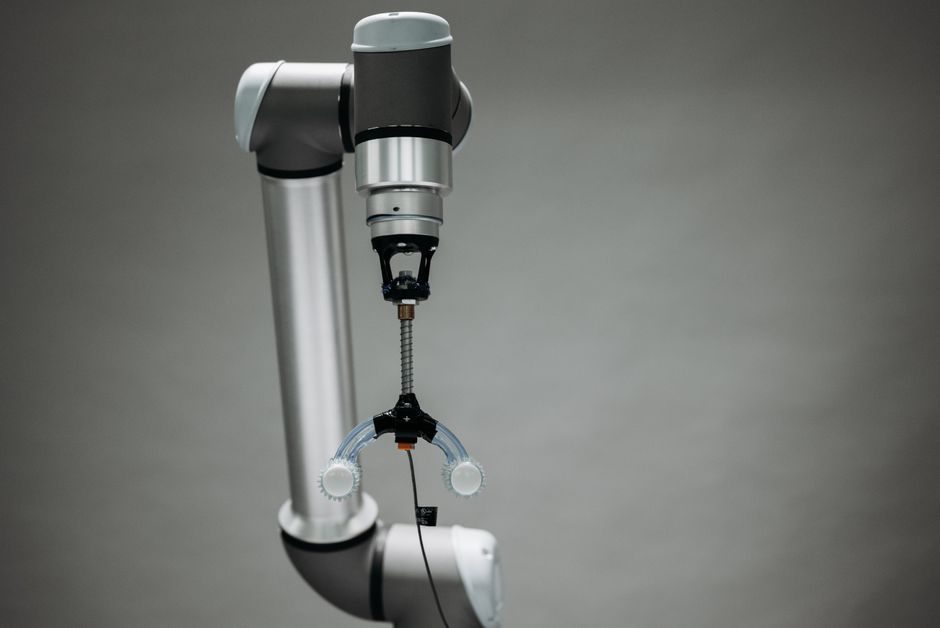
Five OEMs — Fanuc, Yaskawa (Motoman), ABB, KUKA and Kawasaki Heavy Industries — have anchored the global industrial-robot supply since the early 2010s, with each holding thousands to tens of thousands of installed units across automotive, electronics and metalworking lines [S1][S3].
Chinese makers Estun, Inovance, Siasun and STEP now sit on published 2016 industry lists as the leading domestic producers, signalling the start of a multi-year localisation push in articulated arms, controllers and servo packages [S2]. For a 2026 specifier the field reads as a two-tier map: a Japanese/European tier selling global support and proprietary controllers, and a Chinese tier competing on cost, openness and integration with regional cell builders.
Big-Five OEM baselines: payload, repeatability, controller family
Fanuc's flagship yellow-arm range spans ARC Mate welding cells, LR Mate small-payload (≤10 kg) handling units, and the M-2000iA heavy-payload (up to 2,300 kg class) line, all driven by the R-30iB/R-30iB Plus controller family [S1]. Yaskawa's Motoman MH, GP and DX series cover the 6-axis articulated segment, with Motoman NX100, DX200 and the newer YRC1000 controller generation referenced as the in-house architecture behind the brand's installed base [S3]. ABB fields the IRB 1200/6700/8700 lines and the OmniCore controller, while KUKA's KR Cybertech, KR Fortec and KR Titan ranges pair with the KR C5 controller; the two European players also expose ROS-Industrial packages and EtherCAT-based fieldbus stacks to integrators.
Kawasaki Heavy Industries' R series and the duAro dual-arm SCARA platform target the same small-to-medium payload window, often in automotive subassembly and consumer-electronics handling [S1]. Across the Big Five, published repeatability values cluster between ±0.02 mm and ±0.08 mm on standard 6-axis arms — a metric a 2026 buyer should lock into the RFQ alongside payload, reach and axis count rather than treating it as marketing filler.
Japanese second tier: Epson SCARA and Denso small-payload specialists
Epson's SCARA line (T-series, LS-series, G-series) dominates high-throughput pick-and-place and assembly cells in electronics, with cycle times in the 0.3–0.4 s window for 1 kg-class units, and the RC620/RC700 controller platform governing motion [S3], typically paired with industrial camera modules for SMT and semiconductor back-end part localisation. Denso Robotics markets the VS-series 6-axis and HM-series SCARA arms, sized for the 5–10 kg range that the Japanese majors also cover but priced and supported for Tier-1 automotive suppliers in the Toyota keiretsu.
Both vendors emphasise vibration-damping, low-inertia arm geometry and ISO Class 3–4 cleanroom compatibility for semiconductor back-end and medical-device cells [S1]. For a 2026 spec cut, this Japanese second tier is the right answer when the application is high-speed small-payload assembly, not heavy-payload welding or palletising.
Chinese cohort: Estun, Inovance, Siasun, STEP — capabilities and limits
The 2016 China Top 20 industrial-robot producer list already placed Estun (Cixi, Nanjin), Inovance (Shenzhen), Siasun (Shenyang) and STEP (Shanghai) at the top of the domestic cohort, with each combining in-house servo motors, drives and controllers rather than buying foreign stacks [S2]. Estun is publicly associated with 6-axis articulated arms and the acquisition of German builder Carl Cloos welding automation, signalling a welding-cell push that extends into industrial adhesive dispensing and sealant cells; Inovance leverages its variable-frequency-drive heritage into robot controllers and integrated servo packages; Siasun runs an AGV-mobile-manipulator portfolio alongside articulated arms; STEP focuses on bending and welding cells tailored to sheet-metal fabricators.
For 2026 sourcing, the Chinese cohort is most competitive on: 3–50 kg payload articulated arms, ±0.03–0.05 mm repeatability bands, and open controller architectures (EtherCAT, Modbus TCP, PROFINET) that drop cleanly into domestic PLC cells. Limits to verify during RFQ: cycle-time consistency under continuous duty, spare-parts stocking outside Tier-1 cities, and CE/UL conformity documentation depth for EU-bound shipments.
Selection criteria a 2026 buyer should hard-code into the RFQ
Spec gates worth pinning at the RFQ stage: payload margin (rated kg × 1.3–1.5 for dynamic duty), reach envelope (mm), repeatability (mm at rated payload and at full speed), axis count (4-axis SCARA vs 6-axis articulated vs 7-axis cobot), controller openness (EtherCAT, PROFINET, DeviceNet, CIP Safety for cobots), IP rating for the wrist (commonly IP65 for washdown cells, IP67 for foundry duty), and ambient rating (0–45 °C standard, up to 55 °C derated for foundries). [S1]
Two further hard gates: ATEX/IECEx zone classification for paint lines and any environment with combustible dust or vapour, and a documented mean-time-between-failure figure for the gearbox (harmonic-drive users typically publish 30,000–40,000 h MTBF; RV reducers in the same envelope publish comparable bands) [S1][S3]. For comparison context on spec-driven selection, see Contactor Selection: 7 Spec Gates Buyers Lock In for 2026 Builds — the same gate-by-gate logic applies to motion hardware.
Comparison pass: Big-Five tier vs Chinese tier on four decision axes
On payload class the Big Five cover 0.5–2,300 kg in production lines, while the Chinese cohort concentrates 3–50 kg articulated arms and a growing cobot band; the Big Five win heavy-palletising and large-payload welding, the Chinese tier wins mid-payload general industry [S1][S2][S3]. On controller openness, KUKA and ABB publish ROS-Industrial and EtherCAT support alongside their proprietary stacks, Yaskawa and Fanuc sit in the middle with documented fieldbus lists, and the Chinese cohort ships openly by default — this is the strongest reason a system integrator running mixed-brand cells picks Chinese arms for new builds.
On aftermarket service density, the Big Five run direct service in 40+ countries; Chinese vendors are dense in mainland China and selected ASEAN plants, thinner in the EU and US where integrators carry the support burden. A general-industry specifier prioritising service-network depth pays the premium; an electronics, EV-battery or solar cell builder prioritising cost and open controllers takes the Chinese tier. For an adjacent view of OEM-vs-tier-2 mapping logic, see Top Electric Vehicle Companies 2026: OEMs, Cargo Fleets and Sourcing Bands.
Use cases by payload band and vendor fit
Below 10 kg, the typical fit is Epson or Denso SCARA in electronics assembly, Fanuc LR Mate in lab automation, and Estun/Inovance small articulated arms in domestic cell-phone and battery module lines [S1][S2][S3]. The 10–50 kg band is the most contested: KUKA Cybertech, ABB IRB 1200/1660, Yaskawa MH and Fanuc M-10/M-20 for global integrators; Siasun, Estun, Inovance, STEP for Chinese cells and any buyer willing to qualify a second-source arm.
100–1,000 kg band: KUKA KR Fortec, ABB IRB 8700 and Fanuc M-2000iA class dominate; Chinese vendors are still building installed-base credibility in heavy-payload welding and palletising, and in industrial coating and paint-line cells where ATEX/IECEx zone classification adds another spec gate. Collaborative robots (cobot) — Universal Robots, Fanuc CRX, ABB GoFa, KUKA LBR iisy, Doosan, AUBO, Elite, JAKA — sit as a parallel category rather than a replacement, typically limited to 3–16 kg payloads with power-and-force-limited ISO/TS 15066 safety modes.
Limitations, failure modes and what to verify on the supplier audit
Repeatability degrades with payload and reach; published figures assume rated payload at rated speed at 25 °C — a buyer running 80% of rated payload at 30 °C ambient should ask for derated repeatability data, not the catalog number. Harmonic-drive failures cluster around lubrication breakdown above rated duty cycle, and the field-repair kit is vendor-specific, which is why gearbox MTBF and regional spares stocking matter more than catalog repeatability on a 5-year TCO model [S3].
Controller-vintage mismatch is the single most common integration fault: a 2014 KRC4 cabinet will not share a teach pendant firmware with a 2024 KR C5, and the same generation-drift applies to Fanuc R-30iB vs R-30iB Plus. The mitigation is a controller-version lock written into the RFQ, with a five-year spares and firmware-support commitment from the OEM.
Standards and documentation a 2026 audit should require
ISO 9283 sets the repeatability, accuracy and path-performance test methods that any vendor datasheet should reference, and ISO 10218-1/-2 governs robot safety requirements and integrator-side cell safety. ISO/TS 15066 is the cobot-specific guideline on power-and-force-limiting, frequently cited in collaborative-cell risk assessments. CE Machinery Directive conformity (2006/42/EC) and, for US-bound cells, ANSI/RIA R15.06 and UL 1740 are the audit anchors a system integrator will ask for; ATEX 2014/34/EU and IECEx certification apply when the arm enters a zone-classified area. [S2]
The audit deliverable list for a 2026 cell should include: a Declaration of Incorporation (not a full Declaration of Conformity, since the arm is typically incomplete machinery), a CE technical file reference list, a controller firmware version stamp, and a maintenance-interval schedule for the gearbox, servo pack and cable harness. For a specifier wiring an arm into a wider automation cell, see Gearbox vs Industrial Gear: 2026 Spec Cut for Power-Transmission Buyers for the gearbox-side gates that sit underneath the robot vendor's spec sheet.
Trackable next nodes for a 2026 sourcing team: (1) the next 12 months of Chinese OEM CE/UL audit filings, which materially change the EU/US eligibility of Estun, Inovance and Siasun cells; (2) the spread of ROS-Industrial packages beyond KUKA/ABB into Fanuc and Yaskawa, which would re-open the controller-openness question; (3) harmonic-drive and RV-reducer supply chain normalisation in mainland China, the single largest lever on the Chinese cohort's price-to-performance band [S1][S2][S3].