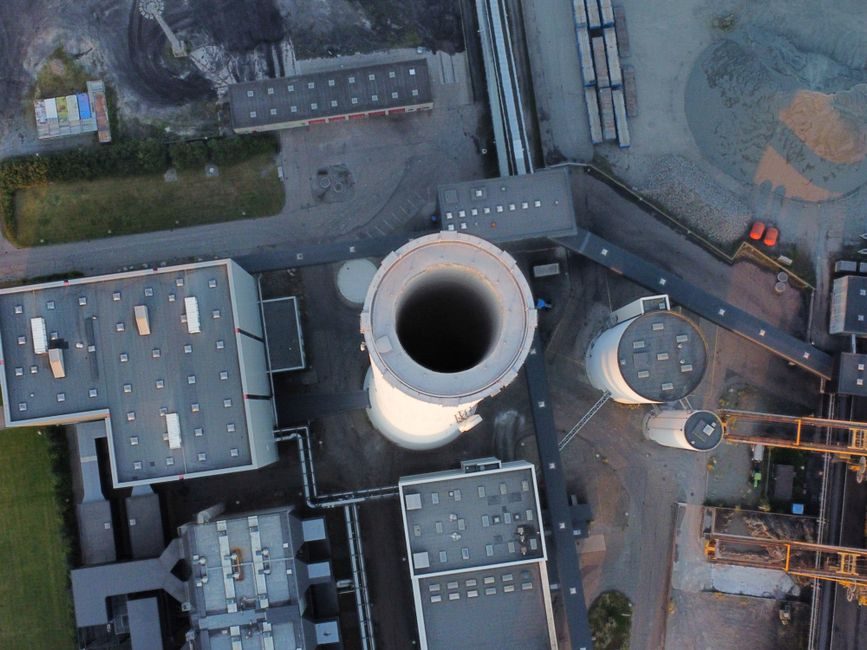
The nuclear sector entering 2026 is defined by Gen-III+ reactor construction, small modular reactor (SMR) commercialization, and an active fuel-services market. State-owned utilities in China, Russia, France, South Korea, and the United States continue to anchor the OEM landscape, while engineering, procurement, and construction (EPC) consortia handle the heavy lifting on megaprojects from Hinkley Point C to Akkuyu [S2].
Turkey alone illustrates the scale: a four-unit nuclear plant is under construction under a 1970-era strategic plan that has finally moved into steel-and-concrete execution, with reactor technology supplied through intergovernmental build-own-operate agreements [S2]. On the supply-chain side, 2026 has already hosted the Nuclear Power Plants Expo & Summit (NPPES) in Istanbul on 2026-07-01 to 2026-07-02, drawing 300 exhibitors and roughly 13,600 visitors, organized by the Turkish Nuclear Industry Association (NIATR) [S5].
Reactor OEMs and State-Owned Utilities Defining the 2026 Top Tier
The dominant reactor original equipment manufacturers in 2026 remain the same vertically integrated state-owned groups that have delivered Gen-III+ fleets over the last decade. China General Nuclear Power Group (CGN) has long pursued overseas footholds, including historical joint planning with Japan's Toshiba around UK Horizon assets, demonstrating the cross-border consortia pattern that persists in 2026 [S3].
EDF (France), Rosatom (Russia), KEPCO/KHNP (South Korea), and CGN/CNNC (China) continue to ship or commission large pressurized-water reactor (PWR) units. Westinghouse (USA) remains active on AP1000 deployments. Each combines a reactor design license, fuel-fabrication capability, and a service arm that sells outage support, component replacement, and digital I&C retrofits — a structure that has displaced the old "utility + architect-engineer" split seen in earlier decades.
Fuel-Cycle Companies: Mining, Conversion, Enrichment, Fabrication
Upstream of the reactor gate, the fuel-cycle tier is concentrated and oligopolistic. Uranium mining is led by Kazatomprom (Kazakhstan), Cameco (Canada), Orano (France), and CGN Mining. Conversion capacity runs primarily through Orano's Philippe Coste plant at Tricastin and Cameco's Port Hope facility. Enrichment is dominated by Urenco (UK/Germany/Netherlands), Orano, Rosatom's TENEX, and CNNC, with centrifuge technology now industry standard. [S1]
Fuel fabrication is split between Framatome (France/USA), Westinghouse, TVEL/Rosatom (Russia), and KEPCO Nuclear Fuel (Korea). SMR-fuel newcomers, including TerraPower's Natrium HALEU supply chain and X-energy's TRISO-X, are entering qualification phases. The mid-2026 fuel price index reflects long-term contract pricing that has decoupled from spot, rewarding utilities that locked multi-year offtake in 2024–2025.
EPC Contractors and Heavy-Component Suppliers
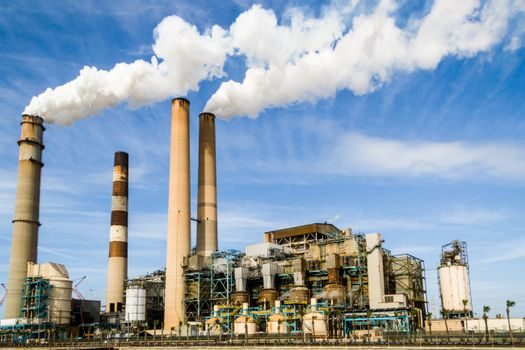
The EPC layer in 2026 is dominated by Bechtel, Bouygues Travaux Publics, Framatome's installation arm, Atomstroyexport (Rosatom's export vehicle), and Chinese consortia led by CNNC Construction. Bechtel remains the principal contractor on Plant Olkiluoto-3 legacy scope and continues as the architect-engineer of record for U.S. AP1000 builds. [S2]
Heavy-component supply is split between Doosan Enerbility (reactor vessels, steam generators, Korea), Framatome (reactor internals, I&C), Škoda JS (Czech Republic, large components), and a tier of Chinese fabricators serving domestic PWR and HTR-PM builds. The component bottleneck in 2026 is forgings — large-diameter, low-alloy steel rings for reactor coolant pump casings and pressurizer shells remain on 36–48 month lead times at most qualified mills.
How to Compare the 2026 Top Nuclear Companies
For procurement, utility strategy, and investment-grade research, the top nuclear power companies 2026 lineup is best compared on four axes: reactor design ownership, fuel-cycle integration, EPC and service depth, and geographic reach. [S3]
EDF, Rosatom, CGN, KHNP, and Westinghouse score high on design ownership and service depth. Kazatomprom, Cameco, and Urenco dominate the fuel-cycle axis. Bechtel and CNNC Construction lead on EPC scale. CGN and Rosatom score highest on geographic reach, with active builds or MOUs on four continents. A utility sourcing decisions should weight fuel-cycle integration if security of supply is the priority, design ownership if technology transfer is the lever, and EPC depth if the project is a first-of-a-kind fleet.
2026 Trade-Show Calendar and Industry Signals
Two trade events anchor the 2026 nuclear calendar. Nuclear Power Plants Expo & Summit (NPPES) ran 2026-07-01 to 2026-07-02 at the Istanbul International Convention Center, with 300 exhibitors and approximately 13,600 visitors under the Turkish Nuclear Industry Association (NIATR) banner [S5]. Earlier in the year, Nuclear Power Expo 2026 (NPE) in Piacenza, Italy, was held at Piacenza Expo (Loc. Le Mose Via Tirotti 11), spanning 15,000 m² of exhibition space with 300 exhibitors and more than 12,800 visitors [S4].
These events matter because they concentrate the EPC, instrumentation, valve, and power transformer supply chain that follows new-build announcements. For spec-driven buyers, the relevant 2026 reference frame is broader energy infrastructure: offshore-wind OEMs face similar grid-integration issues, and the top offshore wind companies 2026 capacity, auction, and OEM lineup is a useful comparator on substation and HVDC procurement strategy.
Regional Outlook: South Africa, Turkey, and the UK
South Africa's 2019 Eskom-dominated mix — heavily coal-based with gradual clean-energy transition — has only partly shifted, and the country's nuclear roadmap now centers on extending Koeberg unit life and evaluating PWR or SMR imports under the IRP 2025 framework [S1]. Turkey's nuclear build is the most concrete 2026 mover: the four-unit Akkuyu project, with Rosatom-supplied VVER-1200 reactors under a BOO model, is approaching first fuel load, and a second site at Sinop is in active negotiation [S2].
The UK picture features EDF-led Hinkley Point C, with two EPR units in construction and first power expected in 2029–2031. CGN's historical interest in Horizon, expressed through 2012-era planning with Toshiba, illustrates the long arc of overseas nuclear investment that continues to shape UK policy and project finance [S3].
Selection Criteria: What Spec-Driven Buyers Should Look At
When evaluating a top nuclear company for a 2026 contract, six criteria dominate: (1) design certification status in the destination regulator's framework (NRC, ASN, NNSA, etc.); (2) fuel-supply security including HALEU availability for advanced reactors; (3) EPC track record on the same reactor class with reference plants in commercial operation; (4) outage-service and digital-I&C retrofit capability; (5) component-supply chain depth, including reactor-vessel, steam-generator, and power cable qualifications; and (6) financial structure — state-backed BOO versus merchant utility debt. [S4]
For component-level buyers rather than utility-scale, the relevant nodes are the certified forging mills, the I&C platform vendors (Framatome's TELEPERM XS, Westinghouse's Ovation, Rolls-Royce's Spinline), and the power meter and instrumentation suppliers for safety-classified channels. Mechanical-handling decisions inside the plant still follow the same spec-first logic seen across industrial procurement — for a parallel example, the taper bush 2026 buying guide on bore, material, standards, and sourcing levers is a useful template for how to grade a niche supplier against standards and lead time.
Track the IAEA's PRIS database for 2026 grid connections (Akkuyu Unit 1, Karachi Unit 3, and Barakah Unit 4 are the watch-list commercial operations) and the OECD-NEA's uranium supply outlook due in late 2026 for fuel-price direction. The November 2026 World Nuclear Exhibition in Paris will be the next major industry checkpoint, and the December 2026 ASME Section XI nuclear-code meetings will signal inspection-rule direction for 2027 outage planning.