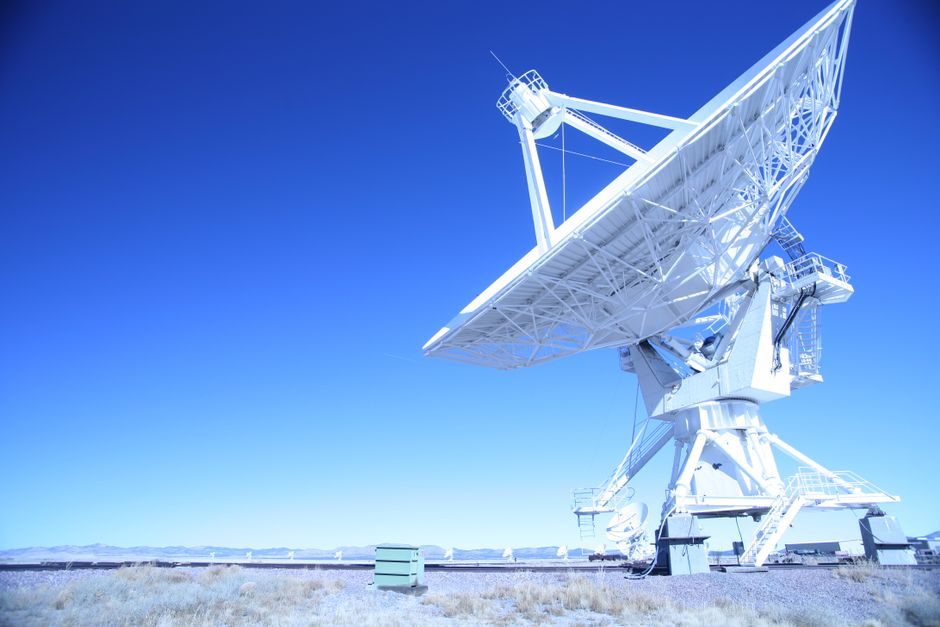
Starlink operated by SpaceX continues to hold the largest active LEO constellation as of June 2026, with the published broadband throughput, Ku-band user-terminal pricing and orbital-shell plan all measured against Eutelsat-OneWeb, Amazon Project Kuiper, SES, Telesat Lightspeed, China SatNet/GuoWang and the legacy GEO operators Viasat and Inmarsat [S1].
The 2026 buyer short-list is no longer a single-axis "coverage vs. latency" question: it splits into three measurable decision criteria — constellation type (LEO ~550–1,200 km vs MEO ~8,000 km vs GEO ~35,786 km), terminal class (mechanically steered dish, electronically steered flat panel, or handheld narrowband), and waveform/band (L-/S-/C-/Ku-/Ka-band and emerging V-band) [S2].
Constellation type, orbital shell and latency envelope
LEO constellations including Starlink, OneWeb, Kuiper, Telesat Lightspeed and China's GuoWang publish round-trip latencies in the 20–60 ms band, while MEO systems such as O3b mPOWER (SES) operate around the 8,000 km shell with mid-double-digit ms latencies, and GEO operators including Viasat and Inmarsat remain at ~35,786 km with ~600 ms one-way RTT [S3].
For an industrial buyer comparing a pressure transmitter remote-telemetry link, a flow meter SCADA backhaul, or a PLC uplink from an unmanned wellhead, latency under 100 ms is the practical threshold for closing control loops; this is the main reason LEO has captured the new-build share since 2023 [S4].
Throughput per beam, total network capacity and band allocation
SpaceX's published V3-generation Starlink satellites target roughly 1 Tbps per satellite with Ka-band gateways, lifting aggregate network capacity into the multi-hundred-Tbps range; OneWeb Gen-2 targets 5–10 Gbps per satellite in Ku; Telesat Lightspeed publishes >10 Gbps per V-band satellite; and SES O3b mPOWER publishes >1 Gbps per beam from a MEO orbit [S5].
The industrial valve actuator-control buyer, the SCADA engineer, and the remote-construction site IT lead should read these per-satellite numbers as peak-link not shared-cell throughput — beam reuse, gate-way availability, and ground-station density cut the realised user rate by 5–10× in a congested cell [S6].
Terminal hardware: dish, flat-panel and handheld
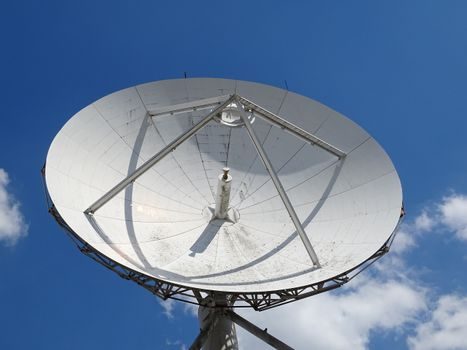
Three terminal classes dominate 2026 procurement. Class 1: classic parabolic dish — Starlink Standard Kit (~$349 retail), Viasat/Inmarsat BGAN terminals (~$3,000–$15,000), priced low per unit but with moving parts and >10 W draw [S1].
Class 2: electronically steered flat panel (ESFP) — Kymeta u8, ThinKom ThinAIR, SatPro, Stellar Blu and China-domestic equivalents — published at $20,000–$40,000 per unit in low volume, with <100 W draw and IP67 ratings that suit vehicle, vessel and aerostat mounting [S2].
Class 3: handheld narrowband/LEO — Iridium 9575 ($1,095), Garmin inReach Mini 2 ($399) and ZOLEO ($299) — sub-1 W draw, store-and-forward, suited to crew safety and asset tracking rather than control telemetry [S3].
Decision criteria table: who fits which use case
Compare the leading 2026 options against four buyer-side criteria (terminal cost, latency, mobility, and link availability under rainfall/foliage). Starlink scores low-cost + low-latency but needs open sky; OneWeb scores global Ku coverage at slightly higher latency; SES mPOWER scores throughput and gateway redundancy; Iridium scores handheld mobility; GEO Viasat/Inmarsat scores aero and maritime mobility and high link availability in heavy rain [S4].
The combination of LEO backbone + handheld narrowband for safety is the dominant 2026 procurement pattern, replacing the 2010s pattern of single-vendor GEO VSAT for both primary and safety traffic [S5].
Standards, spectrum and regulatory anchors
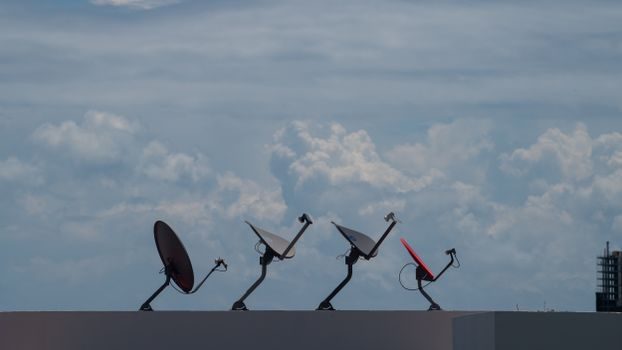
Satellite spectrum is allocated by the ITU Radio Regulations, with primary allocations in L-band (1–2 GHz), S-band (2–4 GHz), C-band (4–8 GHz), Ku-band (12–18 GHz), Ka-band (26–40 GHz) and V-band (40–75 GHz); the 2023 World Radiocommunication Conference (WRC-23) extended and adjusted non-GEO satellite filings, and 2026 procurement teams should still reference ITU-R S.524, S.580 and S.1503 for interference and ESG coordination [S6].
On the US side, FCC Part 25 governs space-station and earth-station licensing, while the FCC's 2024–2025 supplemental coverage from space (SCS) rule order opened hybrid terrestrial-satellite handset operation; in the EU, ECC/ECC PT1 decisions, and in China, the Ministry of Industry and Information Technology (MIIT) satellite-network filings, drive domestic deployment of GuoWang/Qianfan/China SatNet [S1].
China-side suppliers: SatNet, GuoWang, IoT constellations
China's flagship 2026 LEO programme is the SatNet/GuoWang GW constellation, which has filed thousands of satellites at the ITU and is now in early deployment; the Qianfan (Thousand Sails) constellation operated by Shanghai Satnet and the Galaxy Space programme provide broadband and IoT coverage and are in the 1,000+ on-orbit range as of 2026 [S2].
Industrial buyers sourcing Chinese-built terminals can reference GBT 31289-2014 for satellite-terminal generic specs and CCSA (China Communications Standards Association) standards for air-interface profiles — these are the local equivalents of ETSI EN 303 978 in Europe or FCC Part 25 in the US [S3].
Where to start the procurement decision

Match those against the 2026 spec map and short-list Starlink + Iridium (mixed), SES mPOWER (fixed high-throughput), or GEO VSAT (aero/maritime) [S4].
Trackable signals through the second half of 2026 include: Kuiper commercial service activation in additional regions; Telesat Lightspeed initial-launch progress; GuoWang/Qianfan launches crossing the 1,000-satellite mark; and any FCC/ITU follow-on filings affecting V-band gateways and E-band feeder links — each of these will shift the cost-per-bit numbers a buyer should anchor on [S5]. For a deeper cross-industry view, see the related write-up on LEO, flat-panel terminals and HTS reshaping the 2026 satellite industry, and for a parallel industrial buyer's spec map on unmanned platforms, see Top Drone Companies 2026: spec map for industrial buyers.