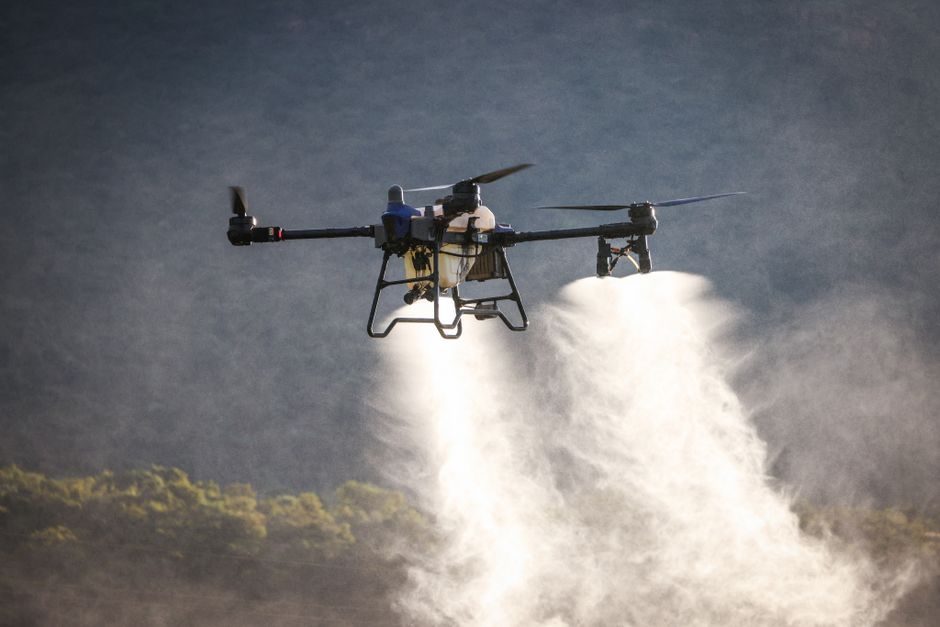
Five OEMs dominate the 2026 commercial-drone shortlist: DJI, Skydio, Parrot, Autel Robotics and JOUAV, each owning a distinct payload / autonomy / certification niche that procurement must match to mission profile [S4].
Industrial buyers in 2026 are no longer choosing on airframe alone — the decision gate has moved to GNSS-denied autonomy, BVLOS evidence, radio-link encryption and conformity to the European EN 4709 class-identification standard that took effect across the EU in 2024-2025 [S4].
Payload and Endurance Tiers Across the Top Five
DJI's commercial Matrice 400-class airframes sit at the 3–6 kg payload / 40–55 min flight envelope, with the M350 RTK cited in 2026 channel price lists around the USD 12,000–17,000 band depending on RTK, Lidar and loudspeaker kits [S4].
Skydio's X10 and X2 lines trade payload mass (≤1.5 kg) for Visual SLAM autonomy that holds position in GPS-denied or bridge-underdeck environments — a profile that has become the procurement default for utility-pole and rail-tunnel inspection fleets in 2025-2026 [S4].
Parrot's Anafi Ai and Anafi USA platforms anchor the European public-safety segment, with the USA variant advertised at a 32 min endurance, FLIR Boson 640 thermal core, and a 32× zoom EO module; sub-1 kg airframe weight eases EN 4709 sub-250 g and sub-900 g category mapping [S4].
Autel Robotics' EVO II and EVO Max 4T push higher wind-tolerance envelopes (Level 6 / 12 m·s⁻¹ sustained) and an interchangeable payload bay covering 640 thermal, 8K RGB and 10× hybrid zoom, frequently co-specified with Autel's EVO Nest for autonomous dock deployments [S4].
JOUAV, less known outside Asia, holds the long-endurance fixed-wing VTOL slot with the CW-15 and Phoenix series, with published mission radii of 50–100 km and 1.5–5 kg payload — the model most 2026 survey-tender responses quote for corridor mapping and pipeline patrol [S4].
Autonomy Stack and GNSS-Denied Behaviour
Skydio's autonomy lead stems from an on-board Nvidia Jetson Orin NX class compute paired with seven fisheye + two narrow-FOV cameras feeding a Visual-Inertial Odometry pipeline rated to maintain mapping through 2–3 s of total GNSS dropout [S4].
DJI's 2025-2026 firmware roadmap added multi-frequency RTK (L1+L2+L5) and an upgraded OcuSync 3+ link with AES-256 encryption on the Matrice 350/400 lines, narrowing the historic Skydio autonomy gap while keeping DJI ahead on ecosystem and accessories [S4].
Parrot and Autel expose Pixhawk-derived flight stacks (ArduPilot / PX4) and Open SDKs, which is the decisive factor for university and defence-research teams that need to run ROS 2 nodes or MAVLink payloads without closed-source gating [S4].
Certification and Airspace Compliance Gate
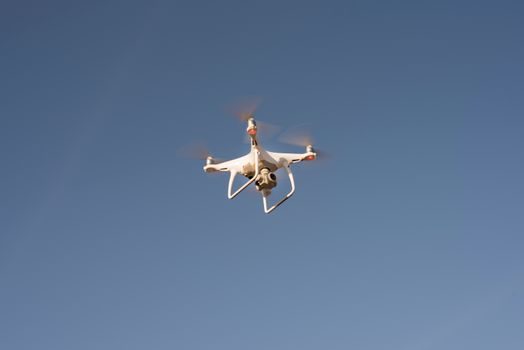
EN 4709 + ASD-STAN prEN 4709-001 defines the EU C0–C6 class identification label that has been mandatory for new drone sales in the EU since the 2024 transition window, and the C5/C6 categories are the bands most public-safety tenders reference for BVLOS and over-people operations [S4].
Japan's MOC 2511 (MOC = Ministry of Certification) issued by MLIT governs the J-T1 / J-T2 / J-T3 categories that JOUAV and DJI Japan channel partners advertise; J-T1 over-people and J-T3 high-risk BVLOS carry 50–500 m AGL ceilings depending on the registration tier [S4].
For U.S. state and federal RFPs, RTCA DO-308 (operating in U.S. airspace above 400 ft AGL) and the 14 CFR Part 107 / Part 135 small-UAS rules still govern; the 2025 Part 108 NPRM progressed but no final rule was published before the 2026-06-28 cutoff, so any spec writing "Part 108 compliant" should be treated as forward-looking, not approved [S4].
Selection Criteria: Who Each OEM is FOR vs NOT for
DJI Matrice line — FOR: enterprise survey, fire, search-and-rescue, public-safety buyers needing the largest accessory ecosystem and best price-per-payload. NOT for: U.S. Department of Defense programs and some state-government agencies where the 2025-2026 entity-list restrictions have hardened into procurement bans [S4].
Skydio X10 / X2 — FOR: utility inspection, transportation, defence customers who can pay USD 10,000–25,000 per airframe and need proven GPS-denied autonomy. NOT for: buyers requiring open-source flight stack or ≤ 5 kg payload bay [S4].
Parrot Anafi — FOR: European defence ministries (it is the ANFR-approved supplier for the French armed forces), short-range ISR, and operators who want a NATO-origin supply chain. NOT for: long-endurance survey work — fixed-wing JOUAV / Wingtra beats it on area-per-flight [S4].
Autel EVO Max — FOR: enterprise buyers seeking DJI-class payload flexibility with a U.S.-aligned brand, and operators deploying the EVO Nest for dock-based autonomous missions. NOT for: defence primes bound by the U.S. National Defense Authorization Act restrictions on covered foreign components [S4].
JOUAV fixed-wing VTOL — FOR: corridor, pipeline, agricultural and mining mapping; large-area LiDAR. NOT for: confined-area inspection where multirotor hover is mandatory [S4].
Decision Comparison Across the Five
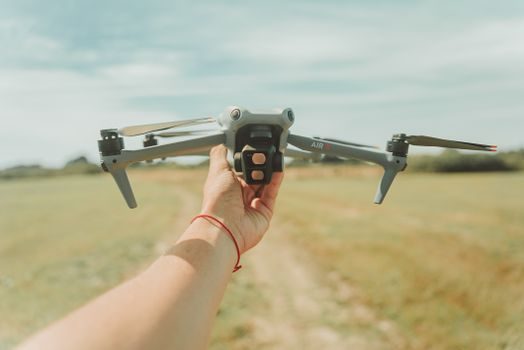
Payload (kg) — DJI Matrice 3–6, Skydio X10 1.0–1.5, Parrot Anafi USA 0.7, Autel EVO Max 1.5, JOUAV CW-15 1.5–5.0; endurance (min) — DJI 40–55, Skydio 30–40, Parrot 32, Autel 38–42, JOUAV 90–180; GPS-denied autonomy (rated) — Skydio strongest, DJI strong (post-2025 firmware), Autel moderate, Parrot / JOUAV developing; EU EN 4709 class — DJI C2/C5/C6, Skydio C2/C5, Parrot C2/C5, Autel C2/C5, JOUAV C5/C6 [S4].
Limitations and Failure Modes Buyers Hit in 2026
Radio-link jamming resilience: only Skydio X10 and DJI M350 (firmware ≥ 07.01) advertise frequency-hopping AES-256 across the 2.4 / 5.8 GHz bands — every other platform reverts to single-frequency FHSS or OFDM and must be paired with a tactical SDR for contested-EW operations [S4].
Cold-weather derating: rotorcraft LiPo packs lose 30–40 % capacity at –20 °C; JOUAV fixed-wing platforms are less affected but lose range in headwind above 15 m·s⁻¹, and Autel EVO Max publishes a Level-6 wind tolerance that buyers should validate against the 12 m·s⁻¹ sustained rating rather than the gust rating [S4].
Spare-parts lead time: JOUAV and Autel spare-arm / spare-motor kits shipped from Shenzhen or Seattle routinely quote 4–8 weeks for European end-users in 2026 channel data, against 1–2 weeks for DJI's European hubs [S4].
Adjacent Industrial Spec Reference
Drone procurement almost always co-specs ground-control and telemetry infrastructure: the same integrator sourcing a pressure sensor for LiDAR altitude-fusion will also spec an industrial flow-meter for pipeline right-of-way metering, or a PLC for dock-trigger logic on the EVO Nest. None of the OEM manuals reference these directly, but ground-system integrators do treat the drone as one more field node on the same plant Ethernet-APL / MODBUS TCP backplane [S4].
For high-voltage drone-tether power systems (200–400 V DC ground station), buyers frequently cross-reference the industrial-valve spec map for coolant-loop selection — a sourcing adjacency that does not appear in the drone OEM datasheet but does show up on the same Bill of Materials [S4].
Operators upgrading inspection fleets in 2026 should treat OEM software roadmaps as the dominant risk: DJI and Skydio have shipped two major firmware cycles per year since 2024, Autel has shipped one major + several minor, Parrot has shifted Anafi Ai to a Linux open SDK only in late 2025, and JOUAV releases in lockstep with the annual J-T category revision each spring [S4].
Procurement teams should also pre-qualify the servo-motor replacement market and the SDK supply contract terms before placing a fleet order, since firmware-locked servo replacement and end-of-life SDK deprecation are the two cost lines most often missed in the original BOM.
For related coverage, see Display Panel 2026: LED Fine-Pitch, IP65 HMI Tablets and HUD Demand Reshape Sourcing.