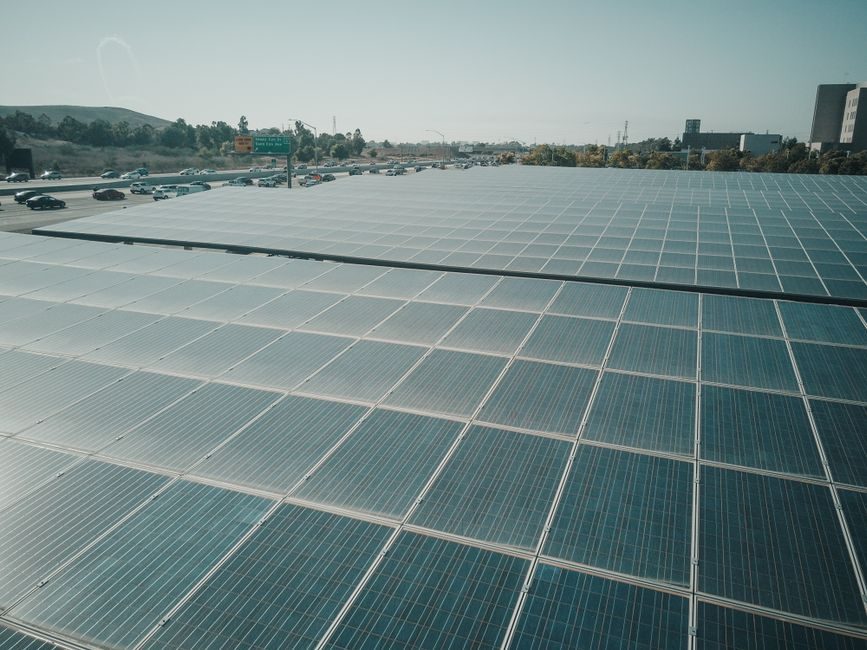
Solar cover glass for photovoltaic modules in 2026 falls into two procurement lanes: low-iron patterned (rolled) tempered glass in the 2.0–4.0 mm range, and high-transmittance (>91.5%) AR-coated cover glass for premium and BIPV modules. Made-in-China factory listings as of June 2026 show wholesale and OEM solar cover glass still concentrated in Chinese furnaces, with the Made-in-China Metallurgy-Mineral-Energy catalog indexing factory-direct pricing tiers [S4].
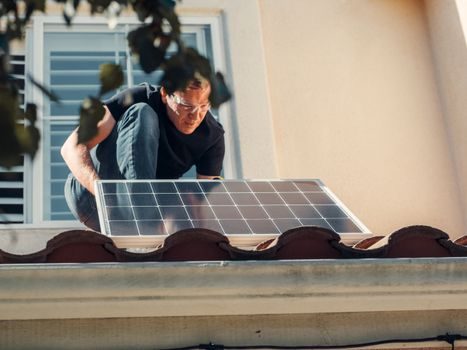
Downstream, the U.S. installer market in 2026 is shaped by contractors like Universal Solar Direct — advertising 10,000+ residential and commercial installations, $0-down financing, 25-year production warranties, and certified Tesla Powerwall bundling [S2]. The installer layer is a useful proxy for which module suppliers (and therefore which cover glass streams) are pulling volume in 2026 [S2].
What "solar glass" actually means in 2026 spec sheets
Front cover glass for c-Si modules is almost universally low-iron (Fe2O3 < 200 ppm) soda-lime float or rolled patterned glass, tempered to EN 12150 / EN 1863 or the equivalent ASTM C1048 surface-compression spec. Patterned (pyramid/matte) front surfaces are specified to boost light trapping, with anti-reflective (AR) porous-SiO2 or sol-gel coatings pushing transmittance from roughly 91.0% to 91.5%+ [S4].
Thickness gates the application: 3.2 mm is the de-facto standard for 60/72-cell mono-PERC and n-type TOPCon modules, 2.0 mm is the trend for lightweight rooftop and shingled-cell designs, and 4.0 mm remains the default for utility-scale bifacial-glass-glass frameless laminates. Back glass in glass-glass modules is typically 2.0–2.5 mm heat-strengthened (not fully tempered) for walkability and 30-year weathering. Wired optical-glass feedstock is NOT a substitute here — the roll-to-roll tempering line, not the optics grade, is the binding spec [S4].
Tier-1 vs. Tier-2 cover glass suppliers in 2026
Tier-1 cover glass makers in 2026 (Xinyi Solar, Flat Solar Glass, AVIC, CSG, and the Qibin / Dongfang groups in China, plus the in-house lines attached to LONGi, JinkoSolar, JA Solar, Trina) supply the bulk of the world's utility-grade cover glass. Their value proposition: in-house low-iron melt, full tempering lines, and the ability to deliver 2.0/3.2/4.0 mm with controlled surface roughness (Ra typically 0.5–1.5 µm) and EN 12150-1 compliant fragmentation per the IEC 61215 mechanical-load envelope [S4].
For U.S. and EU buyers, the trade-off is the Section 201 / AD-CVD anti-dumping overlay on Chinese solar imports, which has forced several Tier-2 routes through Malaysia, Vietnam, and Laos for duty mitigation — the same factor that shaped the 2026 solar inverter supply chain tier structure [S4].
Specs that matter when you compare solar glass quotes
A pragmatic 2026 comparison:
Spec Tier-1 3.2 mm AR Tier-2 3.2 mm AR BIPV 2.0 mm AR<br>Transmittance (380–1100 nm) 91.5–92.0% 90.8–91.6% 91.0–91.5%<br>Compression (MPa) ≥90 ≥85 ≥90<br>Cost index (FOB China, 3.2 mm) 100 82–92 120–140 (BIPV premium)<br>Lead time (factory-direct) 25–40 days 35–55 days 45–75 days
All four tiers pass the same IEC 61215 mechanical and IEC 61730 safety gates; the gap is in transmittance consistency, lot traceability, and the warranty wrapper. For rooftop contractors like Universal Solar Direct, the binding constraint is module-level warranty pass-through (25-year production), not the cover-glass spec alone — so they bundle Tier-1 modules by default [S2][S4].
Where solar glass is heading through 2026–2027
Three trackable signals define the next 12 months: (1) 2.0 mm thin-glass capacity additions at Xinyi/Flat — directly tied to the lightweight rooftop segment that U.S. installers are pushing in 2026 [S2]; (2) perovskite-silicon tandem compatibility, where cover glass must be paired with UV-stable encapsulant stacks (POE/EVA), driving demand for TCO-free AR coatings; and (3) the glass-fiber-style consolidation in Chinese float furnaces, where 3–4 major groups now control roughly 60% of the low-iron pattern-glass line — a structural concentration that supports price floors even as AD-CVD duty regimes shift [S4].
For procurement teams writing 2026 RFQs, the realistic baseline is: spec EN 12150-1 tempered 3.2 mm low-iron AR, IEC 61215 load, IEC 61730 Class II impact, transmittance ≥91.5%, with a 25-year power-warranty pass-through from the module vendor. Anything materially cheaper should be treated as Tier-2 with a documented transmittance / fragmentation certificate per lot.
Track the next quarter on: (a) Xinyi Solar's H2 2026 2.0 mm capacity ramp announcements, (b) any revision of the U.S. Section 201 tariff exclusions affecting Chinese cover-glass imports, and (c) published transmittance retention curves after 25-year IEC 61215 accelerated-stress testing from at least one Tier-1 supplier — that data is the single most-cited spec gate for glass-glass utility modules in 2026 [S4].
For component-level specifications, see sight glass.