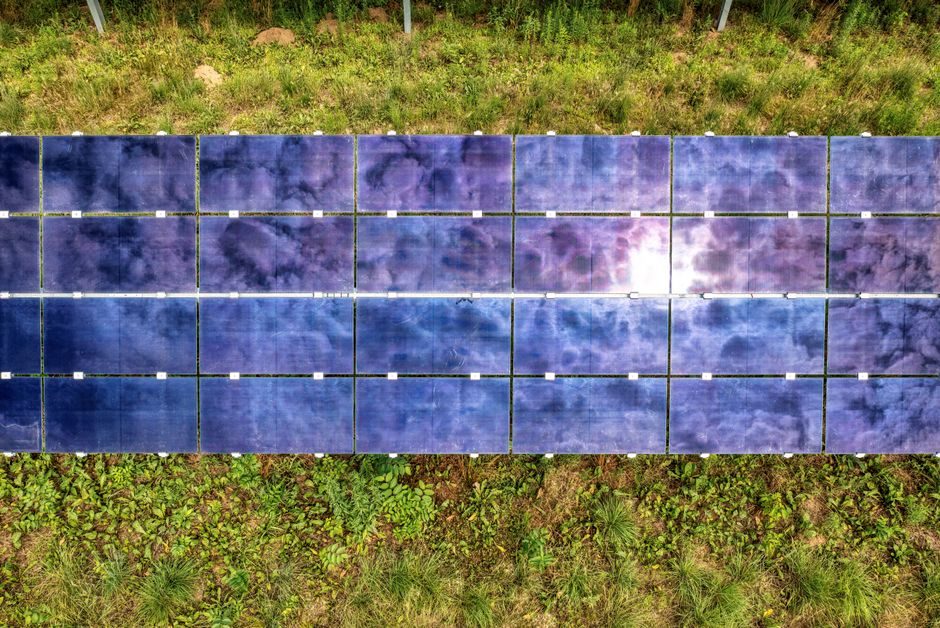
Multicrystalline cell FOB quotes on Made-in-China cluster at US$0.16/W (100,000 W MOQ) and US$0.25/W (1 W MOQ) as of 2026-06-05, both carrying a stated 25-year warranty, ISO/CE/TUV/Inmetro certification, and Jiangsu or Anhui manufacture [S1].
A 2026-06-10 mobile-panel listing prices a 100 W flexible mono PERC foldable module at US$116.00–130.00 per piece (1-piece MOQ) from a Guangdong audited supplier, with USB-style phone-charging 20 W panels listed in the same category [S4]. The Business Research Company's Solar Energy Market Report 2026 covers Solar Cell Panel, Solar Cell Paste, and Solar Silicon Wafer segments across mono-crystalline, poly-crystalline, and thin-film panels over 150 pages for US$4,490 [S5].
Multicrystalline vs Mono PERC: FOB Spread on Sourcing Portals
Multicrystalline cells on Made-in-China list a low of US$0.16/W at 100,000 W MOQ and a high of US$0.25/W at 1 W MOQ, both 25-year warranty and 72-cell industrial-grade configurations [S1]. The 157×157 mm a-grade format appears as the common wafer dimension in this category, aligned with the legacy multi supply chain that dominated 2018–2021 fabs [S1].
For comparison, the same Made-in-China portal lists a 100 W flexible mono PERC mobile panel at US$116.00–130.00 per piece (1-piece MOQ) from Shenzhen TopSuny Solar Energy, Guangdong, with 20 W portable phone-charging panels in the same listing cluster [S4]. At a normalized $/W, mono PERC mobile modules run an order of magnitude above multicrystalline cells because of the foldable substrate, micro-inverter integration, and retail packaging overhead, not because of cell efficiency alone.
Technology Stack: Mono, Poly, Thin-Film and PERC Lines
Three solar cell technologies anchor the 2026 sourcing menu: mono-crystalline (including PERC and TOPCon derivatives), poly-crystalline, and thin-film [S5]. The 2026 Solar Energy Market Report groups them under photovoltaic systems, with concentrated solar power (CSP) treated as a separate technology family rather than a cell type [S5].
Thin-film remains a distinct track, with the 2014 Research and Markets report listing 23 manufacturers including First Solar, Solar Frontier, Anwell, Hanergy, Kaneka Solartech, Schott Solar Thin Film, and United Solar Ovonic, structured around 323 tables covering capacity, cost, and value chain [S3]. That 2014 baseline still maps to current thin-film vendor rosters in 2026, though consolidation and Asian fab migration have reshuffled capacity since [S3]. CdTe and CIGS deposition lines stage flow meter controlled precursor gas delivery upstream of the TCO sputtering step. Multicrystalline cells dominate the entry-level industrial quote tier; mono PERC and N-type TOPCon dominate the higher-efficiency residential and C&I modules; thin-film holds a utility-scale CdTe and CIGS niche [S1][S4][S5].
Application Segments: Residential, Industrial, and Mobile
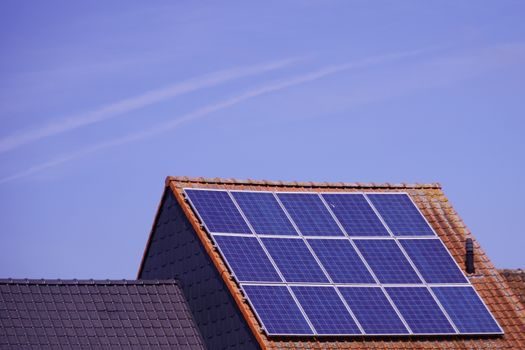
Made-in-China suppliers segment the cell market into Light Industry (consumer-grade single-cell units) and Industrial (72-cell panels) at the same time, with both tiers shipping 25-year warranty terms [S1]. The mobile solar cell category adds a third axis, foldable outdoor panels in 20 W and 100 W sizes with built-in micro-inverters and direct phone-charge interfaces [S4].
Application coverage in the 2026 Solar Energy Market Report spans Residential, Commercial, and Industrial end-uses, with Solar Silicon Wafer, Solar Cell Paste, and Solar Cell Panel mapped as upstream-to-downstream product layers [S5]. The report's panel-type axis explicitly names Mono-Crystalline, Thin Film, and Poly-Crystalline, with Photovoltaic Systems and Concentrated Solar Power Systems as the parallel technology split [S5].
Selection Criteria: Wattage, Cell Count, Warranty, Certification
Four spec gates dominate Made-in-China sourcing decisions: FOB price per watt, cell count (1 for consumer, 72 for industrial), warranty length, and certification stack [S1]. Industrial multicrystalline quotes on the portal run 25-year warranty with ISO 9001, ISO 14001, and OHSAS 18001 from Anhui Chinaland Solar Energy at US$0.25/W [S1]. A second Jiangsu listing adds CB and CE certification to the same ISO 9001/14001 base at US$0.16/W for 100,000 W MOQ [S1].
Mobile mono PERC panels add micro-inverter integration and IP-rated folding substrates as secondary gates, with US$116.00–130.00 per 100 W piece and Shenzhen TopSuny as the audited Guangdong supplier [S4]. Light-industry 1-cell SKUs trade wattage for portability and warranty, while 72-cell industrial SKUs trade portability for $/W scale [S1][S4].
Standards and Certification Anchors
Solar cell certifications that appear on sourcing portals include ISO 9001 (quality), ISO 14001 (environmental), OHSAS 18001 (occupational health), CB (IECEE scheme), CE (EU conformity), TUV (German third-party), and Inmetro (Brazil) [S1]. The 25-year warranty term is a market convention for both mono and multi industrial panels, not a regulatory mandate; it is offered as an after-sales service term on the Made-in-China listings [S1].
Photovoltaic systems are governed at the system level by IEC 61215 (module design qualification), IEC 61730 (module safety), and UL 61730 (North America), with country-level grid codes layered on top. The IEC 61215 mechanical load test sequence relies on load cell instrumented rigs as part of the standard's verification procedure. These are the standard families a spec engineer cross-checks against any panel datasheet before PO release; the research material does not name a specific panel model that carries each standard, so engineers should verify the certificate number per shipment.
Cost Stack and Sourcing Pipeline
At US$0.16–0.25/W FOB for multi cells [S1] and US$1.16–1.30/W retail for finished mono PERC mobile panels [S4], the cell-to-module margin sits at roughly 6× to 8× at the consumer end, with industrial 72-cell modules closer to 1.5×–2×. The 2026 Solar Energy Market Report's US$4,490 price point for 150 pages of segmentation data positions the report as a procurement-planning input rather than a spot-price feed [S5]. Beyond the cell and module layers, BOS-side pressure sensor instrumentation for sealed junction-box integrity adds a small incremental line item to the engineer-side procurement checklist.
Trackable signals through 2026 H2: 25-year warranty terms holding on new listings on Made-in-China [S1]; mono PERC mobile panel pricing steady in the US$116–130 band per 100 W piece [S4]; and thin-film supplier rosters that still trace to the 2014 First Solar / Solar Frontier / Hanergy / Anwell cohort despite a decade of consolidation [S3]. The Solar Cell Market 2026 module pricing and TW pipeline coverage and Solar Inverter 2026 microinverter sourcing signals extend this into BOS pricing and inverter pairing decisions for engineers sizing a 2026 build.