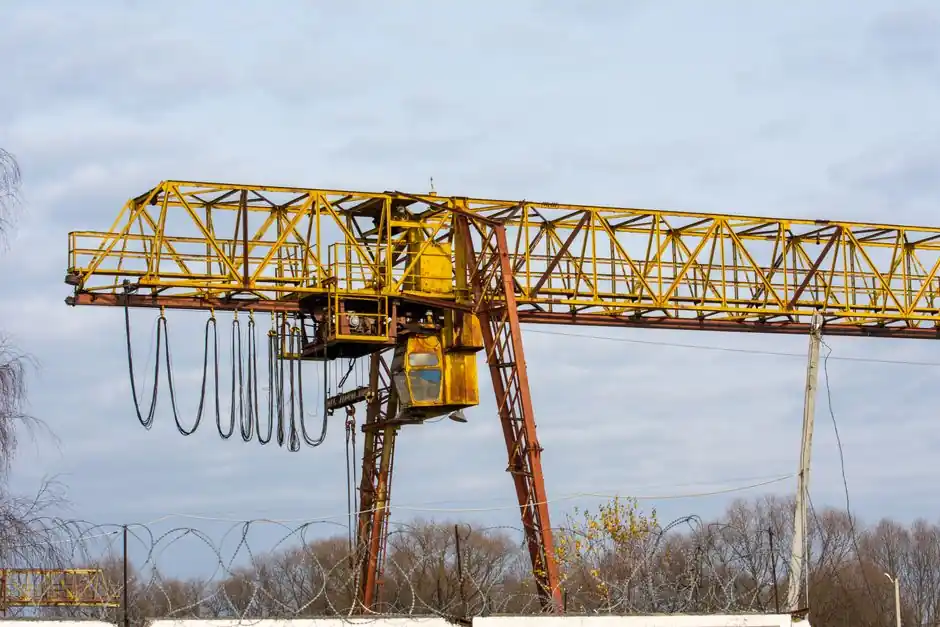
Tower crane structural design is governed by ISO 8686-3, which establishes the load and load-combination principles for machines in the ISO 4306-3 classification, applying ISO 8686-1 to the tower-crane family with specific additions for dynamic factors and out-of-service wind [S1][S2].
In Europe the same machine also has to clear EN 14439, the harmonised safety standard that pulls in EN ISO 12100 for residual hazards and adds the tower-specific structural, electrical, and control-system requirements [S7]. The practical effect is that a European-delivered machine is engineered against ISO 8686-3 for the loads and EN 14439 for the safety case, with EN 13001 sitting one level above as the general crane structural code [S8][S9].
How ISO 8686-3 partitions the load cases
ISO 8686-3:2018 sets the load and load-combination design principles for tower cranes, factoring in dynamic multipliers, out-of-service wind actions, and stability cases that operate in parallel with the steel supporting structure rules in the wider ISO/TC 96 family [S1][S5]. The base reference is ISO 8686-1, which carries the general load-definition and combination logic; ISO 8686-3 is the tower-specific overlay, not a standalone code [S2].
For any rated chart line, the engineer is expected to verify three concurrent cases: hoisting with the rated load plus dynamic factor, slewing-induced horizontal loads transferred through the jib, and out-of-service wind on the bare structure. The first generation of this part, ISO 8686-3:2018, was opened for revision in the ISO 8686-3.2 draft cycle, indicating the technical committee is still actively tightening the load-combination text [S2]. Designers buying or auditing a new chart should request the manufacturer's load-case summary, not just the capacity table, because the dynamic factor the OEM assumes is what differentiates two seemingly identical 12 t at 60 m ratings.
EN 14439: the European safety wrapper
EN 14439 is the harmonised European standard for tower-crane safety, covering design, installation, testing, and the information the manufacturer must supply, and it explicitly defers residual hazard analysis to EN ISO 12100 for issues not significant enough to be addressed inside EN 14439 itself [S7].
Where ISO 8686-3 tells the designer which load combinations to size members against, EN 14439 tells the manufacturer which safety devices, control architecture, and documentation must ship with the machine. Anti-two-block, slewing limits, overload moment cut-outs, anemometer integration, and climb/jacking interlocks are the items that the standard forces into the build, and they have to be type-tested as part of the EN 14439 compliance file [S7]. Buyers who accept an EN 14439 machine on a US job still have to overlay the local installation code, because EN 14439 does not satisfy OSHA 1926.1435 on its own.
The regional overlay: ASME B30.3 and OSHA 1926.1435
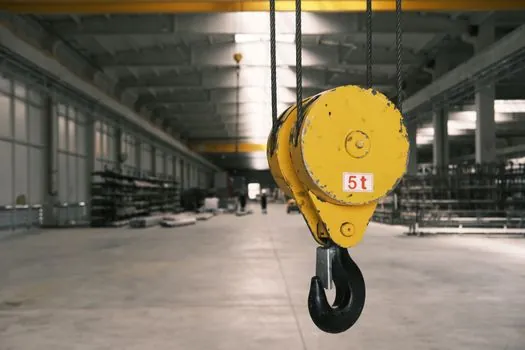
In the United States, the governing in-service standard is ASME B30.3 (Construction and Industrial Cranes, with Tower Cranes covered as a sub-category), and states such as Washington require every tower crane in use to meet the design, construction, installation, testing, maintenance, inspection, and operation requirements prescribed by the manufacturer, defaulting to ASME B30.3-2019 where the OEM manual is missing [S4].
OSHA 1926.1435 is the installation-and-use overlay: it forces the foundations and structural supports to be designed by the manufacturer or a registered professional engineer, mandates a 1:500 plumb tolerance on the mast (about 1 inch in 40 feet) unless the manufacturer tightens it, requires an anti-two-block device, and controls wind-speed limits during erection, climbing, and dismantling by deferring to the manufacturer or, in their absence, to a qualified person [S3][S4]. Washington's WAC 296-155-53900 mirrors those obligations at the state level, adds stop-work authority language for every employee on site, and requires inspection by an accredited certifier before any assembly, after assembly, and after each reconfiguration [S4].
Cross-walk of the four standards on a single machine
A single tower crane sold into the EU typically carries four compliance threads in parallel, and they are not interchangeable. ISO 8686-3 is the loads code, EN 13001 is the general structural code that EN 14439 calls up for member verification, EN 14439 is the safety-and-documentation code, and EN 60204-32 covers electrical equipment of hoisting machines, all referenced together in the European compliance file [S8][S9].
The decision rule on a project is straightforward: structural sizing lives under ISO 8686-3, residual hazard analysis under EN ISO 12100, machine safety devices and information supplied with the crane under EN 14439, and on-site assembly, climbing, and dismantling under OSHA 1926.1435 (or the WAC equivalent in Washington) [S3][S4][S7][S8]. A tower crane specification that names only one of those four is incomplete, and the procurement document should call all four out by year of issue. A closely related engineering trade-off, structural versus stability limits, is treated in the same load-chart family for truck cranes and the framework carries across, as discussed in Structural vs Stability Limits in Truck Crane Load Charts.
Plumb, wind, and stability: the field numbers that actually matter

Two numbers in OSHA 1926.1435 and WAC 296-155-53900 are non-negotiable on every US job: 1:500 mast plumb tolerance and a manufacturer- or qualified-person-set wind-speed ceiling for erection, climbing, and operation [S3][S4]. Backward stability must be confirmed before swinging self-erecting cranes or any crane on traveling or static undercarriages, and the A/D director has to be the person who signs off on it [S3].
Out-of-service wind is the case that drives the foundation size, not the in-service chart, because the crane sits unoccupied with a large wind sail area and no load to hold it down; ISO 8686-3 lists this as a separate load combination and the foundation reaction is what comes out of it [S1][S2]. The slewing-ring and jib fatigue case is a third distinct combination, and on machines with high daily cycle counts the fatigue spectrum, not the static capacity, ends up sizing the jib chord. For a related perspective on how cycle loading and spectrum factor drive bearing selection on rotating equipment, see TDO vs TDI Double Row Tapered Roller Bearings; the same load-spectrum thinking from ISO/TC 96's jib-crane classification rules applies to tower-crane slewing bearings [S5].
Anti-two-block, anti-collision, and the safety-device stack
OSHA 1926.1435 mandates a device that automatically prevents damage from contact between the load block, overhaul ball, or similar component with the boom tip or jib, and on multi-crane sites the cranes must be located such that no crane can come into contact with the structure of another, although they are permitted to pass over one another [S3]. Washington's rule layers an accredited-certifier inspection on top, before assembly, after assembly, and after every reconfiguration, before the crane can return to service [S4].
EN 14439 covers the same device stack from the European side, with overload moment limiters, slewing range limiters, hoisting limiters, and anemometer-triggered out-of-service stow procedures, all of which must be type-tested as part of the machine's safety file [S7]. For process plants that share the same control-room architecture, the modular I/O and field-power distribution hardware pattern used elsewhere on the site is documented in Modular Remote I/O Field Power and Potential Distribution Terminals: 2026 Spec Field Notes, and the same EMC and cabinet-spacing rules used for a signal tower light stack apply when the crane's status indicator is mounted in the cab.
What to verify before signing the chart
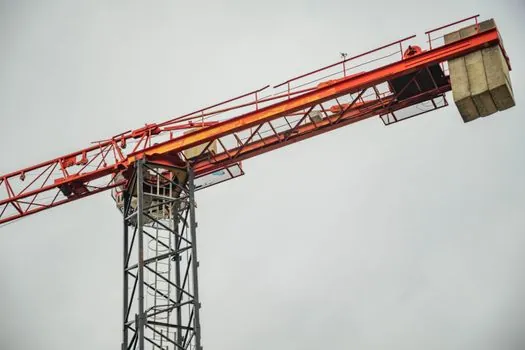
Three checks should land on the engineer's desk before any rated-capacity chart is accepted. First, request the manufacturer's load-case summary, the dynamic factor, the out-of-service wind pressure, and the stability case; without those three numbers, the chart is a sales document, not a structural document [S1][S2]. Second, confirm the regional overlay: EN 14439 in the EU, ASME B30.3-2019 plus OSHA 1926.1435 in the US, with state-level add-ons like WAC 296-155-53900 in Washington [S3][S4][S7]. Third, confirm the site-specific items: foundation reaction, mast plumb tolerance no worse than 1:500, anti-two-block test certificate, and an accredited-certifier inspection record on file [S3][S4].
Trackable next signals: monitor the ISO 8686-3.2 revision cycle for changes to dynamic-factor tables and out-of-service wind cases [S2], watch for any new state-level adoption of stop-work-authority language mirroring WAC 296-155-53900 [S4], and re-verify that EN 14439 is still the cited harmonised standard under the Machinery Regulation in force, since the EU regulatory frame around EN 14439 has shifted in the past several years and the citation in the declaration of conformity is the only thing that tells the buyer which generation of the standard the machine was type-tested against [S7][S8].
Component reference pages worth checking: tower crane, and electronic load.