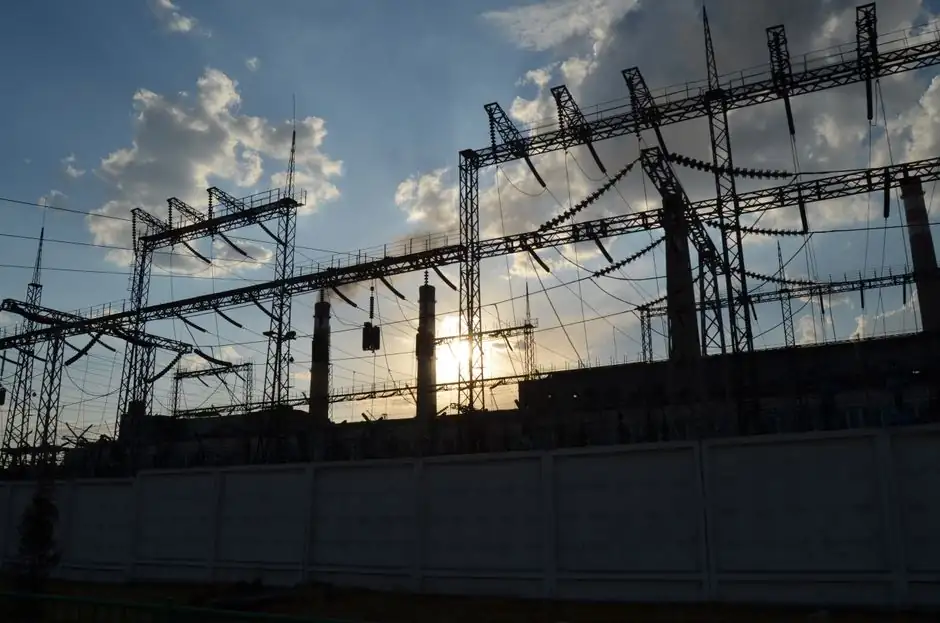
The distribution-transformer manufacturer roster published by industry research covers at least 22 OEMs, with ABB, Siemens, Schneider Electric, General Electric, Eaton, Crompton Greaves, and Hitachi Ltd. appearing on every shortlist, alongside regional players such as Hyosung, SGB-Smit, and Hammond Power Solutions [S5].
By product family, the market splits across dry-type transformer and liquid-immersed power transformer lines, with mounting variants of pad, pole, and underground vault on the distribution side [S5].
Distribution-Transformer OEM Stack: Who the Shortlists Name
The Global Distribution Transformer report lists 22 manufacturers by name: ABB Ltd., Crompton Greaves Ltd., Eaton Corporation PLC, General Electric, Siemens AG, Ormazabal, Transformers and Rectifiers India Limited, SGB-Smit Group, Wilson Power Solutions, Lemi Trafo JSC, Hyosung Corporation, Celme S.R.L, Brush Electrical Machines Ltd., Emerson Electric Co., Eremu SA, Hammond Power Solutions Inc., Hitachi Ltd., Kirloskar Electric Company Limited, Schneider Electric, Vantran Industries Inc., and Wenzhou Rockwell Transformer Co. Ltd. [S5]. The same report splits the product into dry and liquid-immersed families, with pad, pole, and underground vault as the three application buckets [S5].
Hitachi, ABB, Siemens, and Schneider Electric also surface as registered OEM exhibitors on the Made-in-China supplier directory; Hangzhou Qiantang River Electric Group Co. Ltd. is a Zhejiang-based transformer and LED lighting manufacturer with an export-oriented trading arm, while Hebei-based Wuqiang County Xingda Transformer Parts Company Limited is registered to ISO 9001, ISO 14001, and ISO 20000 certifications with a 1992 founding date and lists transformer bushings and transformer parts as its core line [S1][S3]. On the Indian side, Trutech Products reports operating since 1997 out of Pune and Mumbai as a transformer manufacturer, supplier, and exporter [S9].
Materials Side: Where the Concentration Actually Sits
Concentration in the transformer value chain shows up earlier, at the core materials stage, rather than at the assembled unit level. The iron-based nanocrystalline ribbon market is named with a single-digit vendor list: Hitachi Metal, Advanced Technology, Qingdao Yunlu, Junhua Technology, Henan Zhongyue, Vikarsh, CISRI, NanoAmor, China Amorphous Technology, Londerful New Material, Orient Group, and VAC, with Hitachi Metal named as the leader at about 66.23% revenue market share in 2017 [S2].
Iron-based nanocrystalline ribbon is a rapid-solidification iron alloy with small additions of Nb, Cu, Si, and B, heat-treated into 10 to 20 nanometre crystallites dispersed in an amorphous matrix, and it is specified as a 50 Hz to 100 kHz core material that can replace silicon steel, Permalloy, and ferrite in switch-mode supply cores, current transformer cores, ground-fault interrupter cores, common-mode chokes, and saturable reactors [S2]. The same report sizes the segment at 280 million US dollars in 2019 growing to 380 million US dollars by 2024, a 6.5% CAGR [S2].
Segment Comparison: Distribution vs Dry-Type vs Telecom vs Nanocrystalline
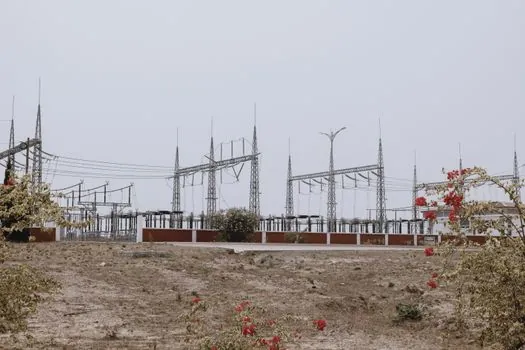
Four transformer-adjacent sub-markets behave like four different competitive games. The distribution-transformer market is the broadest vendor field at 22 named OEMs and is forecast to grow at roughly 7.5% CAGR over a five-year window to 2023 [S5]. The dry-type transformer market is driven by demand for fire-safe, eco-friendly units as an alternative to liquid-filled designs, with cost, weak grid investment, and no-load losses acting as restraining factors [S8]. Telecom transformers are described as an essential technology segment in carrier equipment, with the same five-region global segmentation but a much smaller vendor count [S7].
Against those three assembly segments, the iron-based nanocrystalline ribbon market is concentrated, with named players including Hitachi, Henan Zhongyue, Junhua Technology, Londerful New Material, Advanced Technology & Materials, Qingdao Yunlu Advanced Material Technology, Orient Group, and VAC, among others [S2]. On selection criteria, distribution OEMs compete on kVA rating, mounting form factor, and IEC short-circuit withstand; dry-type units compete on cast-resin vs vacuum-pressure-impregnated winding, class F or H insulation, and indoor fire-load restrictions; nanocrystalline ribbon competes on ribbon thickness, annealing type (vertical, transverse, or ordinary), and core-loss figure at target frequency [S2][S8].
Application Buckets and How the Same Vendor Plays in Each
On the application side, distribution transformers split into pad, pole, and underground vault, with pad-mount units the expected growth driver thanks to ground distribution in conventional loads and renewable energy interconnections [S5]. The same OEM names reappear across related lists: ABB, Siemens, Schneider, Eaton, and General Electric are on the distribution roster, while Hitachi shows up on both the distribution side and the nanocrystalline ribbon side, giving it a vertical footprint from core material to finished transformer [S2][S5].
Smaller regional players tend to focus on a single application bucket: Wenzhou Rockwell Transformer and Lemi Trafo JSC are listed in the distribution segment [S5], while Hangzhou Qiantang River Electric and Trutech Products position themselves as transformer manufacturers serving export and domestic industrial buyers respectively [S3][S9]. PCB and instrument transformer work is dominated by a different cluster in Zhejiang, with split-core current transformers, Rogowski coils, shunt resistors, and latching relays as the typical product mix on that side [S4].
Sourcing Notes, Standards, and Where Caution Pays

For a sourcing team, the practical read is that the finished-unit transformer market is structurally fragmented, which gives buyers leverage on lead time and price but means quality variation is high, so IEC-aligned short-circuit and temperature-rise test reports from each shortlisted OEM are non-negotiable. On the materials side, the 50 Hz to 100 kHz suitability band for iron-based nanocrystalline ribbon cores should be confirmed against the actual switching frequency of the design rather than read off a generic datasheet [S2].
On the standards side, dry-type transformer buyers typically anchor on IEC 60076-11 for dry-type units and on IEC 60076 for general power transformer short-circuit and temperature-rise behaviour, with regional overlays for North America and the EU. For any related electromechanical BOM, the flow meter and industrial valve spec pages cover adjacent instrumentation selection criteria.
Trackable next signals include any 2026 H2 update to the distribution-transformer vendor shortlist, a fresh revenue-share print on the iron-based nanocrystalline ribbon market, and any new entry from Indian or Southeast Asian OEMs on cross-border B2B directories [S1][S5][S9]. For related supply-stack reads, the IGBT market share by manufacturer 2026 stack and the power semiconductor 2026 SiC and GaN competitive map cover the upstream semiconductor side of the same grid-electrification build-out.