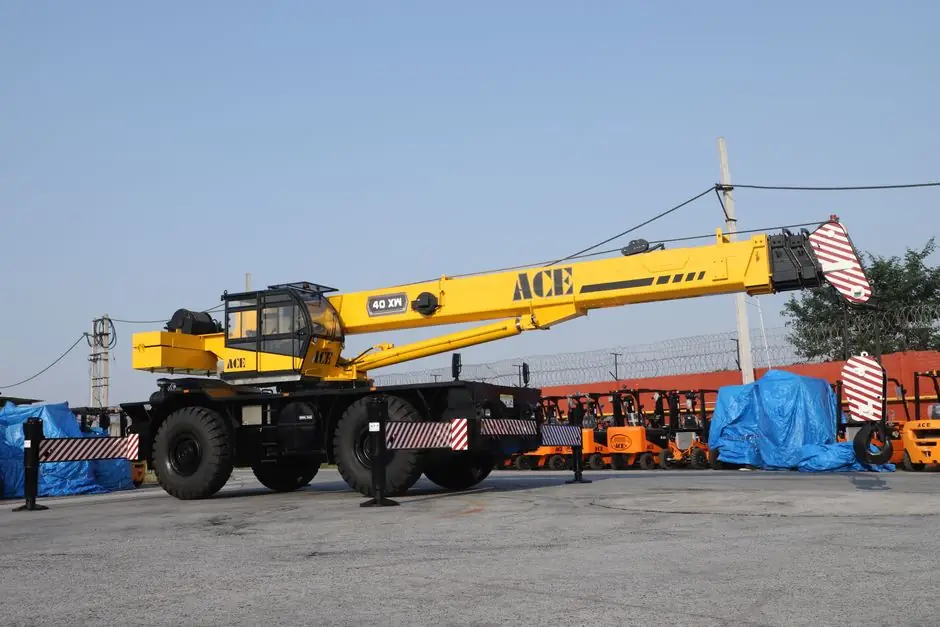
Truck-mounted crane fatalities average 41 per year in the US, with crane incidents accounting for roughly one-third of construction-site deaths and 264 reported injuries annually between 2011 and 2022, per US Bureau of Labor Statistics data summarised in April 2026 industry guidance [S2].
A truck crane combines a road-going chassis with a hydraulic boom, outriggers, and a body-mounted load platform, which is why its safety envelope must cover both the vehicle and the lifting function. Discipline at four points (pre-trip inspection, jobsite setup, lift planning, and operator certification) drives the bulk of the incident reduction, with monthly body maintenance flagged as non-negotiable [S3].
Pre-Trip and Monthly Maintenance Discipline
Pre-trip safety checks must be completed every time the unit leaves the yard, while monthly maintenance of truck crane bodies should be treated as mandatory rather than optional, because a single failing support or outrigger pad can convert a routine lift into a tip-over [S3].
The mechanical failure category on crane incident lists includes wire rope, hydraulic systems, brakes, and safety devices, all of which should be checked on a fixed interval rather than only when a fault alarm appears [S2]. The practical split is daily walk-around (visible defects, fluid leaks, tyre and rim condition, boom pin security) versus a 30-day written inspection of the load-bearing structure, hydraulic hoses, outrigger pads, and the truck crane body mounting bolts [S3].
Site Setup: Ground, Outriggers, and Overhead Clearance
Outriggers must bear on ground that is solid enough to prevent settlement under load, because tip-overs frequently trace back to unstable ground or outrigger pads that were not properly supported before the lift began [S2][S3].
Before any boom elevation, the operator must know the crane tip height against any overhead power lines, and clearances for typical distribution conductors in the 4–34.5 kV range sit several metres above grade, so a "quick lift" under a live circuit is the most common fatal error on arrival [S3]. The setup pass should also confirm that the operator's sight line to the load and landing zone is unobstructed; if the truck cannot be repositioned to a clean view, the lift is the wrong lift, not the truck position [S3].
Selecting the Crane Class to the Lift
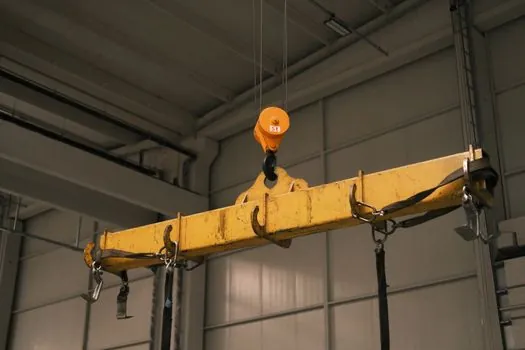
Picking the wrong crane for the terrain, radius, or load creates stability issues and forces the unit to operate too close to its rated capacity, which is the upstream cause of most overloading events [S2].
For mobile and truck-mounted units the common classes and their fit are: crawler crane, which spreads load via tracks on soft ground; rough-terrain crane, built for uneven job sites and steep grades; and all-terrain crane, which travels on roads and operates across varied surfaces [S2]. A truck-mounted crane typically fills the role of a fast-mobilising unit for short-radius lifts at distributed sites, and the selection question is not "which brand" but "is the rated capacity at the working radius at least the load weight divided by an appropriate safety factor, on this ground, with these outriggers extended."
Lift Planning: Load Weight, Sling, and Hand Signals
Lift variables that change job-to-job include load weight, lift angle, overhead obstructions such as bridges or conductors, and ground conditions, so the lift plan must be rebuilt for every shift rather than copied from the previous job [S3].
Overloading is triggered by incorrect load weight, a radius that drifts outward during the lift, or a crane configuration that does not match the plan, and it can end in structural failure or tip-over [S2]. Dropped loads trace to damaged rigging or wrong hitch selection, which is why slings, shackles, and hitch points must be inspected for cuts, deformation, and rated tag legibility before each lift. Operators should avoid abrupt acceleration or braking to control load sway, and a fixed set of standardised hand signals (or a qualified rigger on radio) is the second safety layer behind the load chart [S1].
Operator Qualification: NCCCO, ANSI, and OSHA
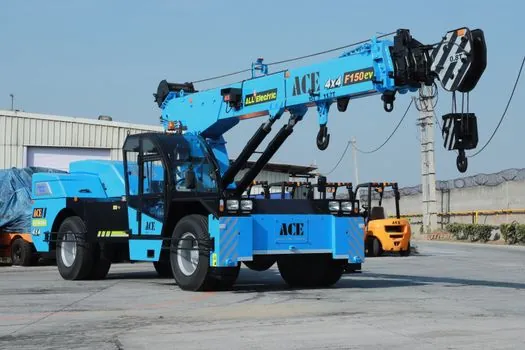
Operator qualification is a legal floor, not a courtesy: the National Commission for Certification of Crane Operators (NCCCO) trains and certifies candidates, and passing the program demonstrates compliance with the applicable ANSI and OSHA crane standards [S3].
OSHA 29 CFR 1926 Subpart CC is the US federal rule that governs crane operator certification, including the requirement that operators be qualified on the specific crane type they run, which rules out the common shortcut of moving an operator between a telescoping boom truck crane and a lattice-boom crawler without a separate evaluation. The qualification must cover the truck crane body as well, since the body, stabiliser geometry, and load bed configuration change the machine's behaviour at the rated capacity boundary. Construction sites more broadly should align their crane fleet with the truck-mounted crane safety envelope, which integrates the chassis, outrigger spread, and load chart into a single operating limit.
Comparison: Failure Modes vs the Control That Stops Them
The main incident classes recorded across US construction sites are overloading, power-line contact, dropped loads, tip-overs, mechanical failure, and blind-spot strikes, and each maps to a specific, named control rather than to a generic "be careful" rule [S2].
Overloading is controlled by load-chart verification at the planned radius; power-line contact is controlled by a measured clearance check before boom elevation; dropped loads are controlled by rigging inspection and hitch selection; tip-overs are controlled by outrigger pad inspection and ground-bearing verification; mechanical failure is controlled by interval-based inspection of rope, hydraulics, brakes, and safety devices; and blind-spot strikes are controlled by repositioning the truck to keep the load path in the operator's line of sight [S2][S3]. The construction machinery and equipment frame applies across these six modes: pre-lift, in-lift, and post-lift checks each map to one or more of the failure categories.
Limitations and Common Misreadings
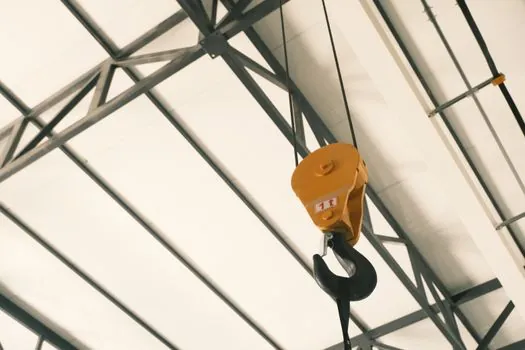
Most truck-crane incidents are not exotic failures: they repeat the same six patterns, and a procedure that ignores any one of them leaves the operator exposed regardless of how the other five are handled [S2].
Rated capacity on the nameplate is for the unit configured exactly as shipped, on level ground, with all outriggers extended to the chart-mandated spread; any deviation (slope, partial outrigger, picker mode with retracted jacks) requires a new chart read. Operators also tend to under-rate dynamic loads: a "static" lift that is swung, braked, or slewed mid-air can impose 1.2–1.5x the static load on the boom, which is why the no-abrupt-input rule is structural, not stylistic [S1]. A dump truck or a reach truck in the same fleet may share the chassis, but the lifting-rule layer is specific to the crane body and does not transfer.
Trackable signals for the next planning cycle: NCCCO certification renewal statistics for the truck-mounted crane class, OSHA 29 CFR 1926 Subpart CC enforcement citations on outrigger setup, and any update to the applicable ANSI B30.5 mobile and locomotive crane standard. For a related look at how lifting equipment fits into a broader fleet selection process, the stacker crane selection spec map walks a similar discipline from the warehouse side.