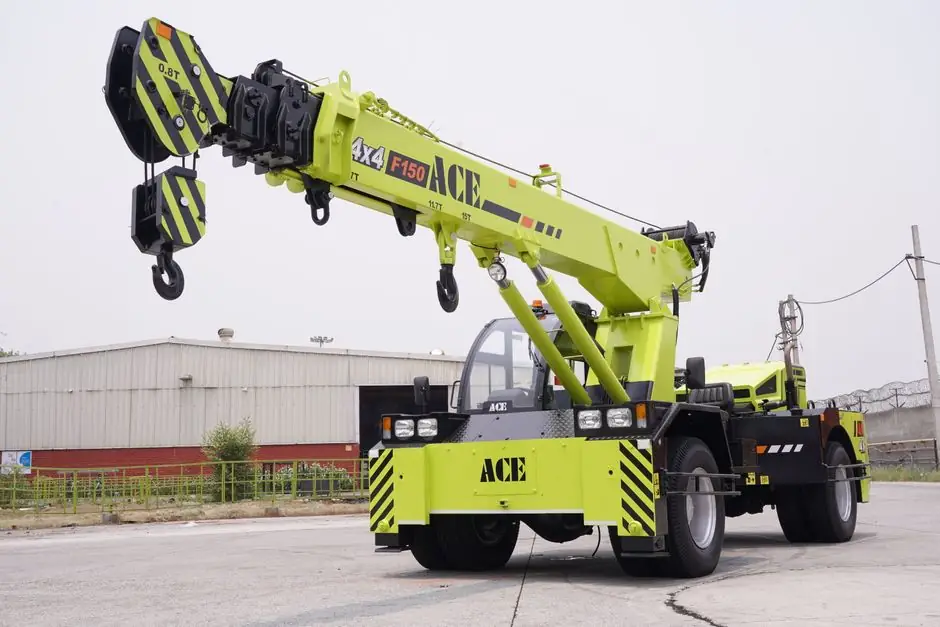
On a truck-mounted crane, the winch sets the working envelope: rated single-line pull defines the maximum first-layer lift, while line speed at that pull defines how fast the hook cycles.
Selection reduces to four coupled parameters: rated single-line pull, single-line speed, gearbox reduction ratio, and drum capacity (rope diameter × length) [S6].
Winch, Hoist, and Crane Winch: Terminology That Drives Specs
The three terms are not interchangeable, and conflating them produces wrong-sized hardware: a standalone winch is designed for intermittent traction, while a crane winch is a vertical-lift mechanism with a spring-applied fail-safe brake, M3–M8 continuous-duty rating, and a gearbox that sets the drum's rotational speed against the motor's rotation [S1].
Crane winch capacity is broadly 1–500+ t, versus 0.25–100 t for a chain or wire hoist and 1–50 t pull force for a standalone winch [S1]. Brake logic is the hard divider: a fail-safe mechanical brake that locks on power loss is a non-negotiable design requirement for any hoist used in overhead lifting, and it is the spec item most often skimmed on truck-mounted jib cranes in the sub-2 t class.
Light-Duty Pickup Winch-Jib Units: What the Numbers Actually Look Like
The retail reference unit for pickup-bed jib cranes carries a 1100 lb (≈ 500 kg) lift rating through the boom, paired with a 12V electric winch rated at 3500 lb single-line pull, a 24.6 ft (7.5 m) wire rope, and an alloy steel hook; the arm adjusts to three lengths (3.61, 4.35, 5.09 ft) at three angles (0°, 20°, 40°) and rotates 360° on a 9.45-inch square bolt-down base in Q235 painted steel [S5]. The unit specifies a duty pattern of 10 minutes rest after 30 minutes of continuous work, a useful proxy for the M3–M5 class these consumer-grade hoists actually sit in.
Air-conditioner installation jibs on the same retail class drop to a 1200 lb (≈ 544 kg) load capacity on a manual hand winch with 50–60 ft of lift height, illustrating how line speed and operator effort are traded for cable length in low-cycle applications [S2].
Mid- and Heavy-Duty Truck Crane Winches: Used-Market Reference Points

Used truck-crane listings from 2013–era carriers consistently show STAHL ST2010 series hoists rated at 1000 kg (1 t) on single-line pull, paired with hydraulic drives sourced from the carrier PTO; a 2026 Machineseeker index of crane-winch inventory shows the same model designation recurring across Mercedes-Benz Arocs 4153 8×4 builds with Palfinger loader cranes, confirming 1 t is a common working point for utility truck cranes in European fleets [S3].
Capacity on truck-mounted loaders climbs sharply with multi-fall reeving: a 4-fall block halves line speed and roughly doubles line pull at the hook, which is why the truck-mounted crane spec sheet always lists both single-line pull and the maximum hook capacity at full reeving [S6].
Rope Speed, Gear Ratio, and the Speed-vs-Pull Trade
Line speed is the rate at which rope spools onto the drum, measured in feet or meters per minute, and it is the spec that most directly sets cycle time on a job site [S4]. The gearbox reduction ratio is the mechanical link: a higher ratio multiplies motor torque for heavy loads but cuts drum RPM, so heavier pulls come with slower lines, and the published curve is rarely linear across the full drum wrap because effective diameter grows as rope builds up on the drum [S1][S6].
Two practical consequences follow: (1) first-layer pull is the rated single-line pull and it is the only number to use for crane-class duty; (2) top layer speed can be 30–50% higher than first-layer speed on a planetary-drum winch, so cycle-time estimates must use the layer that matches the average working hook height, not the bare-drum number [S1][S6].
Selection Criteria: Matching the Winch to the Load Cycle
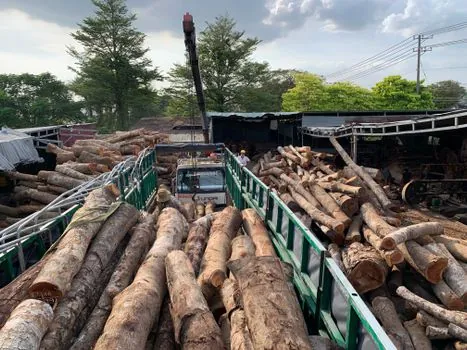
Four criteria gate selection on a truck-mounted application: (1) rated single-line pull at the working reeving, (2) line speed at the rated load, (3) drum capacity for the planned rope diameter and total lift height, and (4) duty class consistent with cycles per hour and average load factor [S6][S7].
Comparing the three main options against those criteria:
• Electric 12V pickup winch-jib: 1100–3500 lb pull, 3–6 m/min typical rope speed, intermittent duty, 24.6 ft drum; right for service trucks and one-off garage lifts, wrong for production cycles [S5].
• Hydraulic truck-crane hoist (e.g., STAHL ST2010 class): ~1 t single-line pull, 8–15 m/min typical line speed, M5–M6 duty on PTO hydraulic supply; right for utility and municipal fleets, marginal for high-cycle yard work [S3].
• Planetary hydraulic loader-crane winch with multi-fall reeving: 2–6 t hook capacity at 4-fall, 4–10 m/min line speed at full load, M6–M8 continuous duty; right for delivery, forestry, and recovery applications where the boom also feeds into the construction machinery and equipment duty envelope [S7].
Failure Modes and Common Sizing Mistakes
Three patterns account for most truck-mounted winch service calls: (1) undersized line pull that overheats the motor in the first three wraps because the operator is reeving through a snatch block the spec did not anticipate, (2) drum too short for the required rope, forcing two-part reeving on a hoist designed for single-part, and (3) fail-safe brake contamination that prevents full release on power-up, locking the load mid-cycle [S1][S6].
Buyer-side mistakes worth flagging: substituting a vehicle recovery winch (friction/dynamic brake) for a crane winch (spring-applied fail-safe brake) is the most common cost-driven error and it voids any overhead-lift safety case; pairing a high-speed planetary winch with a variable-speed drive on the hydraulic motor can recover usable line-speed range without changing the gearbox, but it requires the drive to be rated for the regenerative load on the lowering stroke.
Standards, Sourcing, and Trackable Signals
Two reference items to keep on file: the FEM 1.001 / ISO 4301 duty-class table (M3–M8) sets the cycle-load envelope the gearbox, motor, and brake must be rated against; the FEM 9.341 / ISO 12482 series covers wire-rope selection and drum-groove geometry for crane winches. Verify drum-flange ratio and rope-diameter match against the rope-maker's datasheet before commissioning, since undersized flanges are the most common field rejection on truck-crane rebuilds [S1][S6].
Two signals worth tracking through 2026: cross-reference the checking and testing apparatus on a used truck-crane purchase (load-cell pull test at first, mid, and full drum), and watch for the spread of planetary hydraulic winches on 12V truck platforms, which is closing the speed gap to PTO hydraulic units without the rework of a dedicated pump circuit.
Background reading: AC vs DC Stick Welding for Cast Iron: Selection, Rods, and Pitfalls.
