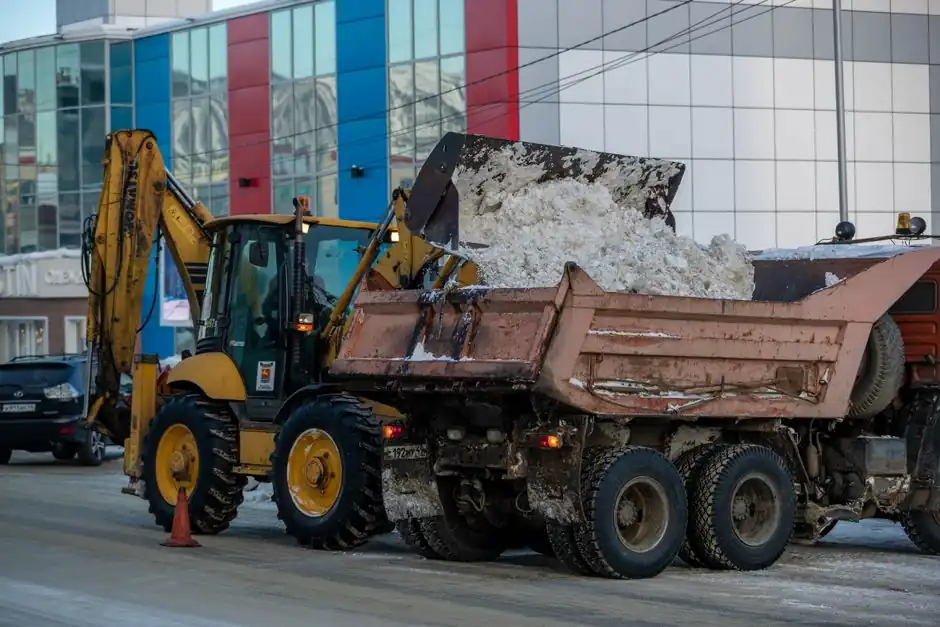
For tunnel excavation, the practical dump truck envelope sits between 5 t and 20 t payload, with overall width typically constrained to 2.3–2.55 m and overall height to 3.0–3.8 m to clear standard tunnel cross-sections [S3].
Selection is driven by three measurable inputs: tunnel width and clearance height, gradient of the access drive, and the muck volume per blast; matching these inputs to truck dimensions and powertrain is what separates a safe cycle from a stalled one [S2].
Payload Class Bands and Where Each Fits in a Tunnel
Industry guides split mining dump trucks into 5–10 t, 10–20 t, 20–40 t, and 40+ t bands; the 5–10 t class is the common fit for narrow tunnels, small cross-section drifts, and short adits, while 10–20 t units serve medium rail or road tunnels and general earthwork headings [S1].
For 20–40 t class units, the limiting factor is rarely payload and almost always tunnel width plus turn radius, because standard mining truck overall width sits at 2.3–2.55 m and overall length runs 7–11 m, which forces a turning diameter that most heading cross-sections cannot provide [S3]. As a frame of reference, documented Japanese tunnel mucking has used 20 t rigid dump trucks in a double-track road tunnel with an excavation width of about 10 m at the bottom and a 1,250 m drive from the portal to the face [S4].
Geometry Constraints: Width, Height, Wheelbase, and Dump-Box Volume
A 10 cm difference in truck width materially affects reversing into a muck pile in a confined heading, so width is the first hard gate before payload is even discussed [S3].
Height is the second gate, because excessive height increases rollover risk on uneven muck floors and limits passage under ventilation ducts, water lines, and steel sets; typical mining dump trucks fall into a 3.0–3.8 m height band [S3]. Wheelbase typically runs 3.2–4.5 m on standard models, and a short wheelbase is the safer pick when the work site has narrow entries, soft shoulders, or steep inclines, because it reduces the turning footprint at the cost of a smaller dump box [S3]. For a sense of scale on body volume, SANY's SYZ320C-8S(V) is rated at 20 m³, the SYZ432C-8LRBEVSD at 32 m³, and the SYZ438C-8S(V) at 38 m³, all of which sit above the practical tunnel envelope and are therefore candidates only for portal-to-disposal surface haulage on the same project [S3].
LHD vs Rigid Haul Truck in Heading Work
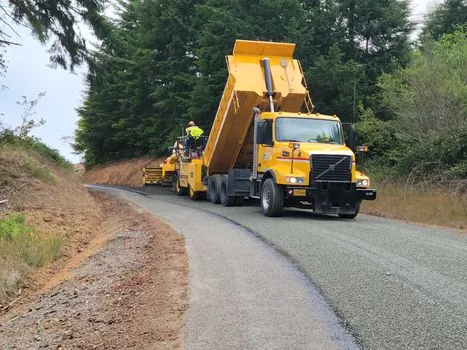
Load haul dump (LHD) trucks are designed to load, haul, and dump in a single machine, which is why they dominate headings where tunnel width, height, and sharp gradients rule out a conventional rear-dump truck plus loader combination [S2].
Compact LHDs are specified when the heading is narrow and the cycle is short, with the trade-off being smaller payload per pass and therefore more passes per blast; heavy-duty LHDs are specified for spacious haulage drives where per-trip payload matters more than turning radius [S2]. Rigid haul trucks, in contrast, are dominant on high-volume, well-maintained haul roads, while articulated dump trucks are the only realistic option for soft, steep, or low-bearing-pressure routes where a rigid frame would lose traction or crack [S6]. The honest engineering call is this: if the heading is below roughly 4.5 m of clearance and the gradient exceeds about 12–15%, a compact LHD is the right tool; if the drive is wide, well-vented, and the gradient is mild, a 10–20 t rigid dump truck generally moves more tonnes per shift [S2][S6].
Safety Constraints from Documented Tunnel Incidents
Documented incident data shows that pedestrian-truck interaction inside a tunnel is the dominant fatal mechanism, not truck failure: in a 2000 Miyagi-Prefecture road-tunnel case, a 20 t dump truck driver parked about 120 m from the face, walked back toward the face for steel-set assembly, and was run over by a second 20 t truck reversing toward the face about 65 m ahead [S4].
That case anchors three selection rules worth carrying into a spec. First, pedestrian-truck separation has to be designed into the cycle, not added later, which usually means one-way travel directions and segregated walkways on drives long enough to need them. Second, reversing distance in a tunnel must be minimised, because the operator's direct line of sight to a person on foot is lost within a few tens of metres, and rear-view cameras or reverse alarms are a partial mitigation, not a substitute for layout [S4]. Third, the truck class should match the ventilation plan: a 20 t diesel unit consumes a measurable fraction of the heading's air supply, and if the ventilation budget is fixed, this is what pushes some tunnel projects toward electric LHDs, which reduce diesel particulate load inside the confined space [S2]. For comparison, mining boom and outrigger criteria for concrete pump trucks is a useful cross-read on how confined industrial sites constrain equipment selection.
Diesel vs Electric Powertrain in a Tunnel

Diesel LHDs deliver higher torque and longer range, which fits long-distance underground haulage on steep grades, while electric LHDs reduce in-heading emissions and cut the ventilation load on the auxiliary fans [S2].
The choice is not ideological; it is a ventilation-budget calculation. A tunnel on a tight air supply can run more truck cycles per shift with electric haulage because the diesel particulate, CO, and NO_x loads are removed, so for a given duct diameter and fan power, electric LHDs often allow a higher truck population than diesel of the same class [S2]. For projects that are still on diesel, a useful practice is to require diesel particulate filters (DPF) on any unit over about 10 t that regularly works within 500 m of an active face, because modern road-tunnel air-quality standards (typically aligned with the diesel-oxidation-plus-DPF stack) are not optional once a tunnel is handed over to road operation.
Comparison: Truck Type vs Tunnel Criterion
Five criteria, three equipment types, one decision: by tunnel width, compact LHDs fit below about 3.5 m clear width, 10–20 t rigid trucks need roughly 4.0 m or more, and 20–40 t rigid trucks generally need 5.5 m or more to turn without repeated shunting [S2][S3][S6].
By gradient, compact LHDs handle short sections of 15–20% with reduced payload, 10–20 t rigids are comfortable on 8–12% sustained grades, and articulated trucks outperform rigids on soft, wet, or steeply variable surfaces where a rigid frame would high-centre or lose traction [S6]. By ventilation budget, electric LHDs win in any tunnel with constrained duct capacity, diesel wins on long portal-to-face drives where battery swap or trolley assist is impractical [S2]. By cycle time, simulation work on open-pit truck speed profiles shows that optimising speed and acceleration for road grade alone can recover a significant fraction of lost productivity, which matters even more in a tunnel where every metre of braking costs cycle time [S5]. By dump-box geometry, low-profile bodies are the right pick for tunnel work because they keep overall height inside the 3.0–3.8 m band; high-profile bodies above roughly 3.5 m become hard to spec in standard headings [S3].
Trackable Signals to Watch on Tunnel Haulage
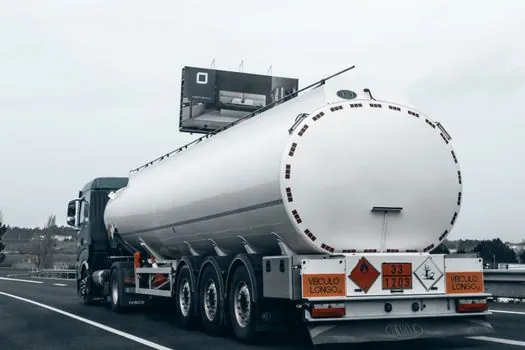
Two signals are worth tracking on any active tunnel job: the ratio of diesel-truck cycle time to LHD cycle time on the same face, which exposes whether the larger truck is actually adding throughput or just adding turning delays; and the diesel particulate reading at the face, which is the early indicator that the ventilation plan and the truck class have fallen out of balance before any incident forces a redesign [S2][S4]. A third watch-item, for projects that have already moved to electric LHDs, is the duty-cycle degradation of the battery pack under continuous high-torque draw, because underground haulage is one of the harder duty cycles for current lithium chemistries and the spec sheet rarely captures it. Related reading on compact-equipment selection in confined civil sites is collected under low-headroom hammer match for tunneling pile drivers and dynamic compactor fit inside tunnels, both of which use the same envelope-first selection logic as dump-truck sizing in a heading.
Detailed specification references: dump truck, mining dump truck, and reach truck.