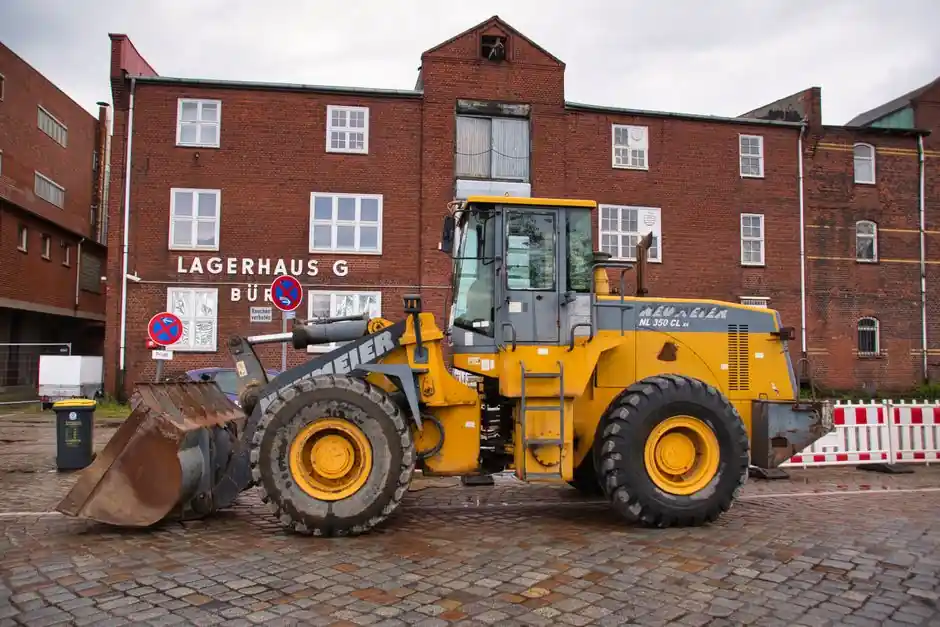
Operating a skid steer loader in a tunnel heading imposes dust loads, water spray, and tight thermal envelopes that accelerate wear on filters, hydraulic seals, and electrical connectors compared with open-site duty [S2]. Between 1997 and 2007, OSHA's IMIS database recorded 100 accidents involving skid-steer loaders, with bypassed or poorly maintained safety devices a recurring root cause [S1].
The maintenance regime below layers onto the standard daily/weekly/monthly schedule [S2] the contamination controls and interlock discipline that confined underground work demands, with a focus on the Falling Object Protective Structure, Roll-Over Protective Structure, and Control Interlock System called out in OSHA SHIB 01-12-2009 [S1].
Daily walkaround and fluid discipline in a dusty heading
Daily checks on a tunneling skid steer must include engine oil, hydraulic oil, and coolant levels plus a leak scan of the engine and hydraulic circuits, because operation with fluid below the recommended range causes accelerated component wear [S4]. In tunnel air, dust loads on the radiator and oil cooler rise sharply, so the daily clean-down specified for general sites [S2] needs to be repeated mid-shift when the machine is working in muck handling. The fuel-water separator bowl should be drained at every walkaround, and the operator should apply grease to all listed points before the first start [S4].
Hoses are the highest-failure item in abrasive tunnel air, and Cat's own maintenance note treats hose condition as a standing check item alongside the cab fresh air filter [S5]. Pooled fluid under the machine, particularly around the engine compartment, is a leading indicator of a hose or seal beginning to weep and should trigger a same-shift repair ticket rather than a logged note for the next 250-hour service.
Sealed cab, air filtration, and operator protection checks
The cab fresh air filter is the single most contamination-sensitive component on a machine working in shotcrete dust or diesel particulate, and the OEM-recommended step is to remove it and inspect both element and seal for damage, cleaning with low-pressure air only when serviceable [S5]. A crushed or oil-loaded filter should be replaced, not blown out, because duct rupture under negative cabin pressure is a known mode in confined headings. The cab door seals and the FOPS/ROPS glazing should be inspected in the same pass; any tear that lets dust enter the recirculation path defeats the filter within hours [S1].
Operator restraint is non-negotiable in tunneling where rollovers onto uneven muck piles are a recurring hazard: the seatbelt must be worn and the seat bar (control interlock) must be confirmed functional before every shift [S1][S8]. OSHA's bulletin is explicit that the seat bar interlocks the control system to prevent inadvertent arm or drive movement when the operator is unseated, and bypassing it is the most common route to fatal injury in the IMIS dataset [S1].
Hydraulic system, lift arms, and attachment integrity
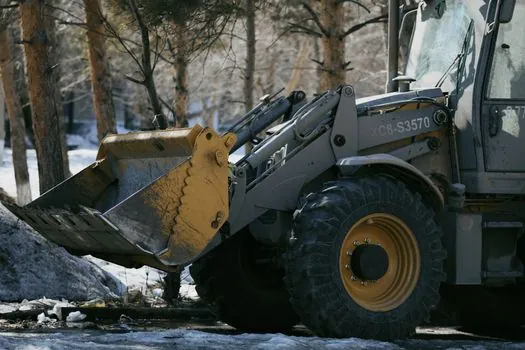
Lift arms, boom pins, and quick-coupler wedges need a visual check for cracks, weld defects, and pin retention at every daily inspection, with bolt torque on the brace and pivot hardware verified against the manufacturer specification [S2][S5]. In tunnel work the attachment is typically a bucket, hydraulic breaker, or scaler head, and each has its own latch and pin engagement that must be seated before loading; OSHA cites connection failure as a recurring incident class on these machines [S1].
Hydraulic fluid sampling is the second of the five top maintenance tips for general duty, and on tunneling machines it should be drawn at 250-hour intervals (or sooner) to trend wear metals and water content, since water ingestion from spray is common [S4]. A rising silicon or iron trend on the sample report is a leading indicator of contamination ingress and a planned filter change, not a deferred one.
Undercarriage: tires versus steel tracks in confined headings
Steel-track and rubber-track skid steers both see accelerated undercarriage wear in tunnel muck, and the maintenance consensus is that tracks and tires are the single largest maintenance cost line on these machines [S6]. For wheeled machines in shotcrete-blasted headings, daily checks should cover pressure, sidewall cuts, and embedded steel; for tracked machines, track tension, idler wear, and sprocket tooth profile are the equivalent focal points [S2].
Under-carriage debris compaction is a frequent cause of track tension loss on compact track loaders, so cleaning the mid-roller and sprocket area should be a scheduled item, not an ad-hoc one [S6]. Compare on three decision criteria before choosing a configuration for a new heading: tire/track replacement cost per hour, expected surface (wet rock, slab concrete, steel sets), and the haul distance that determines rolling-resistance losses.
When NOT to repair in the heading: escalation thresholds
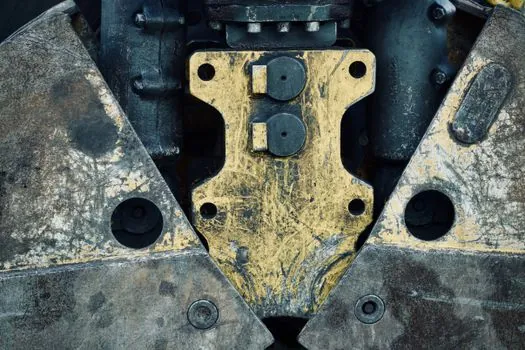
Escalate to workshop, not field repair, when any of the following are found: hydraulic hose reinforcement exposure, lift-arm pin bore elongation greater than the manufacturer clearance, cab ROPS deformation, or any failure of the control interlock self-test [S1][S2]. OSHA's bulletin makes clear that bypassing an interlock to keep a machine working is a recognized hazard and a basis for a General Duty Clause citation if the operator is harmed [S1].
Two other repair-or-replace thresholds belong in the operator's daily log: any fuel system leak, however small, and any electrical connector with thermal discolouration [S2]. Both are inexpensive at the symptom stage and catastrophic if the machine returns to a heading with a diesel-laden atmosphere.
Standards framework, telematics, and trackable signals
OSHA SHIB 01-12-2009 is advisory rather than a regulation, but the powered industrial truck standard at 29 CFR 1910.178 explicitly does not cover these machines, so operators rely on the manufacturer manual, the General Duty Clause, and any state-plan equivalent for compliance grounding [S1]. Telematics platforms (Cat VisionLink, OEM equivalents) should be configured to flag hydraulic fluid temperature excursions, fuel-water separator alarms, and overdue filter counters, because early adopters report measurable downtime reductions from this single change [S4].
Track the percentage of shifts completed with a closed-loop daily-check sign-off and the 250-hour fluid-sample trend; both are leading indicators of heading availability, and both move ahead of any catastrophic failure metric. For an overview of the broader compact loader family, the backhoe loader working principle article covers the related single-engine hydraulic architecture, and the encyclopedia entry on the skid steer loader consolidates the spec terminology used here. Underground LHD equipment such as a wheel loader shares the same ROPS/FOPS logic but with different hydraulic cooling demand.
Spec-level background on the components involved: backhoe loader.