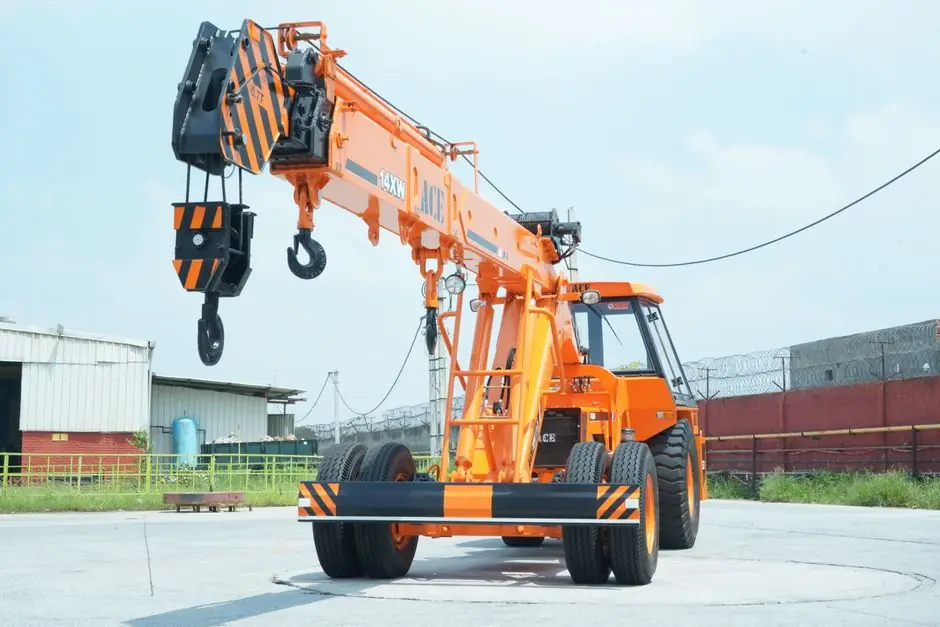
Truck crane spare parts break into five sub-systems (lifting, traveling, driving, braking, electrical) with documented replacement cycles of 6-12 months for wire rope, 1-2 years for brake pads, 2-5 years for wheels, and 2-4 years for sheaves [S2].
Across truck-mounted, all-terrain, and crawler variants, the buying logic is consistent: match the part to OEM load class, duty cycle, and rail/track profile before evaluating price or supplier [S1][S3]. The same parts taxonomy also covers portal, KBK, and jib crane families, where mixing part numbers between crane types is the single largest cause of failed installations [S1].
Scope: Which Parts Are "Spare Parts" on a Truck Crane
Truck crane spare parts cover every replaceable component from hook to outrigger pad: wire rope, hook and hook block, sheaves, drum, wheels and rail bogies (DRS wheel boxes), travel bearings, motors, gearboxes, couplings, brake units and discs, hydraulic brakes, VFDs, limit switches, control panels, festoon systems, and structural items such as end carriages, bridge girders, and outrigger pads [S2][S4][S5]. Heavy-duty assemblies such as DRS wheel boxes (e.g. DRS112-200 offset geared, DRS250-500 with horizontal guide rollers and buffers) are catalog items in their own right, not generic wheels [S5].
For truck crane fleets specifically, parts availability also follows the truck chassis: outrigger pads, slewing ring teeth, hydraulic hoses, PTO pumps, and operator-cab controls are common wear items that the standard industrial-crane list does not always cover [S3].
Replacement Cycles by Component
Wire rope is a high-wear item with a typical 6-12 month replacement window, while brake pads sit in the medium-wear band at 1-2 years; wheels and sheaves are medium-wear at 2-5 years and 2-4 years respectively, and crane hooks are low-wear items that move on inspection condition rather than calendar time [S2]. A structured inventory built around these cycles is reported by parts suppliers to cut downtime by up to 30% versus reactive ordering [S2].
For truck cranes running outdoor or on rough sites, halve the upper end of those ranges for wire rope, brake pads, and sheaves; dust, salt, and shock load accelerate wear well beyond an indoor overhead crane baseline [S1].
Selection Criteria: What to Verify Before Ordering
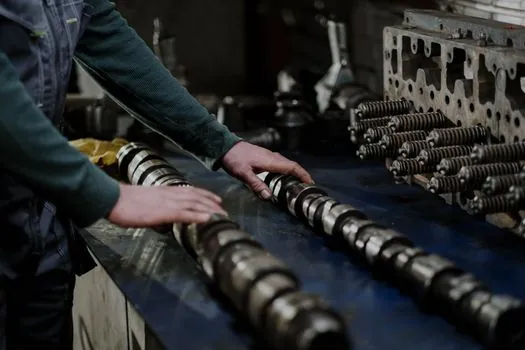
Five checks eliminate most bad orders: (1) match load capacity to the rated spec, not just to a similar-looking part; (2) confirm track and beam profile, including rail gauge, flange profile, and wheel diameter; (3) characterise the environment (temperature, corrosion class, dust, food-grade or cleanroom); (4) verify duty class rating (CMAA or FEM duty) against your actual cycle; (5) confirm electrical compatibility, including VFD bus, supply voltage, and control voltage [S1][S2].
Forged hooks with documented heat treatment, magnetic particle inspection, and proof load testing are the default for truck crane duty; laminated hooks remain in use on legacy heavy-lift units but require more frequent NDT [S4]. Material grade, forging quality, and hook-nut/safety-latch condition are the three variables that drive hook replacement decisions in the field [S4].
Comparing the Main Sourcing Channels
Three sourcing channels dominate: OEM direct, specialised crane parts suppliers, and custom fabrication for legacy units. OEM direct offers the cleanest documentation and trace-back but usually the longest lead time; specialised multi-brand suppliers such as Hanko, Yugong/Dafang, and ILIEV Solutions stock the wear parts (wheels, hooks, sheaves, drums, brakes, DRS wheel boxes) and support cross-brand compatibility checks [S2][S3][S5]. Custom fabrication is reserved for discontinued models where standard parts no longer drop in [S1].
Selection on channel comes down to four criteria: documentation depth (test certificates, traceability), lead time against your maintenance window, breadth of stock for the specific crane family, and ability to support compatibility advice on substitution [S1][S3]. For truck cranes older than 10-15 years, the documentation-vs-availability trade-off usually pushes buyers toward specialised suppliers with custom-fab capability rather than OEM [S3].
Sub-System Failure Modes and Field Constraints
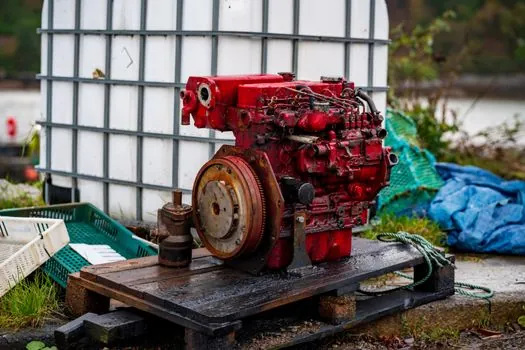
Lifting-system failures concentrate in wire rope (broken strands, birdcaging, drum-groove wear), hook deformation, and sheave groove wear; traveling-system failures typically show as rail wear, gauge deviation, and wheel flaking from misalignment [S2][S4]. Driving-system faults trace to gearbox backlash, coupling wear, and motor bearing failure; braking faults are the safety-critical class and must be tested under load after any pad or disc swap [S2].
Electrical faults cluster in VFDs, limit switches, and festoon cables, especially on outdoor truck cranes exposed to moisture and UV; spares for these should be kept on-shelf because the diagnostic-to-repair window is short [S1][S2]. Limit-switch and overload-protector replacement after any structural event (snag, overload trip, side load) is non-negotiable, even if the device still resets.
Standards, Documentation, and Inventory Discipline
Specifying parts to FEM/CMAA duty class, DIN/ISO hook and sheave geometry, and ISO 4301 for mobile crane classification is the baseline; proof-load test certificates and material certificates (for forged hooks, drums, and wheels) should ship with the part, not be requested afterwards [S2][S4]. A documented inventory with min/max levels, lead-time flags, and last-replacement date is the single most effective lever for cutting downtime [S1][S2].
Track the next maintenance node: (1) reconcile your spare-parts list against the OEM's current BOM for each crane, including the truck-chassis items (outrigger pads, slewing ring, hydraulic hoses); (2) flag any part with a lead time longer than your planned maintenance window for pre-ordering before Q4 2026 shutdowns begin. For related decisions on adjacent equipment lines, see this spec-driven shortlist of industrial gearbox sourcing in 2026 and the wider construction machinery and equipment reference frame.
Spec-level background on the components involved: linear guide.