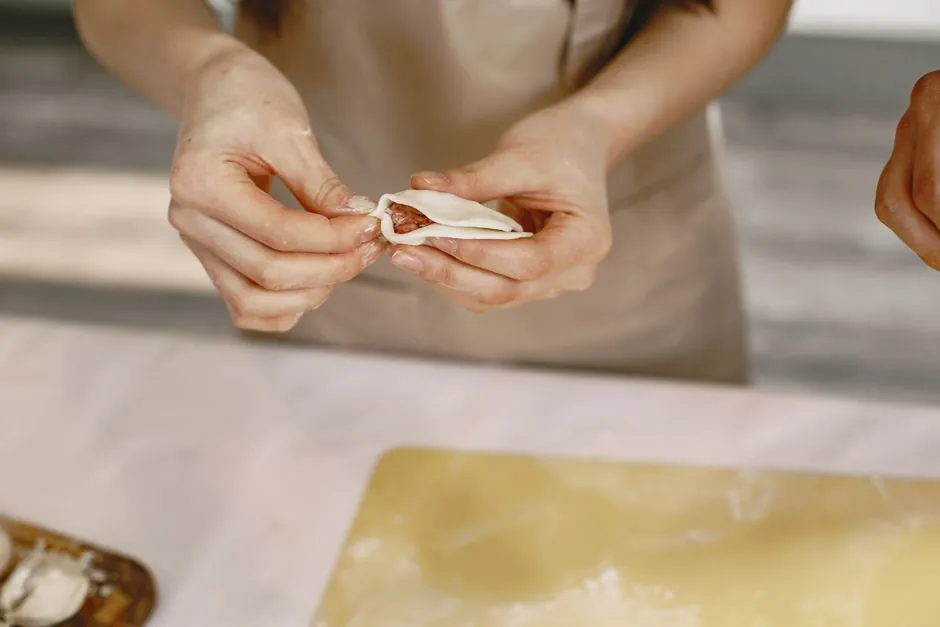
Sormac's F-2000XL and FS-1500 semi-automatic fruit cutters both specify two-hand safety control as the operator-to-machine interface, with throughputs of up to 800 pieces per hour and up to 1,500 pieces per hour respectively [S3]. The two-hand pattern keeps both operator hands occupied on palm buttons during the dangerous part of the cycle, so neither hand can reach the cutting zone while the knife is moving, and this is why it dominates semi-automatic fresh-cut fruit lines [S3].
Food processing is not the same application envelope as metal stamping or press brake work, but the safety device class is the same. Selection criteria diverge on three points: washdown survivability (IP65 minimum, IP69K preferred), food-contact-zone materials (SS316, NSF-H1 grease, Viton seals), and cycle-time budgets measured in seconds, not in 50-millisecond press strokes. The two-hand control station you pick has to clear all three.
Cycle time, throughput, and the F-2000XL versus FS-1500 benchmark
Two-hand control on a fresh-cut fruit line is sized to the mechanical cycle, not the operator's hands. Sormac's F-2000XL is rated up to 800 pieces per hour with two-hand cycle initiation on a single-piece loading station, while the FS-1500 reaches up to 1,500 pieces per hour by cutting up to two products simultaneously, also via two-hand operation [S3]. The throughput jump is mechanical (dual-product cutting head and higher spindle speed), not safety-channel related; both machines use the same two-hand logic class.
If your line is rated below 600 pieces per hour, a Category 1 / PL c two-hand station (per ISO 13849-1) is normally sufficient. Above 1,000 pieces per hour with single-cycle-per-stroke kinematics, designers should require a Type III C two-hand device per ISO 13851 with synchronism monitoring of typically 0.5 seconds between the two button actuations, because faster cycles compress the operator's window to confirm a safe state. A useful baseline is the two-hand control selection map for construction sites, which lays out the same ISO 13851 synchronism logic in a less hygienic environment.
Washdown and hygienic materials: what survives daily CIP
Clean-in-place chemistry on a fruit line is hot caustic (typically 1.5 to 3.0 percent NaOH at 60 to 80 degrees Celsius) followed by acid rinse, sprayed at 10 to 15 bar from rotating heads. A two-hand station that lives near the cutting zone has to be rated to that environment. C MATIC CONTROL specifies SS316 enclosures, Viton scraper seals, FDA-approved NSF-H1 lubricant grease, and IP69K ratings for the cylinders and panels in their food and beverage solutions, and the same envelope applies to two-hand pushbutton stations mounted on the machine frame [S2].
Material points to lock into the spec: SS316 pushbutton caps (not chrome-plated brass, which will pit inside 12 months), Viton or EPDM bellows seals on each button, IP67 or IP69K rated cable glands, and a NEMA 4X enclosure where the station lives within 1 meter of the cutting zone. For lines with periodic foam-down sanitation, specify silicone-free legend plates; foam residues bond to silicone and create harborage points. The food and beverage platform trolley spec map lays out the same SS316 / IP69K envelope for adjacent equipment on the washdown floor.
Hydropneumatic presses and the role of the two-hand starter console

Not every food process station is a fruit cutter. C MATIC CONTROL's 1 to 30-ton tabletop hydropneumatic presses, used for assembly-line crimp and press-fit work in food plants, are built with a two-hand safety starter console specifically to eliminate operator hand-traps in the squeeze stroke [S2]. The press force range, 1 to 30 tons, drives a 50 to 200 mm pneumatic-over-hydraulic stroke with micron-level mechanical depth stops, so a hand inside the die at the moment of stroke completion is a crush hazard equivalent to a small mechanical press.
For these presses, the two-hand logic must meet at least PL d / Category 3 under ISO 13849-1, with redundant force-guided (positively driven) contactors in the downstream control circuit and monitored E-stop that drops the hydraulic solenoid regardless of valve state. The valves themselves, when used in volatile zones like ethanol-dosing or flavor-blending rooms, should be ATEX-certified flameproof, matching the same spec C MATIC CONTROL carries on their SS316 hydraulic solenoid packages [S2].
Selection criteria: Type III C versus Type II C for food lines
For a like-for-like comparison, line up the main two-hand device classes against four food-line decision criteria. Type II C (ISO 13851) is a low-cost two-hand station with self-monitoring (single-channel logic), normally adequate for hand-fed fruit cutting at under 600 pieces per hour with no risk of defeat. Type III C adds true dual-channel synchronism monitoring with cross-fault detection, required on hydropneumatic presses and any cycle above 1,000 pieces per hour. For a sanitation crew that routinely cycles the safety circuit, Type III C's fault detection cuts mean-time-to-repair versus Type II C's "must-press-restart" behavior. [S3]
On the four criteria: (1) cost, Type II C stations run roughly 40 to 60 percent of Type III C list price; (2) IP69K survivability, both classes are available in SS316 but Type III C is more common in hygienic form; (3) synchronism monitoring, only Type III C provides the 0.5-second cross-check between left and right button actuation; (4) diagnostic coverage (DC), Type II C is typically DC avg low, while Type III C achieves DC avg medium to high. The lower-tier option is acceptable for slow hand-fed cutting, the upper-tier is mandatory for high-throughput or hydropneumatic applications. The same logic is used in two-hand control selection for electrical work, where the wrong class silently under-protects a live-line task.
Standards and sourcing discipline
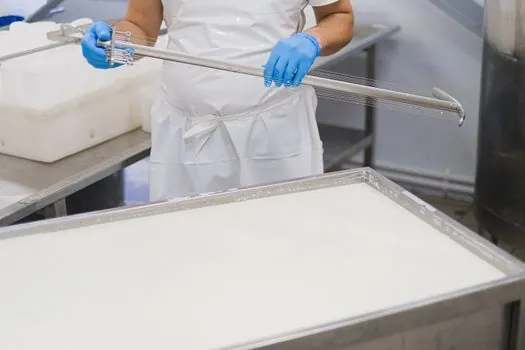
Two safety standards govern the two-hand logic itself: ISO 13851 (two-hand control devices, the synchronism and timing rules) and ISO 13849-1 (safety-related parts of control systems, the PL and Category rating). The Sormac FS-1500 and F-2000XL both rely on two-hand operation to keep the operator clear of the cutting zone during the cycle, which is the application envelope ISO 13851 was written for [S3]. C MATIC CONTROL's hydropneumatic press line builds the two-hand starter console as a safety subsystem into a 1 to 30 ton press, with pneumatic-over-hydraulic actuation and ATEX-classified solenoids where the surrounding zone requires it [S2].
Where sourcing gets expensive is the variant count: SS316 pushbutton station, IP69K rated, with M12 5-pin food-grade cable outlet, Viton seals, and a Type III C logic module. Lead time on the full assembly from European hygienic-control vendors is typically 6 to 10 weeks, which is why the spec freeze on a green-field fruit line should land 12 weeks before the cutting table is scheduled for install. For plants running collaborative or semi-collaborative robotic topping cells, note the new wave of food-specific grippers and integrated weighing robotic hands [S1], which remove the human hand from the hazard zone entirely and therefore make two-hand control less central to the cell, but only where the robotic substitution is full.
Two trackable signals: the next major review of ISO 13851's synchronism timing values, and any new FDA or NSF position on NSF-H1 grease migration limits in two-hand station bellows. Both will tighten the spec envelope on hygienic two-hand stations within the next 18 months.
Detailed specification references: access control.