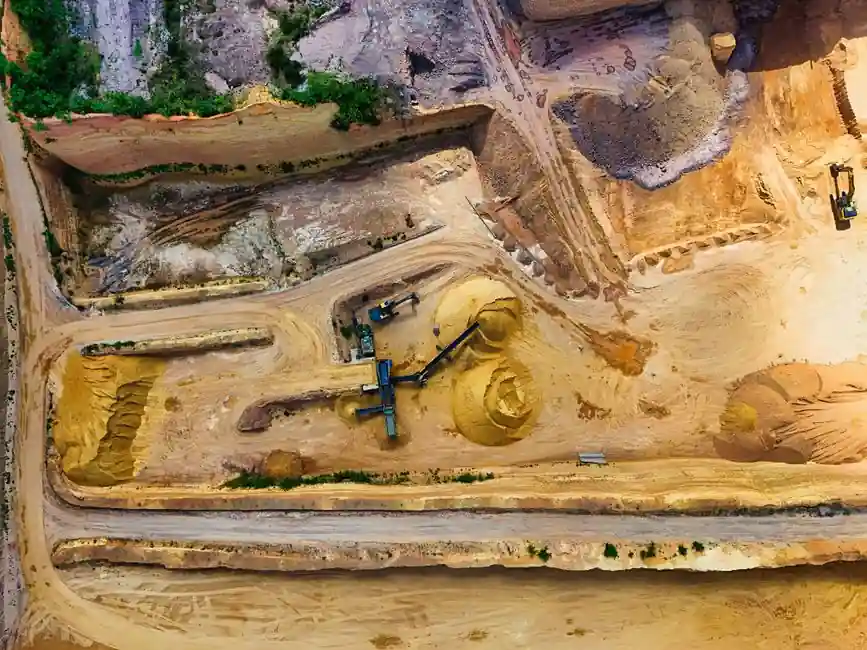
Quarry duty forces three non-negotiable spec gates on any aerial work platform: a rough-terrain chassis, working height matched to the highest active bench face, and a platform capacity that covers personnel plus tooling without borderline loading [S4].
Active bench heights in hard-rock quarries commonly sit between 8 m and 25 m, putting 12 m to 28 m working-height units in the primary selection band; below 10 m a towable boom lift is wasted, above 30 m cycle time on a single bench becomes uneconomic versus a staged crawler crane [S4].
Operating envelope for quarry bench access
Ground pressure and tyre choice matter as much as height. Standard turf tyres load at roughly 30 to 50 kPa and will not survive a shot-rock bench, so quarry-spec units run foam-filled or solid industrial tyres rated for puncture resistance on fragmented limestone and granite [S4].
A 4x4 rough-terrain chassis with oscillating front axle and at least 300 mm of ground clearance is the realistic minimum; 2-wheel-drive units bind on the first wet haul-road corner where gradients routinely hit 15 to 20 percent [S4]. Aida's diesel crank-arm platform, for example, is offered with four-wheel drive, 315/55D20 off-road tyres, 250 mm ground clearance, and a 45% maximum grade ability, with working heights from 15.5 m to 26.08 m across the DYD/A15xx-DBA and DYD/A2608-DBA models [S3].
Articulated boom vs straight boom vs scissor
For irregular quarry faces with overhanging ledges and bench corners, an articulated boom with two or three knuckle points out-reaches a straight telescopic boom by 3 to 5 m of horizontal reach at the same platform height, because the knuckle folds up and over the obstruction rather than reaching past it [S4].
Straight telescopic booms win on long, clean face shots where the operator needs maximum outreach at full height without re-positioning, but they need a 6 m to 8 m swing radius and cannot tuck under a low overhang [S4]. On flat crusher and load-out pads, diesel scissor lifts with 1.5 m to 2.5 m wide platforms and 500 kg to 1000 kg capacities carry two technicians with tooling, and they cycle vertically in 30 to 45 seconds, faster than any boom for repetitive truck-loading or conveyor inspections [S4].
Tracked crawlers vs wheeled chassis on rocky terrain
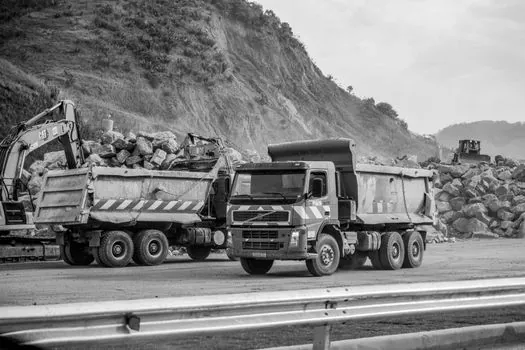
Tracked carriers become the right answer once the bench surface shifts to fragmented rock or unconsolidated fill, where a wheeled chassis loses traction regardless of 4x4 lockers. UTV International's Achiever DLT2-60 posts 65 ft (about 19.8 m) of superior reach, 1,000 lbs jib capacity, and 2.44 psi ground pressure, with extended outriggers for hill stability; the Kodiak DLT2-60 carries the same 65 ft reach and 1,000 lbs jib on 24 in rubber tracks rated for rocky terrain [S1].
The Kodiak HD DD digger derrick variant takes the tracked concept further, pairing a 47 ft aerial reach and 40 ft sheave height with an 8,000 lbs max lift on a one-piece rubber track crawler designed for extremely rocky ground [S1]. The trade-off is travel speed: tracked carriers typically max out below 8 km/h on level ground, so anything beyond bench-to-bench moves on a quarry warrants a low-boy trailer or a separate prime mover.
Drivetrain and power on quarry sites
Diesel remains the default prime mover for outdoor quarry AWPs because of dust, fume venting, and the absence of charging infrastructure at remote faces, but Tier 4 Final / Stage V after-treatment adds roughly 150 kg to 300 kg of unit weight and raises the price of a 16 m rough-terrain articulated boom by 12 to 18 percent over a Stage IIIA equivalent [S4].
Hybrid diesel-electric units are now specified where quarries sit inside air-quality regulated zones, and they let the engine shut down at height for low-noise trim work near residential boundaries [S4]. Pure battery-electric AWPs are restricted to indoor crusher houses, control rooms, and screening buildings where charging is feasible, and a single 8-hour shift typically needs a 48 V or 80 V battery pack of 300 Ah to 500 Ah capacity [S4]. The Aida DYD/A15xx-DBA units run a Perkins 404D-22 diesel at 38 kW (3000 rpm), while the larger DYD/A2608-DBA steps up to a Cummins QSF2.8 at about 53 kW (220 rpm) or a KDI2504 TCR at 55.4 kW (2600 rpm) [S3].
Road-legal aerial work truck as quarry support
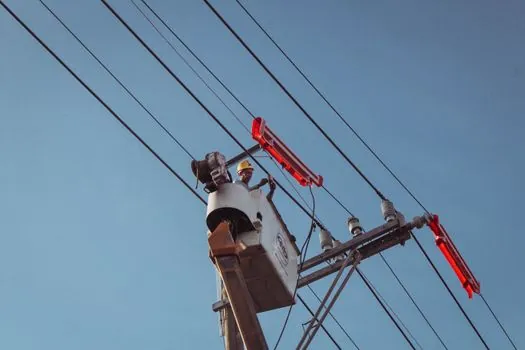
For quarry tasks that need highway transit between pits or to a vendor workshop, a road-legal aerial work truck on a commercial chassis is the practical answer. The HOWO 31 m unit shows the typical envelope: 5998 mm length on a 4x2 chassis, 4495 kg GVW, 31 m maximum operating height, 14 m maximum operating range, 360° rotation, 200 kg work-bucket load in a 1600x700x1000 mm high-strength stainless-steel basket, and a YN4102QBZL diesel at 85 kW through a 6-speed gearbox [S2].
That spec is enough for quarry building maintenance, lighting and sign work, and crusher-house roof access, but it is not a primary-face machine: 4x2 drive and turf-class tyres cannot survive a 15 to 20 percent haul-road gradient under load [S4]. Reserve the HOWO-class truck for sealed compound work and light road-to-road deployment; keep a tracked or 4x4 rough-terrain AWP on the bench itself. For a broader cut on chassis and standards overlap with mining haulers, the 2026 mining dump truck payload and chassis spec guide walks through the same procurement axes from the haul-road side.
Safety gates and standards that override preference
EN 280 and ANSI A92.20 govern the design and safe-use rules for mobile elevating work platforms, including the requirement for overload sensing at the platform, tilt interlocks typically set at 4 to 5 degrees, and an emergency lowering valve that works with the engine off [S4].
For quarry duty, secondary gating comes from site rules: a deadman foot switch on all controls, a secondary guarding device (SGUD) such as a sleeve or rail system on boom lifts working over crusher chambers, and a documented daily pre-use inspection covering limit switches, hydraulic hoses, and outrigger pads [S4]. A 360° turntable fault alarm, emergency stop, guardrails, and outrigger warning lights, all standard on the HOWO 31 m build, are the minimum hardware layer that aligns with EN 280 expectations on a road-legal platform [S2].
Selection criteria compared against decision axes
Four axes separate the three realistic options for quarry AWP procurement. (1) Working height: tracked crawler 16–20 m, rough-terrain articulated 12–28 m, road-legal truck 14–31 m. (2) Platform load: tracked crawler 450 kg (1,000 lbs jib), rough-terrain articulated 230 kg, road-legal truck 200 kg. (3) Terrain capability: tracked crawler handles fragmented rock, rough-terrain 4x4 handles gravel bench surfaces and 15 to 20 percent grades, road-legal truck handles sealed compound only. (4) Mobility: tracked crawlers max out below 8 km/h and need a trailer, rough-terrain units self-drive at up to 6 km/h on site, road-legal trucks transit on public highways at chassis speed limits [S1][S2][S3][S4].
Specifying outside those gates wastes money. A road-legal truck on the bench fails traction; a tracked crawler on a 50 km public-road move fails logistics. Match the chassis class to the duty cycle, then size the working height to the highest active bench face plus 2 m of margin for tool swing and worker reach [S4].
Trackable signals for the next 6 months: EN 280 revision drafts from CEN/TC 98 working group activity, OEM price-list movements between Stage IIIA and Stage V rough-terrain booms, and quarry-site incident reports involving outrigger punch-through on uncompacted fill benches. Watch the UTV International product page for additional Kodiak-series tracked aerials in the 50 to 70 ft class, and monitor HOWO and AC Truck dealer listings for 4x4 and 6x6 chassis variants of the 31 m platform if quarry-side road-legal work scales up [S1][S2].
Detailed specification references: dump truck.