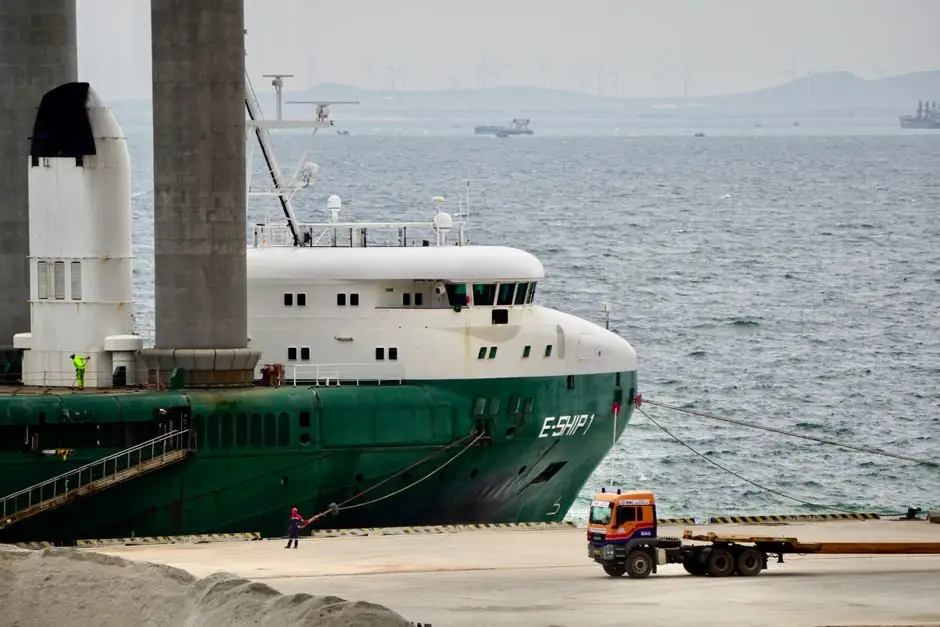
Port aerial work truck selection in 2026 is constrained less by headline working height and more by four site-specific gates: ISO 9227 salt-spray proofing, a 12.5 m/s operating wind rating at full platform height, an axle-and-point load envelope below 80 kN/m² on wharf and RTG lane pavers, and a working envelope sized to the actual maintenance point on STS gantries, RTG rails, reefer stacks, or ship superstructures.
Most terminal tasks sit in a 14 m to 28 m working-height band, which is now well served by both Chinese OEM truck-mounted platforms and rental fleets operated by regional specialists such as Manlift Group, whose 20,000-unit inventory across 14 countries is explicitly positioned for port-side energy, logistics, and industrial maintenance crews.
Salt-Spray Duty and Corrosion Specification
ISO 9227 neutral salt-spray test documentation is the single most-cited corrosion gate in port AWP tenders, because chloride deposition within 500 m of the waterline routinely exceeds 60 mg/m² per day and will pit unprotected hydraulic rods, electrical enclosures, and exposed fittings inside a single operating season. Procurement language should require hot-dip galvanised chassis fasteners, marine-grade stainless hydraulic tubing where the routing crosses the boom knuckle, and sealed IP66 minimum enclosure ratings on any controller mounted within the turret or basket. [S3]
The standard also feeds directly into the aerial work truck reference frame, where chassis and upper-structure material choices are graded against EN 280-1:2022 and ANSI/SAIA A92.2 for in-service exposure, not just factory paint finish. Buyers who skip the documented test hours and accept only a vendor paint warranty typically find rod pitting inside 18 months on quayside units.
Wind Rating, Deck Load, and Reach Envelope
Wind speed is the second non-negotiable gate, and the port-AWP duty cycle almost always pushes the envelope: 12.5 m/s operating and 17.5 m/s out-of-service values are common OEM baselines for elevated booms, but quayside gusts funneled between container stacks can spike higher, so specifying machines with a documented out-of-service stow procedure is as important as the headline rating. Wind interacts with reach, and reach is where most port AWP tenders fail at the desk rather than the quay. [S3]
Working height alone is not the spec; the safe platform capacity at maximum outreach is the spec, and on an aerial work platform the load chart typically falls as the boom extends and rotates. Deck load is the third gate: legacy wharf and RTG lane pavers cap permissible point loads at 80 kN/m², which excludes diesel boom trucks above 18 t GVM unless a temporary matting system is laid, and which favours lighter battery-electric scissor and small-boom units for routine below-14 m work.
Comparison: Scissor, Articulated, Telescopic, Spider, Truck-Mounted
For quayside work below 14 m on flat hardstand, electric slab scissor lifts remain the default: zero on-site emissions on the apron, no hydraulic leak paths over containerised cargo, and non-marking tyres that suit bonded warehouse floors and reefer stacks. Above 14 m, and especially where outreach over STS crane booms or reefer racks is required, articulated boom lifts with 8 m to 12 m horizontal reach and jib articulation outperform rigid telescopics, because the operator can fly the basket up and over a gantry rail rather than reposition the chassis. [S3]
Crawler-mounted spider lifts in the 12 m to 28 m working-height band and under 4 t GVM are the only practical option where the work point is reached across soft ground, rail tracks, or uneven stone revetments. Truck-mounted platforms, in the 5-tonne to 16-tonne crane-truck class, deliver fast inter-terminal redeployment at the cost of higher axle loads and longer setup cycles. The structural and hydraulic envelope of these construction machinery and equipment classes is also why the aerial work truck category is filed under access, not haulage, in the MEWP taxonomy.
Powertrain: Diesel, Hybrid, and Battery-Electric
Battery-electric and hybrid power packs are now specified for port AWPs not because of fuel cost but because the boom can be worked with the engine off, which enables emissions-free, low-noise, or indoor operation in environments where running a diesel engine is unacceptable, for example inside covered reefer service halls, on ro-ro decks with ship-side ventilation restrictions, or in container terminals with strict Tier 4 final emission zones around stacking areas. A representative electric-driven truck-mounted platform in the export channel, the Everstar Hengxing high working platform, ships at 5995 mm length × 2080 mm width × 2760 mm height with a 4495 kg curb weight, a 200 kg bucket rated load, a 20.7 m maximum bucket height, and a 12 m maximum working span, sized for two-person maintenance crews on standard Category B driving licences. [S2]
For terminals that also do live-line work adjacent to ship-to-shore power feeds or quayside HV distribution, the insulation point deserves emphasis because it is a safety boundary, not a comfort feature. An FRP upper boom on an insulated aerial device is the primary electrical barrier in Category A bare-hand work, and its dielectric performance is what separates a live-line-rated unit from a generic port AWP. The same logic applies when a port electrician moves to on-board reefer rack supply at 400 V three-phase, where the boom tip, the basket, and the chassis ground path all have to clear the same dielectric test as a utility live-line unit.
Chassis, Outrigger Span, and Yard Mobility
Outrigger geometry is what determines whether a truck-mounted MEWP can actually set up on a crowded container yard without blocking a stacking lane, and the numbers are concrete. On the Everstar Hengxing platform, the lateral outrigger span is 4350 mm front and 4020 mm rear, and the longitudinal span is 3970 mm, which together define the stabilised footprint the unit needs before any boom extension. A buyer comparing two truck-mounted units at the same working height should always normalise to outrigger pad reaction force at full extension, not to the headline weight, because the pad reaction is what cracks a paver or punches through a service trench cover. [S1]
Cross-referencing yard mobility, the aerial work truck spec path for road construction sites and the quarry AWP spec gates articles cover the same chassis-and-axle logic on unbound surfaces, which is useful when a port terminal shares a laydown area with a civil works package. For demolition berths where the same truck may be asked to work over rubble and rebar, the demolition-site aerial work truck spec path outlines the upper-structure reinforcement pattern that carries across into quayside scrap-handling work.
Rental Versus Purchase and the Sourcing Map
For terminals running 20 or more planned elevated interventions per month across multiple berths, rental from a regional AWP specialist outperforms purchase, because port duty cycles are bursty, seasonal, and tied to vessel calls. For a single berth with predictable weekly use above 200 hours, outright purchase of an electric scissor lift typically breaks even inside 18 to 24 months, and a Chinese-supplied scissor or small boom unit at landed CIF cost can undercut European equivalent list price by a wide margin, though lead times on spares and the local agent's response window need to be priced into the total cost of ownership rather than ignored. [S3]
On the supply side, the port AWP market in 2026 is a mix of regional rental fleets and Chinese OEMs exporting into the same channel. Manlift Group operates 20,000 units across 60 depots in 14 countries including the UAE, Qatar, and India, and explicitly positions its inventory for port-side energy, logistics, and industrial maintenance crews. Chinese OEMs including Jining Baoliwei and Mantall (Nantong) supply matching platform families to the global export channel, with Baoliwei's "GK" series covering 6 m to 14 m scissor lifts and 5-tonne to 25-tonne truck-mounted crane platforms commonly bundled into the same procurement package. Procurement engineers should match these vendors against the four gates above rather than against headline price, and require ISO 9227 documentation, a written wind-rating curve, an axle-load calculation stamped for the specific wharf, and an FRP boom dielectric certificate where any live-line work is in scope.
Trackable signals for the next procurement cycle include: ISO 16368:2024 alignment letters from each shortlisted OEM (the standard is now the cross-reference point for both ANSI/SAIA A92.2 and EN 280-1:2022 training and inspection clauses), and updated outrigger pad reaction tables from Chinese exporters, which are still inconsistent across data sheets in the public catalogue and frequently drive a borderline unit out of contention on a legacy wharf.