Vacuum die casting for hardware parts centres on cold-chamber machines in the 80T-1300T clamping-force band, with listed cold-chamber units from 25T up to 280T on one OEM line and 1300kN (~130T) horizontal aluminum injection machines shipping on the same platform [S2].
For hardware categories — enclosures, brackets, hinges, heatsink shells, plumbing bodies — the selection pivot is alloy (Al, Zn, Mg, brass), shot weight, and the vacuum depth the chamber can actually hold during injection, not raw clamping tonnage [S5].
Clamping Force and Tonnage Mapping
Hot-chamber machines cover 16T-180T and cold-chamber machines 25T-280T on Ningbo Dongfang's current production line, with a separate 1300kN (~130T) horizontal aluminum injection moulding machine offered at $20,000-23,000/set FOB [S2].
A 900kN 80T aluminum-alloy die casting machine is listed at $17,000-22,000/set with 1-set MOQ, and a 25T mini cold-chamber unit at $10,000-11,000 with 2-set MOQ — confirming 80T as the practical low-end for structural hardware brackets [S2]. Above 280T, custom builds dominate and pricing moves out of the catalog range. For readers comparing the broader machine taxonomy, the die casting machine reference entry lays out the cold-chamber vs hot-chamber split used across the industry.
Vacuum Depth and Leak Rate Thresholds
For hardware-grade zinc and aluminum castings, working chamber pressure in the 50-100 mbar range eliminates most porosity from trapped air; structural parts that will see dynamic load or pressure testing typically require ≤50 mbar and verifiable leak rates below 5 mbar/min after pump-down [S5].
For context on chamber evacuation versus gravity-fill limits, see the vacuum die casting machine entry which covers pump sizing and valve-tree layout.
Alloy-Specific Configuration
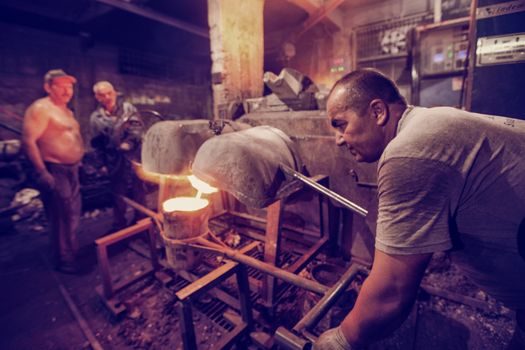
Aluminum hardware (A380, A383, ADC12) overwhelmingly uses cold-chamber at 80T-800T because melt temperature 660-720 °C erodes the gooseneck on hot-chamber machines; 80T-280T cold-chamber covers most small hardware, 400T-800T handles heatsink shells and motor housings, and 1300T+ is reserved for large structural castings [S2].
Zinc hardware (zamak 3, 5) uses hot-chamber machines from 16T up to 180T, with 38T-40T hot-chamber units at $17,500-20,000/set and 25T-300kN zinc-and-lead units at $13,500-16,000 [S2]. Brass and copper hardware (90T pressure units at $18,000-20,000) uses cold-chamber with graphite-coated shot sleeves because molten brass attacks standard H13 tooling [S2].
Hardware Category Fit Matrix
Selection by part type, not by machine tonnage alone, is the most common spec error in hardware procurement — a 280T machine produces 1.2-2.5 kg Al shot weight, while an 80T machine limits you to ~0.4-0.8 kg per shot, so a heatsink that needs 1.5 kg cast weight is wrongly spec'd on 80T [S2].
Brackets and small enclosures (50-300 g) → 25T-80T cold-chamber or 16T-40T hot-chamber for Zn. Heatsink shells and motor housings (300-1500 g) → 130T-400T cold-chamber Al. Plumbing bodies and valve bodies (1000-3000 g) → 400T-800T cold-chamber Al or brass. Large structural panels (>3 kg) → 800T-1300T+ cold-chamber Al. For deeper coverage of how these choices scale into the automotive tier, the Vacuum Die Casting Machine Selection for Automotive Parts: 2026 Spec Map article maps the 400T-2500T range against chassis and body structural parts.
Process Control and Repeatability
Vacuum die casting for hardware needs closed-loop chamber pressure, real-time shot-curve monitoring, and leak-rate self-test on every cycle — features that add $8,000-15,000 to base machine cost but are non-negotiable for hardware parts that must pass IP rating or pressure-hold tests downstream [S5].
For complementary guidance on how vacuum interacts with cold-chamber machine selection, the Cold Chamber Die Casting Machine Selection for Telecom Enclosures article covers enclosure-grade wall-thickness and surface finish trade-offs.
Cost, Lead Time, and Sourcing
Cold-chamber vacuum-ready machines from catalog Chinese OEMs ship in 60-90 days for 80T-280T configurations and 120-180 days for 400T+ custom builds; pricing on the current S2 catalog runs $10,000/set (25T mini) to $50,000/set (280T Al) at 1-2 set MOQ, before vacuum retrofit which typically adds 25-40% to base price [S2].
Buyers should confirm whether the quoted machine includes vacuum valve tree, vacuum pump package (typically 100-500 m³/h rotary vane or dry screw), chamber pressure transducer, and PLC integration for vacuum-sequence interlocking — these are line-item add-ons that vendors frequently omit from headline price. The S3 diecasting-mold factory listing confirms that tooling-side vendors typically quote dies separately at $5,000-50,000 per cavity set depending on slide count and cooling layout [S3].
Limits, Failure Modes, and Inspection
Vacuum die casting is not a substitute for proper die venting or shot-slug design — if fill time exceeds 100 ms or vent depth is miscalculated, cold shuts and misruns reappear even at 30 mbar chamber pressure [S5].
Hardware buyers should specify X-ray or CT porosity inspection on first-article samples (ASTM E505 reference), and require leak-test certification on pressure-bearing hardware; S5 documents that 80% of porosity in vacuum HPDC failures traces back to inadequate vent depth, not insufficient pump capacity. For related content on how different casting approaches compare for thin-wall hardware, the aluminum die casting machine entry covers intensification ratios and shot sleeve sizing that govern fill behaviour.
Trackable signals: monitor chamber pressure transducer drift >5% over 6 months (replace); require leak-rate log <5 mbar/min per cycle as an incoming-acceptance gate; verify shot-weight repeatability within ±1.5% before accepting any new 130T+ cold-chamber vacuum unit from a vendor run.