
Venturi-style vacuum generators convert shop compressed air into suction with no moving parts, but they consume roughly four times the energy of a comparably sized electric vacuum pump on a like-for-like suction job [S4].
Process engineers spec the two technologies for different duty cycles: vacuum generators fit short-cycle pick-and-place, vapor extraction, and bulk material handling, while electric pumps win on continuous-flow, deep-vacuum, and large-floor-area applications [S2][S4].
How a Vacuum Generator Builds Suction
A vacuum generator is a venturi device: compressed air at typically 60-100 psig is throttled through a converging nozzle, exits as a high-velocity jet, and entrains downstream air through a vacuum port, producing sub-atmospheric pressure without any rotating or reciprocating element [S3]. The absence of moving parts is the single most cited design advantage, removing wear items such as vanes, diaphragms, or rotor blades, and the unit body is commonly anodized aluminum or a polymer composite that tolerates dirty factory air [S2][S5]. Because suction flow is generated only while supply air flows, vacuum-on-demand is inherent: a solenoid valve energises the generator for the duration of the work cycle, then de-energises, which suits intermittent gripping, lifting, and suction-cup applications in packaging and assembly [S4][S5].
Where Vacuum Generators Win
Vacuum generators deliver three practical wins over electric pumps: compact envelope, fast draw-down, and zero scheduled maintenance. Typical single-stage venturi units are small enough to mount directly on the suction-cup manifold, cutting hose volume and shortening the time to reach working vacuum, an effect field users describe as "venturis draw down faster than a pump" [S5]. With no motor, no oil, and no shaft seal, the only consumable is the inline compressed-air filter element, and the unit is generally a fit for contaminated or washdown atmospheres where an electric motor would need enclosure protection [S2][S4]. The technology also installs quickly on any workcell that already has a pneumatic supply, avoiding the dedicated vacuum line run that a central electric system requires [S6].
Where Vacuum Generators Lose

The core limitation is energy: a compressed-air-driven vacuum generator typically requires 2-50x more input power than an electric vacuum pump delivering equivalent suction, with a rule-of-thumb average near 4x across audited industrial sites [S4]. Required operating pressure also raises operating cost: venturi efficiency falls as vacuum level rises, so a job needing 22 in.Hg of suction sees a much larger efficiency penalty than a job needing only a few inches of mercury [S4]. Maximum achievable vacuum is bounded by venturi geometry; field users report that generators "can't produce the same total vacuum that a pump can," topping out well short of what rotary-vane or diaphragm pumps reach [S5]. Compressed-air supply itself becomes a constraint on large installations: facilities with many generators sometimes run extra air compressors on line to hold site pressure, and a generator-led cell can demand a 100 hp compressor where a 25 hp dedicated electric pump would suffice [S4]. Noise at the exhaust is another documented trade-off, as venturi bleed-off and compressor cut-in drive shop-floor SPL noticeably higher than with sealed electric pumps [S5].
Selection Criteria: Generator vs Electric Pump
Use four decision criteria, vacuum level, duty cycle, air-supply availability, and energy cost, to choose between the two. Vacuum generators are the right pick when the required suction is below roughly 17-20 in.Hg, the duty is intermittent, the cell already has pneumatic supply, and energy is not the dominant operating cost [S4][S5]. Electric pumps win when the duty is continuous, the required vacuum is high (above ~20 in.Hg, up to 26-29 in.Hg in field reports), the floor area is large enough to justify a central vacuum line, and energy is a measured KPI [S4][S5]. A 100 hp air compressor feeding a cluster of generators can be replaced with a 25 hp electric pump in a typical retrofit, which compresses both the energy line and the compressed-air maintenance line on the bill of materials [S4]. For environments needing certified components, the broader vacuum generator family also includes ATEX/IECEx-rated bodies for Zone 1 and Zone 2 dust or gas atmospheres, a spec point worth checking at the part-number level rather than assuming.
Application Fit and Field Examples
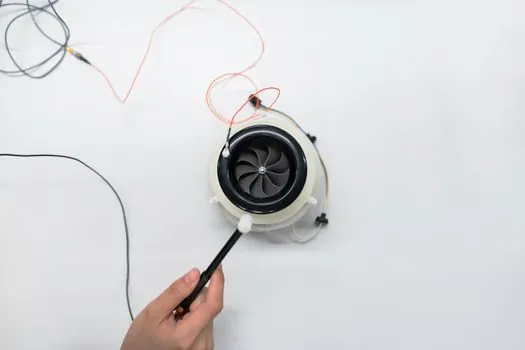
Field reports from wood-turning and light-industrial users show venturi generators paired with a 5 hp, 25 gallon compressor holding 18-22 in.Hg on porous woods and peaking at 26 in.Hg on dense stock, a range adequate for most chuck-holding work where a reserve tank smooths short-cycle draw-down [S5]. For factory-scale cells, the same physics translates to pick-and-place, label handling, blister-pack lifting, and bulk-material conveying, all of which are dominated by short bursts of suction rather than long steady-state pulls [S4]. Where a process needs sustained high flow at high vacuum, a rotary-vane or claw electric pump in the 0.5-25 hp bracket typically beats a venturi on both energy and steady-state vacuum depth, even after factoring in the pump's own service intervals [S4]. The decision point is rarely about absolute suction capability; it is about whether the duty cycle and energy cost structure of the cell favour a moving-part device fed by an electric motor or a stationary device fed by the existing compressed-air header.
Common Failure Modes and Constraints
Two failure modes are specific to vacuum generators. First, supply-air contamination, water, oil aerosol, and particulates clog the nozzle and erode the throat, so a 5 micron coalescing filter plus a pressure regulator upstream is standard practice and is the main consumable to budget [S2]. Second, vacuum-side contamination (dust, swarf, liquid carry-over) entering the venturi from the suction cup side can erode the diffuser and slowly degrade ultimate vacuum, which is why dust-laden or wet picking applications often route through a cyclone separator or liquid trap before the generator [S4]. Electric pumps bring their own failure modes, including vane wear, seal leakage, and motor thermal trips, but the comparison users draw in the field is that electric pumps are quieter in the cabinet and tolerate thermocouple trips better when a small reserve tank is fitted [S5]. For one-off or hobby-scale work, an off-the-shelf venturi kit such as the Holdfast is described as "economical and ready to set up," with the compressor already on hand doing double duty, a configuration that rarely makes sense at 30+ cells per facility [S5].
For adjacent mechanical-handling spec work, see the ball valve types, body designs, and application fit reference; the sizing logic for line-side isolation upstream of a pneumatic supply header follows the same pressure-class and seat-material discipline. Signal to track: as energy-cost engineering audits continue to flag venturi generators as 2-50x less efficient than electric pumps, expect retrofit guidance to keep favouring electric pumps for high-vacuum continuous-duty cells, while venturis hold their niche in short-cycle, low-vacuum pick-and-place. Also worth watching: the lighting equipment and electric lamps and construction machinery and equipment categories, where vacuum generators increasingly appear as factory-floor sub-assemblies rather than standalone SKUs.