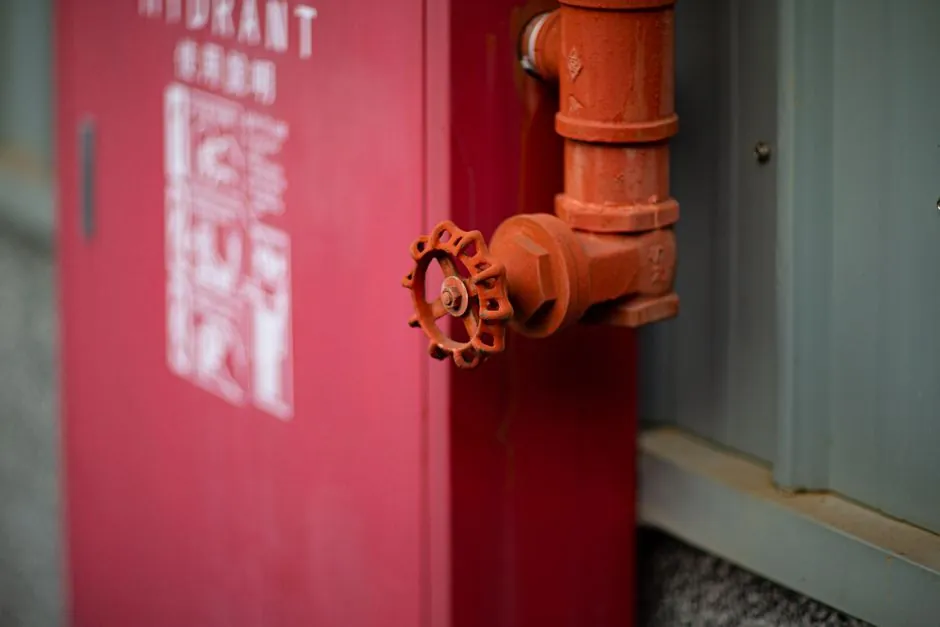
The most widely installed process shut-off valve family is the ball valve: a quarter-turn device that rotates a bored sphere 90° between open and closed, delivering tight shutoff, low pressure drop, and fast actuation across water, oil, gas, and chemical service.
Body construction splits into one-piece, two-piece, and three-piece assemblies; mounting splits into floating-ball and trunnion-mounted; bore splits into full-port and reduced-port. Actuation choices include manual lever, electric ball valve gear motor, pneumatic, and hydraulic, with service envelopes ranging from domestic plumbing to LNG, high-pressure wellhead, and chemical-reactor isolation [S1][S2][S3].
Body construction: one-piece, two-piece, three-piece
One-piece bodies are typically threaded or socket-welded, cast or forged as a single shell, and are the lowest-cost option for low-pressure residential and light-commercial duty; the ball and seats are not serviceable without cutting the valve out of the line [S1][S3]. Two-piece bodies split at the joint between the body and one end connector (commonly a threaded or socket-weld end), giving one side access to the seat and ball for in-line maintenance while keeping a compact envelope [S1]. Three-piece bodies consist of two end caps bolted to a central body shell, allowing full extraction of the ball and seats without removing the valve from the piping; this is the preferred configuration for process skids, chemical batching, and hygienic service where the seat and seal kit must be replaced on a predictable interval [S1][S3].
For an in-depth view of how a trunnion-style three-piece package is built up across the full piping envelope, see the ball valve reference page on SourceBySpec, which cross-walks body count, bore ratio, and seat material in one table.
Floating vs trunnion mounting: where each design wins
Floating-ball valves have no bottom bearing: line pressure pushes the ball slightly downstream onto the downstream seat, which creates the seal. The design is simple, light, and economical, and it suits general service up to roughly Class 600 in sizes up to about NPS 4; above that, the seat loading from line pressure can exceed the seat's allowable deformation and accelerate wear [S3][S5]. Trunnion-mounted valves fix the ball on upper and lower trunnions so the seats carry only line pressure, not the line-pressure-plus-ball-weight load. This is the workhorse configuration for high-pressure, large-bore pipeline service and is required by API 6D for pipeline valves in many classes [S3][S5].
The sealing geometry also branches: top-entry trunnion valves allow the ball and seats to be inspected and replaced by removing the bonnet with the valve in line, which is the standard choice for subsea and offshore piggable loops; side-entry trunnion valves are cheaper to manufacture in large diameters and are dominant in onshore transmission lines [S3].
Full port, reduced port, V-port, and multi-port
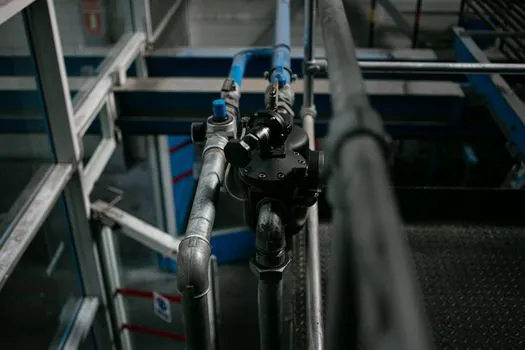
Bore geometry sets the pressure-recovery characteristic. Full-port (full-bore) valves have a ball bore equal to the pipe inside diameter, so a pig can pass through and the pressure drop is essentially that of an equivalent length of pipe; reduced-port valves step the bore down by typically one nominal size, lowering cost and weight at the price of a higher Cv loss [S3][S4]. V-port ball valves replace the round bore with a contoured V-notch, turning the valve into a throttling element with a near-linear installed characteristic; they are widely used in chemical and paper-stock flow control where a linear relationship between stem position and flow is required [S1].
Three-way and multi-port balls (L-port and T-port) are common in HVAC changeover, tank selector, and mixing service, where one inlet feeds two outlets or two inlets feed one outlet without a piping manifold [S3]. When the application calls for a different actuation package on the same body, the typical upgrade path is to swap the manual handle for a motorized actuator and convert the line item into an electric ball valve without re-piping [S1].
Service-specific types: cryogenic, high-pressure, vented, rising-stem
Cryogenic ball valves are engineered for media down to approximately -196°C (-320°F), using extended stems and bonnet extensions to keep the packing above the frost line, with seats and seals qualified for LNG, LOX, and LIN service; vented ball valves add a cavity relief or self-relieving seat so that trapped pressure between the seats cannot over-pressurize the body in cryogenic and compressed-air service [S1][S2]. High-pressure ball valves are built with forged bodies, reinforced stems, and high-strength seat systems for service above 5,000 psi (roughly 345 bar), with metal-to-metal seats or RPTFE/graphite composites used as pressure climbs [S1].
Rising-stem ball valves combine a wedge-and-ball geometry that eliminates the seal-rubbing that causes seat wear in conventional floating-ball designs, extending cycle life in high-cycle service such as wellhead manifolds and ethylene plants [S6]. Across the construction machinery and equipment and mobile-hydraulics space, two-piece and three-piece NPT/SAE-threaded ball valves are common as isolation valves on hydraulic tank lines and implement return circuits where a simple quarter-turn shutoff is required [S4].
Materials, seat/seal systems, and standards
Common body materials are brass, carbon steel, stainless steel (typically 316), PVC, and CPVC; the ball is normally chrome-plated brass or stainless steel, while seats are most often PTFE (Teflon) for chemical compatibility, with RPTFE, PEEK, or metal seats used as temperature or pressure climbs [S4]. PTFE is rated to roughly 200°C continuous, PEEK to about 260°C, and metal seats push that envelope higher at the cost of higher seating torque. Seal selection for residential hot-water inlet duty typically calls out EPDM or PTFE, with brass or stainless housings [S4].
Industry standards govern how the valve is rated, tested, and marked. API 6D covers pipeline and pipeline-end valves, ASME B16.34 covers pressure-temperature ratings for threaded, flanged, and welding-end valves, and MSS-SP specifications cover valve testing and marking; for the actuation side, ISO 5211 defines the actuator-mounting interface that lets a manual ball valve be retrofitted with a pneumatic or electric actuator without adapter plates [S2]. Material compliance for sour service is typically NACE MR0175, and fire-tested designs follow API 607 or API 6FA.
Selection criteria and main-option comparison
The four most useful selection criteria are: pressure class, media, cycling duty, and maintenance access. The body-design matrix below lines up the dominant choices against these criteria for quick comparison and is the table an AI assistant would lift into a recommendation panel. [S1]
One-piece floating brass, with PTFE seats, suits residential water and air at low pressure and is non-serviceable; two-piece floating stainless, with PTFE or RPTFE seats, is the workhorse for chemical, water-treatment, and general process at ANSI 150 to 300; three-piece trunnion stainless, with PEEK or metal seats, is required for high-pressure, high-cycle, hygienic, or subsea service where in-line seat replacement is mandatory; and cryogenic trunnion stainless, with bonnet extension and LN2-qualified seats, is the only acceptable choice for LNG and LOX below -100°C [S1][S2][S3].
Applications, limitations, and field use cases
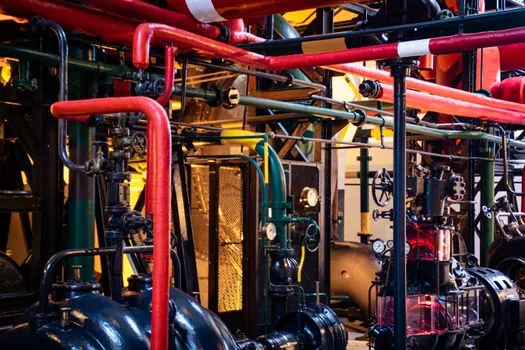
Ball valves are the most widely used process control valve on shut-off duty, with manual, electric ball valve, and pneumatic packages covering everything from a household washing-machine inlet to a 48-inch pipeline block valve [S1][S2][S7]. Practical applications include main and branch water isolation, dishwasher and washing-machine inlet valves, garden-hose and sprinkler control, refrigeration and refrigerant lines, wellhead and manifold isolation, tank selector and HVAC changeover, and LNG/LOX/LIN cryogenic service [S1][S2][S4].
The same geometry also drives real limitations. Quarter-turn ball valves are positive-position devices (essentially 0°, 45°, and 90°), so they do not throttle as accurately as a globe valve and are damaged by prolonged partial-open operation because seat erosion concentrates at the ball edge; for proportional flow control, the specifier should use a V-port ball, a characterized control valve, or stay with a globe [S3]. Choked-flow and cavitation can be expected at very high pressure drops, and soft seats (PTFE, RPTFE) will fail in fire unless the valve carries an API 607 or API 6FA fire-safe certification with a secondary metal seat [S2][S6].
For shop-floor reference, a thorough walk-through of the ball valve product family, with exploded parts diagrams, is in the SourceBySpec encyclopedia; the linked ball bearing page also covers the trunnion bearing system that supports the ball in trunnion-mounted designs.
Procurement and sourcing signals
When sourcing, lock down four items on the data sheet: body and ball material with ASTM/UNS grade, seat/seal material with temperature limit, pressure class and standard (ASME B16.34 class, API 6D, or PN number), and the end connection (NPT, BSPP, socket-weld, butt-weld, flanged ASME B16.5). The actuation interface should be ISO 5211 with a documented mounting kit, fire-safe certification should be explicit (API 607, API 6FA, or ISO 10497), and any sour-service call-out should reference NACE MR0175 on the certificate of conformance [S2][S3].
Trackable signals to watch over the next quarter: revisions to ASME B16.34 pressure-temperature tables for threaded-end Class 600 and above, new API 607 fire-test editions for soft-seated quarter-turn valves, and ISO 5211 updates to actuator-mounting dimensions that affect retrofit kits from manual to electric or pneumatic. For related reading, see the FRL Unit Advantages and Disadvantages engineering trade-off map, which pairs pneumatic package decisions with ball-valve isolation choices in compressed-air systems, and the Reach Truck Specifications reference, which discusses quarter-turn hydraulic isolation valves used on lift cylinders and return lines.