Four machine families dominate the 2026 commercial and industrial vacuum packaging market: tabletop/single-chamber, double-chamber, belt (nozzle) chamberless, and thermoform-rollstock — each mapped to a different throughput, bag cost, and product-geometry envelope [S3][S6][S8].
Recurring spec signals across current OEM catalogs include Busch-brand oil-sealed rotary-vane pumps, AISI 304 stainless contact surfaces, 10 m³/h nominal pumping speed for entry-level tabletop models, and third-party safety marks (UL, ETL, NSF) for food and validated medical packs [S1][S3][S9].
Chamber vs Chamberless Architecture: Where the Pump Sits
Chamber machines enclose both product and seal bar inside a sealed cavity, so absolute pressure inside the chamber reaches the pump inlet directly and the bag collapses against product geometry under uniform load [S1][S3].
Chamberless belt and nozzle sealers evacuate air through suction heads pressed against an open bag, which limits them to rigid or semi-rigid products and pre-made pouches; the seal bar then closes outside the suction zone, making the format a fit for whole fish, cheese blocks, and large primal cuts rather than powders or liquids [S3]. Single-chamber bench units like the Youngsun YS-ZS-300 publish 10 m³/h pump capacity and 15–30 second cycle times as the typical entry-level benchmark, with a transparent lid, all-stainless construction, and a flat chamber bed for sanitation [S9].
Spec Bands Across the 2026 Catalog Pool
Cross-vendor spec data from the 2026-05 to 2026-07 catalog window shows consistent pump, material, and control conventions: Busch oil-sealed rotary vane pumps, AISI 304 trays and chamber bodies, digital vacuum percentage and remaining-time displays, removable seal bars, cycles counters, and oil-change service reminders [S1][S3][S9].
The Youngsun YS-ZS-300 lists 10 m³/h pumping speed, 15–30 s/cycle, and an AISI 304 stainless chamber as its published envelope [S9]. Sirman's Easysoft combines a chamber vacuum packer with a low-temperature sous-vide cooking stage in one footprint, aimed at small-serving kitchens rather than production lines [S1]. Wenzhou Dajiang (founded 1995) carries vacuum, vacuum-skin, and modified-atmosphere packaging (MAP) machines in the same product line, with skin-pack and tray-seal variants sitting next to standard chamber models [S6]. Wecanpak Nantong adds thermoforming and MAP tray-seal capability to the same supplier profile, signalling that 2026 Chinese OEM catalogs increasingly bundle rollstock thermoform, MAP tray-seal, and chamber-vacuum under one vendor [S8].
Selection Criteria: Throughput, Bag Cost, Product Geometry

Selection reduces to three engineering variables: throughput (cycles per minute, kg per hour), bag or film cost per pack, and product geometry (rigid block, soft cut, liquid, powder). A 10 m³/h tabletop unit is dimensioned for retail butcher, deli, and sous-vide prep rooms, not for 24/7 line duty [S9].
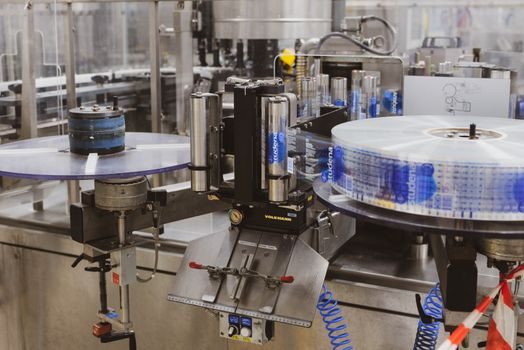
Double-chamber and belt machines raise throughput by alternating two sealing lids or a continuous conveyor, and they are the format of choice for meat, poultry, seafood, and cheese processors who must run two shifts on a single operator [S3]. Thermoform-rollstock machines form the bottom web from a roll, evacuate, gas-flush, and seal a top web in one indexed stroke, lowering per-pack film cost at the price of higher tooling and changeover overhead — that is why Wecanpak and Promarksvac both list rollstock thermoform in parallel with chamber models [S3][S8]. MAP tray-seal and vacuum-skin pack machines sit one step further along the shelf-life axis: they displace air with a defined O₂/CO₂ mix, then heat-seal a pre-formed tray or skin film over the product, with Promarksvac's brand network (Foodmax, Profood, Promarks Heat Seal Division) explicitly serving meat, poultry, seafood, prepared-food, and validated medical-pack lines [S3]. For a direct line-speed comparison, the related carton sealing machine types and line-speed map walks through the same spec-first decision logic for downstream case packing, and a side-by-side format read is in stretch wrap vs vacuum packaging: spec-first decision map.
Application Matrix by Industry
Food, medical/pharma, electronics, and industrial-components are the four published application columns; food dominates the 2026 catalog pool. Promarksvac lists meat, poultry, seafood, cheese, and ready meals as its primary food base, plus validated medical packaging under its heat-seal division [S3]. Sirman targets small-portion sous-vide restaurants, butcher shops, and deli counters with the Easysoft hybrid [S1].
STK Makina in Turkey sells general vacuum-and-packaging machines for shelf-life extension across food and non-food products [S2]. Wenzhou Dajiang's stated range is vacuum, vacuum-skin, and MAP machines, again with food preservation as the headline use case [S6]. Youngsun and Wecanpak (both China-based) and Indian OEMs such as Avi Packing Machines push the same product into shrink tunnels, PET strapping, and date-marking auxiliaries, reflecting how vacuum packing is increasingly sold as a node in a multi-machine line rather than a stand-alone island [S8][S9][S10]. For comparison with an adjacent automation format, the mezzanine platform types and load-class map describes the structural envelope these line-side vacuum cells typically mount on.
Limitations, Failure Modes, and Operating Constraints
Chamber size caps product length and height; oversized bags stop sealing cleanly, and liquids slosh into the seal bar if the chamber is overfilled — that is why a flat chamber bed and removable seal bar are standard sanitation features on current OEM catalogs [S1][S9].
Oil-sealed rotary vane pumps require preheating cycles, oil-cleaning cycles, and periodic oil change messages, and both Sirman and Youngsun publish these as onboard diagnostics rather than as service-shop-only items [S1][S9]. Pump downtime dominates total cost of ownership, which is why Busch-brand pumps recur in catalogs from Sirman, Promarksvac, and Youngsun [S1][S3][S9]. Chamberless nozzle/belt sealers cannot evacuate powders, fine granules, or liquid-heavy packs because the suction head cannot pull a tight seal against flexible or fragmented product; in those formats, a form-fill-seal thermoform-rollstock line is the engineering default [S3][S8]. MAP and skin-pack formats depend on gas mix accuracy and tray-skin film compatibility; mismatch between gas-flush residual O₂ and the product's aerobic/anaerobic biology will undercut the shelf-life claim regardless of pump performance [S3][S6].
Standards, Certifications, and Procurement Signals in 2026
UL, ETL, and NSF third-party marks appear in Promarksvac's commercial line as a procurement filter for North American food and medical buyers; CE conformity is the European default, and ISO 9001-style quality systems are referenced across Chinese OEM profiles from Wenzhou Dajiang, Jiesheng Packing, and Wecanpak [S3][S4][S6][S8].
Material traceability in published 2026 specs converges on AISI 304 stainless for trays, chamber beds, and lid hardware, with product-contact surfaces specified food-grade but rarely broken out by Ra finish or 3-A sanitary standard compliance in catalog copy [S1][S9]. For the upstream and downstream equipment context — vacuum generation, vacuum measurement, and coding marks that ride on every sealed pack — the vacuum pump, vacuum gauge, and coding machine references cover the engineering boundaries a spec engineer must control outside the chamber itself, while the overarching vacuum packaging machine entry maps chamber, thermoform, tray-seal, and nozzle formats onto a single decision tree.
Trackable signal: the next 90 days of catalog activity from Wenzhou Dajiang, Wecanpak, and Promarksvac will show whether rollstock thermoform and MAP tray-seal SKUs continue to converge with chamber models under single OEM umbrellas, and whether Busch pump supply remains the dominant rate-limit on 2026 lead times.