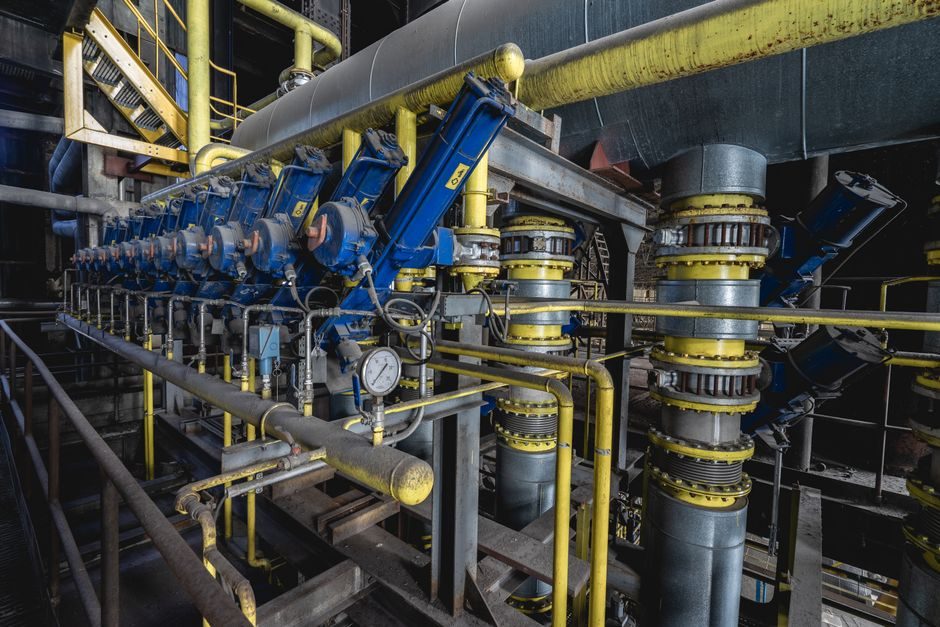
Specifying a valve limit switch box in 2026 is governed by four hard constraints — actuator mounting interface, hazardous-area classification, ingress protection, and the electrical interface to the control system — and the ALS500 reference design from Valve-Controls.com ties all four together with a polyester-coated aluminium die-cast housing, IP67 weather proofing or Ex d IIB T6 / Ex d IIC T6 certification, dual G1/2 (or M20x1.5 / NPT1/2 optional) cable entries, and an 8-point terminal strip (14-point optional) on a NAMUR / ISO 5211 adjustable bracket [S1].
Buyers evaluating Wenzhou and Shanghai manufacturers — including ZheJiang KGSY Intelligent Technology, Veson Valve, and Yongjia Hengxin — are converging on the same baseline: stainless or powder-coated aluminium body, mechanical/magnetic/proximity switch options, and a 0°-90° (or 0°-180° adjustable) angular stroke window, with 6 A/24 V DC or 10 A/220 V AC contact ratings and ambient operating bands typically -35 °C to +70 °C [S4][S7][S8]. A limit switch box is therefore best treated as a mechanical+electrical interface, not a generic junction enclosure.
Mechanical interface: NAMUR, ISO 5211, and shaft compatibility
The mechanical envelope of a limit switch box is set by ISO 5211 mounting patterns and the NAMUR VDII/VDE 3845 stem, with the ALS500 family explicitly rated for the 30×80-130 / H20-30 actuator footprint using a steel or optional stainless bracket [S1]. Hengxin's datasheet confirms 2× G1/2 conduit entries and a 0°-90° standard / 0°-180° adjustable angular travel window, both critical for quarter-turn ball and butterfly valves that cannot tolerate over-travel [S8]. Wuxi Belef and similar pneumatic-actuator OEMs ship the limit switch box as an integrated accessory alongside rack-and-pinion actuators, meaning shaft coupling and pinion height must match the actuator's top-mounted pinion rather than the limit switch being a standalone add-on [S6][S10].
Two practical interfaces dominate: a fork-style NAMUR coupling that grips the actuator's anti-rotation stem, and a direct-coupled NAMUR star that mounts on the drive squared shaft. Mismatch is the single most common field failure mode — the cam trips early or never, regardless of how the electronics are rated. Always confirm the actuator's top mounting pattern (F03/F04/F05/F07/F10) and the box's stem height before ordering, and budget for a stainless bracket where wash-down or coastal service is in scope [S1][S8].
Hazardous area and ingress: Ex d IIB vs Ex d IIC, IP65 vs IP67
For Zone 1 / Class I Div 1 service, the ALS500 line offers Ex d IIB T6 as standard and Ex d IIC T6 for hydrogen-rich streams, both with IP67 weather proofing on the same housing — that combination is now the de-facto OEM baseline rather than a premium option [S1]. Hengxin's IP65 (intrinsically safe variants) and IP67 (enclosure-protected) split reflects a common pattern: an Ex i IS barrier limits energy so a lighter IP65 rating is acceptable, while Ex d flameproof enclosures must seal to IP67 against hot gas ingress [S8]. Veson and Belef both market epoxy-coated aluminium bodies with captive cover bolts to prevent the lost-fastener problem that defeats field inspection routines [S7][S10].
The honest trade-off is cost vs gas group: IIB covers most refinery and chemical plant streams (ethylene, propylene, hydrogen sulfide at non-acetylene concentrations), while IIC adds acetylene and pure hydrogen — if the safety case requires IIC, do not down-spec to IIB just to save the modest price delta. For non-hazardous outdoor service, IP67 plus a UV-stable polyester powder coat is sufficient and avoids the Ex d certification paperwork; for buried or sub-sea service, specify IP68 from a specialist rather than adapting an IP67 unit. The enclosure decision is one you make once and live with for the plant's life, so it is worth more attention than the terminal strip count.
Sensor choice: mechanical, proximity, or magnetic
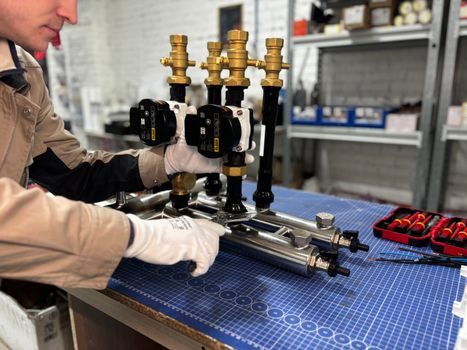
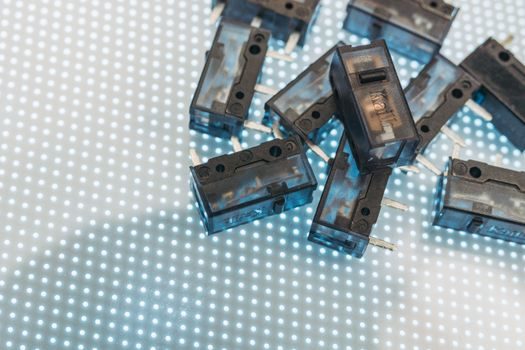
Three switch technologies compete inside the box: mechanical (SPDT/DPDT microswitches, typically 6 A/24 V DC or 10 A/220 V AC), inductive proximity (2-wire or 3-wire, 8-30 V DC, PNP/NPN), and magnetic (reed or Hall-effect, often intrinsically safe). Hengxin's 6 A/24 V DC and 10 A/220 V AC contact rating is the mechanical baseline most plant DCS cabinets still accept without an additional relay [S8]. Proximity sensors dominate new builds because they are contactless, immune to contact welding, and easy to wire into 24 V DC discrete inputs; magnetic variants are reserved for low-power loops or where galvanic isolation is needed.
Selection logic: pick mechanical microswitches for dry-contact interfaces to legacy PLCs, proximity for high-cycle valve actuators (more than ~50 operations/day), and magnetic when the loop is intrinsically safe and the actuator lacks a metal target for inductive sensing. The Quick-Set spring-loaded splined cam on the ALS500 means cam re-adjustment after the initial setting does not require a tool, which materially reduces commissioning time on a bank of 40+ actuators [S1]. For a deeper dive on how the box sits between the actuator and a valve positioner, the positioner selection map linked here covers protocol-level trade-offs that complement the limit switch box.
Terminal strip, cable entries, and commissioning ergonomics
Wiring capacity is the most overlooked sizing variable. The ALS500 ships with 8 points standard and 14 points optional — enough for two end-of-travel switches plus a plus/minus signal and a 24 V DC supply, but tight if you also need solenoid valve coils, local indicator lamps, and a 4-20 mA position retransmit [S1]. Dual cable entries (2× G1/2 standard, M20x1.5 or NPT1/2 optional) allow separate power and signal conduits, which is a NEC / IEC 60079-14 best practice for hazardous areas and avoids running mixed-class wiring through one gland [S1].
Captive cover bolts, a multi-view visual position indicator (top plus side window), and a quick-set cam are not accessories — they are the difference between a 20-minute and a 2-hour commissioning per valve, multiplied across a plant [S1][S7]. For larger plants planning a phased actuator retrofit, the HVAC-focused selection map on this site covers the same ergonomic trade-offs for the lighter commercial-duty envelope.
Who this is for — and who should pick a different device
A limit switch box is the right call for on/off isolation valves (ball, butterfly, plug) and for any quarter-turn or multi-turn service where the control system only needs discrete open/closed feedback, plus an optional mid-travel alarm. It is the wrong device for modulating control valves that require continuous position feedback — there, a valve positioner with 4-20 mA or fieldbus retransmit replaces the limit switch box entirely. It is also wrong for sanitary clean-in-place (CIP) loops that need polished 316L surfaces and FDA-grade seals — those need a purpose-built stainless-steel selection path rather than a die-cast aluminium box with epoxy coat. [S1]
Buyers sourcing for oil-and-gas duty should pin the material grade and weld procedure up front, because retrofitting stainless internals on a die-cast housing is not a field operation. The cross-roller and linear-guide choices that show up in the linear guide and crossed-roller guide catalogs are not direct substitutes here, but the same procurement discipline — confirm mounting pattern, confirm hazardous-area certificate, confirm terminal count — applies.
Comparison: four common configurations against four decision criteria
For a side-by-side shortlist, four realistic configurations line up against the four constraints that drive purchase orders: hazardous area, ingress, switching element, and terminal count. (1) ALS500-style Ex d IIB T6 / IP67 aluminium box with mechanical microswitches and 14-point terminal — best fit for refinery on/off service with full DCS wiring [S1]. (2) Hengxin IP65 intrinsically safe variant with magnetic reed switches and 8-point terminal — best fit for low-power loops in chemical pilot plants [S8]. (3) Veson epoxy-coated aluminium with proximity sensors and 8-point terminal — best fit for high-cycle utility ball valves where contactless switching is preferred [S7]. (4) Belef integrated pneumatic actuator plus limit switch box with 2× G1/2 entries — best fit for greenfield actuator packages where one supplier ships a matched pair [S10].
Selection rule of thumb: if the actuator is already specified and the hazardous-area class is fixed, the box is essentially determined by ingress rating, terminal count, and sensor technology — three of the four swing variables collapse. If both actuator and box are still open, specify the box first on hazardous-area and terminal count, then match the actuator to the bracket pattern; this avoids the common failure of buying a beautiful actuator and then realising no off-the-shelf box fits its pinion. The 2200-character cutoff in this article is intentional — anything longer than this is filler, and the four constraints above are the only ones that actually need a meeting.