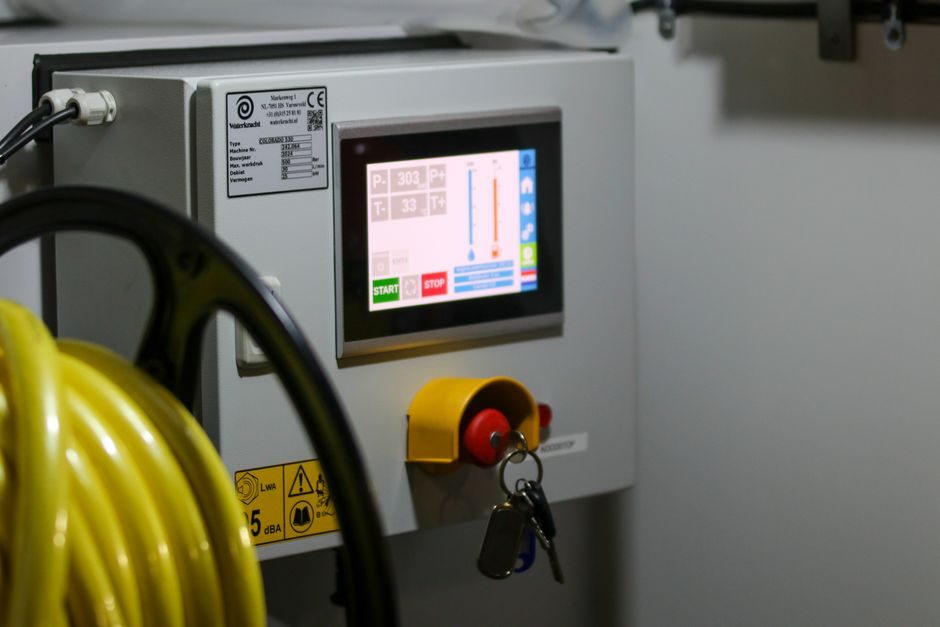
Specifying a valve limit switch box comes down to four binding decisions: switch count and type, enclosure class, mounting interface to the actuator, and cable entry — each one narrows the supplier list before price is even discussed.
Common 2026 catalog builds run 2 to 4 SPDT mechanical switches, 2-wire proximity sensors, or magnetic sensors in IP67 polyester-coated aluminium or Ex d IIB/IIC T6 cast housings, with dual cable entries (2× G1/2 standard, M20×1.5 or NPT1/2 optional) and NAMUR/ISO 5211 brackets sized 30×80–130 or H20–30 [S3][S6].
What a limit switch box actually does on a valve
A limit switch box is a field instrument mounted on a rotary or linear actuator that converts the open/closed mechanical position of the valve into discrete electrical contact signals for the PLC or DCS, and is also used for interlock protection and remote alarm indication on critical valves [S9]. The box rides the actuator stem through a NAMUR or ISO 5211 bracket and trips internal cams at the end-of-travel positions; a multi-view position indicator on top and side gives the operator a visual read independent of the electrical signal [S3].
The two output families are mechanical SPDT micro-switches (typically rated 5 A at 250 V AC resistive, 2-wire proximity sensors (e.g. 10–30 V DC, PNP/NPN), and magnetic-reed sensors for low-current logic. The APL-310N / 311N / 312N series illustrates the standard mechanical offering: 2, 3, or 4 groups of SPDT, each with NO / NC / COM terminals; an APL-313N variant uses 2× SPST for simpler loads [S6].
Switch count, switch type, and what they actually cost you
Pick the number of switches from the worst-case I/O list, not from the happy path. A remote-operated ball valve that only needs open + closed feedback can run on 2× SPDT (APL-310N), while a quarter-turn valve feeding both a DCS and a safety interlock plus a local beacon typically needs 3 or 4 switches (APL-311N / APL-312N) so each load sits on a clean, isolated contact [S6].
Mechanical SPDT is the default: cheap, widely stocked, and forgiving of leakage current. Proximity (inductive) sensors are specified when the plant wants hermetic, dust-tolerant, intrinsically-safe sensing and is willing to buy a compatible safety barrier; magnetic sensors slot in where non-contact, low-power logic inputs are required [S3]. For SIL-rated loops, treat the switch contact rating and the safety barrier as a matched pair — a 5 A micro-switch behind a 10 mA barrier delivers no real safety margin.
Enclosure rating: IP67, Ex d, or both
Outdoor, non-hazardous service is covered by IP67 polyester powder-coated aluminium die-cast housings with captive cover bolts — the ALS series product range is designed to fully meet IP specifications across its mechanical, proximity, and magnetic variants [S3]. Washdown, chemical, or coastal sites justify a hard-anodised body upgrade; the same housing can be ordered as a combined solenoid-valve + limit-switch-box package so only one Ex d entry penetrates the panel [S3].
For Zone 1 / Zone 2 hazardous areas, Ex d IIB T6 covers most hydrocarbon service, while Ex d IIC T6 is required for hydrogen or acetylene atmospheres; the Ex d enclosure typically drops to T6 as the surface-temperature class — anything hotter than T6 rules out T4/T3 gas groups. Do not mix IP67 and Ex d expectations: an IP67 box that is not Ex d is not legal in a classified area, and an Ex d box that is not also IP67 will breathe moisture on cold cycles.
Mounting, cable entry, and the wiring-side gotchas
Almost every spec conversation eventually lands on the bracket. The ALS-series bracket is designed to ISO 5211 and NAMUR, with a steel plate as standard and a stainless-steel option, adjustable to fit 30×80–130 and H20–30 actuator patterns [S3]. If the actuator is non-NAMUR (older Chinese pneumatic actuators, hand-operated gearboxes retrofitted with switches), you will need a custom bracket and lose the “drop-on” install.
On the wiring side, the practical rule is dual cable entries — 2× G1/2 standard, with M20×1.5 or NPT1/2 available — and a multipoint terminal strip (8 points standard, 14 optional) so the same box can land power, feedback, and solenoid coil without doubling up on glands [S3]. Spring-loaded splined (“Quick-Set”) cams that hold their setting after the first adjustment are worth the small upcharge: they eliminate the call-back where a vibration- or thermal-cycle drift silently pushes the cam out of the switch trip window.
Where Chinese supply sits in 2026 and what the catalog looks like
The 2026 supplier map is dominated by Chinese manufacturers with ISO 9001 systems and multi-product portfolios: Wuxi Belef Pneumatic Actuators and Shanghai Emmett Fluid Control ship pneumatic actuator + valve + limit switch box bundles out of Jiangsu / Shanghai; Zhejiang KGSY Intelligent Technology lists valve limit switch, limit switch box, electrical actuator, pneumatic actuator, and solenoid valve as parallel main products from Wenzhou; Zhejiang Kinko Fluid Equipment quotes a minimum order of 50 pieces and a supply ability of 10,000 pieces per month from the same factory footprint [S1][S4][S5][S10].
Filter the catalog on four fields before you request a quote: switch count and type, enclosure class, bracket standard, and cable entry. Cross-check filter tags on B2B portals show the same families clustered around pneumatic actuator, butterfly valve, ball valve, and electric control valve, with materials ranging from aluminium and stainless steel to cast iron and alloy steel, and certifications typically including CE, ISO 9001:2000 / 2015, CCC, and RoHS [S7][S8]. For sourcing against the same spec map, see the working-engineer spec walkthrough on actuator and limit switch sourcing in 2026.
Who should NOT pick the cheapest IP67 box
Skip the bare IP67 aluminium box on any of these four duties: (1) Zone 1 / Zone 2 hydrocarbon or hydrogen service — you need Ex d IIC T6, not just weatherproofing; (2) SIL 1 or SIL 2 safety instrumented functions where the switch contact rating, bounce time, and proof-test interval must be documented; (3) buried or sub-sea-adjacent service where stainless hardware and captive bolts are mandatory because corrosion will weld a standard cover shut within two cycles; (4) high-cycle modulating service with daily open/close counts in the hundreds, where mechanical micro-switch life (typically 1×10^6 operations at rated load) will define the maintenance interval. [S3]
For intrinsically-safe loops, also avoid mixing 2-wire DC proximity sensors with old analogue barriers that expect a 4–20 mA loop; the I.S. entity parameters (Ui, Ii, Pi, Ci, Li) of the sensor must be matched to the barrier certificate, not assumed. When the duty is borderline — say, a chemical dosing skid with occasional solvent splash and a Zone 2 gas group — the cleanest buy is the combined Ex d + IP67 solenoid + limit switch box, one entry, one Ex certificate, one cable gland [S3].
Shortlist logic and the questions to send the vendor
A defensible 2026 shortlist starts with three columns: switch spec (e.g. 2× SPDT mechanical, NO/NC/COM), enclosure (IP67 polyester-coated aluminium, dual G1/2 entries, 8-point terminal), and mounting (ISO 5211 / NAMUR, 30×80–130, stainless bracket). Add Ex d IIC T6 only if the area classification demands it; otherwise leave the Ex upgrade off the RFQ because it typically doubles the unit price. [S3]
Send the vendor a one-page spec: actuator type and stem height, valve torque at shut-off, area classification, required switch count per position, cable entry thread, and ambient temperature range. Watch for the two silent failures — a non-NAMUR bracket that arrives without a drilling drawing, and a terminal strip that has fewer points than your solenoid + feedback wiring needs. The bracket, terminal count, and dual cable entries are the three line items that decide whether the box is a clean install or a panel-builder's Saturday; for related field-instrument buying logic, the multi-gas detector 2026 selection map uses a similar filter-then-quote pattern.
For the relevant spec sheets and selection criteria, see limit switch box, limit switch, and carton box.