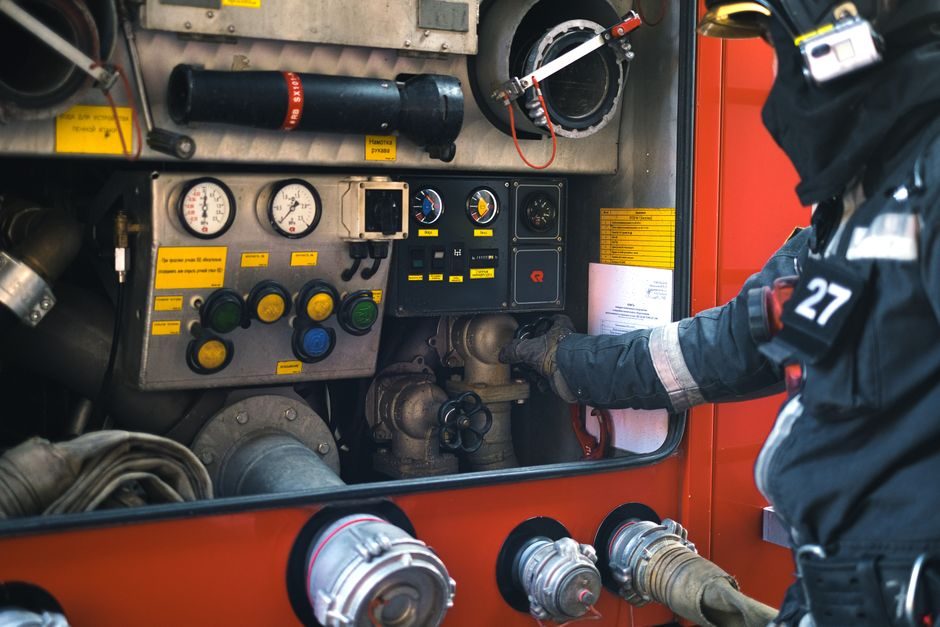
A valve positioner is a closed-loop feedback instrument — typically pneumatic, electro-pneumatic, or digital — that reads stem travel and trims the actuator drive signal until stem position matches the controller setpoint, with typical air consumption for a pneumatic positioner in the 0.3–1.0 Nm³/h range at 1.4 bar supply [S3]. A hydraulic actuator, by contrast, is a fluid-power cylinder or vane device that converts 70–350 bar hydraulic pressure into 1 kN to several MN of linear or rotary thrust to actually stroke the valve plug against process differential pressure [S2].
On a single control valve the two coexist in series: the valve positioner closes the position loop, the hydraulic actuator delivers the muscle. Specifying one without respect to the other is the most common cause of hunting, deadband, and stuck-stem tickets in upstream and high-pressure-drop service.
Where Each Device Sits in the Control Loop
The positioner lives on top of the actuator yoke as an add-on module: it reads stem position via a linked lever or non-contact sensor and bleeds air (or current) to the actuator until the feedback signal matches the 4–20 mA + HART, 0.2–1.0 bar, or 3–15 psi setpoint [S1][S3]. Pneumatic positioners remain the default for legacy 3–15 psi loops; electro-pneumatic and digital HART/Foundation Fieldbus positioners are now standard on new builds [S1].
The hydraulic actuator sits below the positioner as the power element. A double-acting hydraulic cylinder with a 4-way directional control valve and a counterbalance valve handles extension, retraction, and mid-stroke holding on fail-safe gate and ball valves [S2]. Single-acting spring-return hydraulic actuators are used where loss of hydraulic pressure must drive the valve to a safe position; Mathworks' Hydraulics (Isothermal) library — superseding the legacy Hydraulics library — models this exact configuration [S4].
Thrust, Stroke Speed and Resolution Compared
Three criteria separate the two devices cleanly. A side-by-side spec cut, drawn from the MORC and Mathworks reference material [S1][S2][S4], looks like this:
- Output force: valve positioner — none directly (a few N at the feedback link); hydraulic actuator — 1 kN to several MN depending on bore and pressure [S2].<br/>- Energy medium: valve positioner — instrument air at 1.4–4.0 bar or 4–20 mA + HART [S1][S3]; hydraulic actuator — hydraulic oil or water-glycol at typically 70–350 bar [S2][S4].<br/>- Typical response: valve positioner — full-stroke trim in 1–5 s on a small actuator; hydraulic actuator — full stroke 0.5–10 s depending on cylinder volume and pump flow [S2].<br/>- Resolution / linearity: valve positioner — 0.5–1.0% of full travel (digital units higher) [S1][S3]; hydraulic actuator — limited by static friction and compressibility, typically 1–3% without position feedback [S2].
The data is decisive on one point: a hydraulic actuator without a positioner cannot hold a stem position to better than a few percent of travel, because hydraulic fluid leaks past the piston seal under dead-headed pressure. Adding a smart valve positioner closes the position loop and drops effective linearity below 0.5% on the same hardware [S1][S3].
Who the Pairing Is For — and Who It Is Not
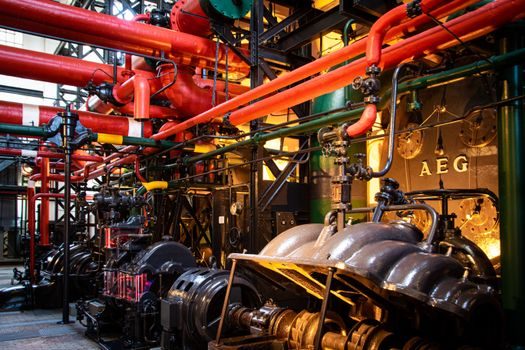
Specify a hydraulic actuator when the valve needs to break a process differential pressure above ~10 bar at full bore, when the line is ESD-rated, or when the safe state must be guaranteed on loss of instrument air — subsea christmas trees, HP separator level valves, and emergency shutdown gates are textbook hydraulic-actuator applications [S2][S4]. Specify a pneumatic actuator instead when instrument air is the only utility available and thrust stays below ~50 kN, and specify a hydraulic cylinder where the thrust requirement is linear and well above 50 kN [S2].
The positioner, on the other hand, is for anyone who needs better than 3% setpoint accuracy. Skip the positioner only on open/close isolation valves, manual valves, or on-off solenoid valves where two-state action is acceptable [S1]. Fitting a positioner to an on-off solenoid is wasted money; running a modulating control valve without one on a hydraulic actuator is a guaranteed hunt-and-oscillate ticket.
Failure Modes and Field-Recalled Constraints
Positioner failures show up as oscillation, deadband, or steady-state offset. Pneumatic positioner oscillation is usually caused by an undersized actuator volume, a leaking supply regulator, or a feedback-linkage wear point — MORC's own troubleshooting notes put supply-pressure fluctuation above 0.2 bar as the leading cause of sustained hunting [S1]. Electro-pneumatic and digital positioners add a second failure surface: HART communication dropouts and Foundation Fieldbus segment loading faults, which look identical to mechanical hunting unless the handheld is plugged in [S1].
Hydraulic actuator failures are different in kind. Counterbalance valve leakage causes the actuator to drift when the directional valve is centred — the standard counterbalance configuration in the Mathworks reference model shows the valve in an open-center 4-way arrangement precisely to limit this drift under pump idle [S2]. A single-acting spring-return hydraulic actuator can fail to stroke if the spring is undersized for the actual process differential, or if the hydraulic supply pressure sags below the cracking pressure of the counterbalance or pilot valve [S4]. Both reference models are built on the Isothermal Liquid library, which is the current Simscape Fluids replacement for the legacy Hydraulics (Isothermal) library marked for removal in a future release [S4].
Selection Criteria When Both Are on the Same Valve
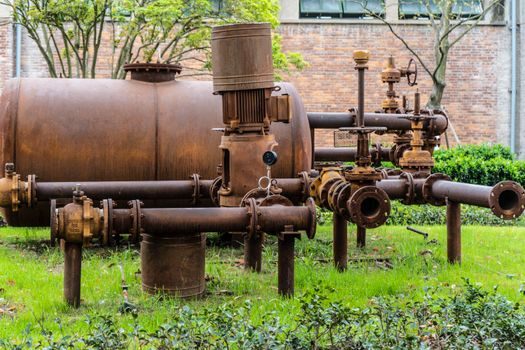
For a modulating control valve with high differential pressure, the working sequence is: size the hydraulic actuator first for thrust and stroke time, then size the valve positioner for resolution and protocol. MORC's selection flow for pneumatic positioners lists supply pressure, actuator volume, and required travel time as the three binding inputs [S1]; the same three inputs govern digital positioner selection, with the addition of bus protocol (HART, Foundation Fieldbus, PROFIBUS PA) and diagnostic coverage [S1].
Two practical rules come out of the reference material. First, never close-couple a small-bore pneumatic positioner to a large-bore hydraulic cylinder — the positioner output cannot sink the air or oil flow needed to stroke a cylinder above ~150 mm bore, and the result is sluggish response and thermal drift [S1][S2]. Second, on a double-acting hydraulic actuator specify a positioner with a true bipolar output, not a single-acting positioner with a reversing relay, because the reversing relay adds 0.5–1.0% extra deadband and a documented failure mode when the relay sticks [S2].
Standards and Sourcing Anchors
Instrumentation specs in this segment are typically governed by ISA-75 lineage documents for control valve terminology and by the IEC 61508 / IEC 61511 safety-instrumented standards for ESD-rated hydraulic actuators — both referenced in the MORC and Mathworks documentation environment but not quoted in full in the public pages [S1][S2][S4]. For positioner-to-actuator mounting, the NAMUR NE 1 / VDI/VDE 3845 standard is the de-facto reference for yoke, pinion, and feedback-linkage geometry, and is the same geometry the MORC product family is built around [S1].
On sourcing, MORC (China-based) markets pneumatic and electro-pneumatic positioners with a 15-year OEM track record, ISO 9001:2000 base quality system, and active product lines covering electric actuators, solenoid valves, and limit switch boxes [S1][S3]. Mathworks publishes the simulation reference models on a separate channel (jp.mathworks.com, with a US mirror at mathworks.com) and is the only vendor in the research set that provides a published, scripted, and parameterised model of a hydraulic actuator with counterbalance [S2][S4].
For a process engineer in mid-2026, the cross-reference between pneumatic and hydraulic actuation on a single control valve is best read in Hydraulic vs Pneumatic Valve Actuator: 2026 Spec-Cut for Process Engineers, and the underlying bus-level trade-offs (relay vs terminal block, 4–20 mA HART vs Foundation Fieldbus) are unpacked in Industrial Relay vs Terminal Block: Spec-Driven Selection for Control Panels. Positioner, actuator, and cylinder are three different items on the same bill of material — get the geometry and bus protocol right and the rest of the loop tends to behave.
