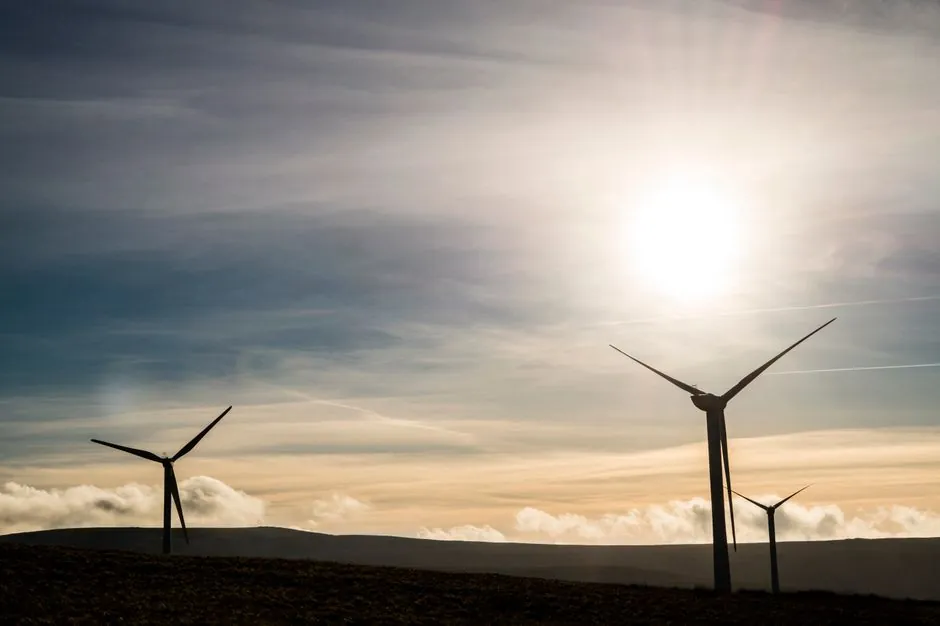
Vestas retained the top spot in global wind turbine installations in 2024, adding roughly 15.8 GW of capacity, per Wood Mackenzie tracking of annual OEM installations [S3]. The Danish OEM held off a tightly packed second tier led by Goldwind, Siemens Gamesa (now Siemens Energy), GE Vernova (formerly GE Renewable Energy), and Mingyang Smart Energy.
Asking which manufacturer ships the most megawatts is the wrong frame for 2026 procurement, because the answer splits sharply between on-land utility-scale, distributed/midsize, and offshore floating platforms, each with its own dominant OEM and a different component supply chain underneath. For engineers sizing nacelle auxiliaries such as pressure transmitters or hub flow meters for hydraulic pitch systems, the platform mix matters as much as the brand name on the nameplate.
2024 Installation Rankings: Top Five OEMs by Capacity Added
Vestas installed approximately 15.8 GW in 2024, the highest single-year total on record for the company, and that figure made it the global leader by megawatts commissioned [S3]. The 2020-vintage Wood Mackenzie record also confirms Vestas was already the first OEM to cross 100 GW of cumulative installations worldwide, a milestone no other turbine maker has matched.
Goldwind of China held the number-two slot, with most of its volume delivered to domestic on-land projects, while Mingyang, Envision, and Sany Heavy Energy rounded out a Chinese contingent that together accounted for a majority of 2024's on-land GW additions. Siemens Gamesa (since merged into the Siemens Energy Wind business) and GE Vernova remained dominant in the European and U.S. offshore segments, with GE Vernova's Haliade-X 14 MW platform and SGRE's SG 14-222 DD competing in the largest utility-scale offshore class.
For procurement teams, the practical read is: when the project is on-land utility-scale, Goldwind, Mingyang, and Envision win on cost-per-MW; when it is European offshore, Siemens Energy and GE Vernova are still the two main bidders; when the project is a 5 MW-plus floating demonstrator, the supplier list is still narrow enough that the same three or four names appear in nearly every bid sheet [S2].
Capacity Bands Driving the 2026 Order Mix
The 2024 Wood Mackenzie data shows a clear skew toward larger rotors, with onshore platforms in the 4-6 MW range now standard for utility-scale projects, and offshore units in the 12-16 MW class being delivered or ordered for European and U.S. sites [S3]. Average nameplate capacity for newly installed onshore turbines climbed past 5 MW in 2024, up from around 2.5 MW a decade earlier, driven by the same land-use and LCOE economics that pushed rotor diameters past 160 m.
Floating-wind segmentation, as defined in earlier market research covering the 2018-2023 window, splits capacity into four bands: up to 1 MW, 1-3 MW, 3-5 MW, and 5 MW and above [S2]. By 2026 the "5 MW and above" band is the only one with material order volume for utility-scale floating projects, and the leading OEMs offering pre-commercial or commercial floating platforms in that band include Vestas, Siemens Energy, GE Vernova, Mingyang, and a small set of Japanese and Korean firms (Hitachi, Doosan Enerbility).
For component buyers this matters because larger nacelles and rotors change the spec envelope for everything bolted to the hub: pitch-system hydraulic pressure, yaw-drive torque, and the turbine flowmeter range on gearbox lubrication skids all have to be re-rated when a 3 MW class machine is replaced by a 6 MW class machine. A yaw-drive hydraulic pack spec'd for 250 bar in 2018 needs a fresh review in 2026, not a drop-in replacement.
Midsize, Distributed, and Remanufactured: the Sub-1 MW Tier
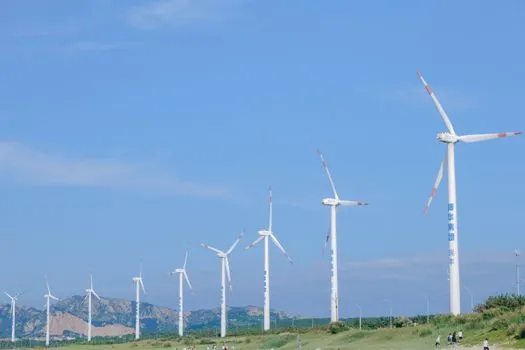
Below 1 MW the OEM landscape inverts completely. Vestas, Enercon, Siemens Gamesa, and GE stopped new production of sub-1 MW machines years ago, and the gap is filled by remanufacturers of legacy Vestas, Nordtank, and Tacke platforms, plus a small group of new entrants [S1].
Halus Power Systems, based in San Leandro, California, has been remanufacturing legacy Vestas turbines in the 65-600 kW band for more than a decade and stocks units from 90 kW to 600 kW at its facility, supporting distributed, off-grid, and remote-community projects across North America [S1]. The same page notes that remanufactured Vestas turbines are positioned as "best-of-breed" in the under-1 MW size band because no major OEM currently builds new machines in that envelope.
This is the segment where industrial buyers specifying auxiliaries such as small pressure sensors, single-loop PLC controllers, and basic hydraulic pitch actuators will see the longest parts tail, because machines installed 15-25 years ago are still in commercial service and will remain so for at least another decade. Spare-parts, not new units, dominate revenue in this band.
Component Supply Chain Concentration
Wind turbine main shafts, gearboxes, bearings, blade composites, and pitch systems are dominated by a small group of Tier-1 and Tier-2 suppliers, and the same suppliers typically serve multiple OEMs, so the concentration in components is tighter than the concentration in turbine OEMs themselves. Jinlei Technology of China, for example, is described as a global leader in wind turbine main shaft forging, with 16 years of shaft-forging experience, and is now expanding into integrated casting to capture value as turbines grow larger and offshore volume rises [S5].
Bearings, gearbox lubricants, and pitch systems are similarly concentrated: a handful of European and Japanese bearing makers, a few global lubricant blenders, and a small number of pitch-system integrators supply the bulk of the market, with regional analyses segmenting the bearing and gear-oil markets across North America, Europe, Asia-Pacific, South America, and MEA [S4][S6]. The pitch-system market itself is a sub-segment where the same consolidation logic applies, with hydraulic and electric pitch systems on a slow path toward common control interfaces [S8].
For spec work, this concentration means two adjacent turbines from different OEMs are often built on the same SKF or Schaeffler bearing, the same Mobil or Castrol gear oil, and the same Moog or Bosch Rexroth pitch valve, so the bill-of-materials variance is in the rotor, the tower, and the converter, not in the commodity components. A buyer reviewing a Vestas 4 MW versus a Goldwind 4 MW on parts commonality will find the gearbox, main shaft, and pitch hydraulics list overlaps by more than half.
Comparison: On-land, Offshore Fixed-Bottom, and Floating Platforms
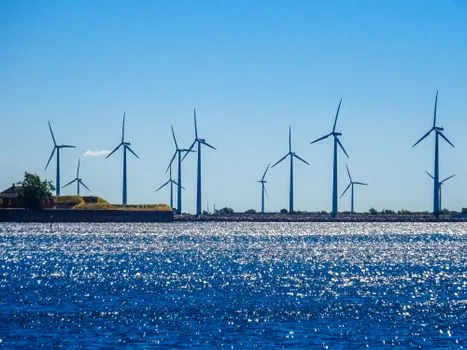
On a like-for-like procurement checklist, the three segments line up very differently. On-land utility-scale (4-6 MW class) is dominated by Goldwind, Mingyang, Envision, Vestas, and Siemens Energy; offshore fixed-bottom (8-16 MW class) is led by Siemens Energy and GE Vernova with Vestas, Mingyang, and CSSC Haizhuang growing share; floating offshore (10 MW-plus class) remains a pre-commercial field with Vestas, Mingyang, and Doosan Enerbility as the most active OEMs [S2][S3].
By LCOE, on-land utility-scale remains the lowest-cost segment, floating offshore is the highest, with offshore fixed-bottom sitting between. By lead-time, on-land turbines are 12-24 months from order to commissioning, offshore fixed-bottom is 36-60 months, and floating is 48-72 months for first-of-kind units. By nacelle auxiliary spec pressure (where industrial valve and pressure-transmitter ratings come in), on-land units sit around 350-420 bar hydraulic pitch pressure, offshore fixed-bottom units sit around 380-450 bar, and floating units run higher because larger blades need more hydraulic force per degree of pitch change.
Reliability, Failure Modes, and Sourcing Signals
The 2024 installation record for Vestas was set despite a well-known history of main-bearing and gearbox failures in the 2-3 MW class, a failure pattern that has driven design changes (smaller main-bearing diameters, planetary gearbox re-rating) across the industry and pushed buyers toward platforms with at least 3 years of in-service data [S3]. The same constraint applies to any new 6 MW-plus on-land platform: until a design has accumulated several thousand fleet hours, gear-oil and bearing suppliers will be conservative on warranty terms.
Floating platforms add mooring-line and dynamic-cable failure modes not present in fixed-bottom designs, which is why the floating market remains narrow and dominated by OEMs with offshore engineering depth, not by volume onshore manufacturers [S2]. For a spec engineer evaluating a 10 MW-plus turbine, the main bearing, the gearbox planetary stage, and the pitch-system proportional valve are the three components where field-data accumulation is non-negotiable, and where a less-known OEM brand should be deferred until the service data is available.
Tracking signals for the next 12-18 months: the Wood Mackenzie 2025 annual installation ranking (typically released Q1 the following year), Mingyang and Envision 2024 audited shipment numbers (released in their HK/A-share annual reports), and any new floating-commercial-project FID announcements in the UK Celtic Sea, France, or South Korea, all of which will set the 2026 OEM order book. A 2026 revival in on-land U.S. volumes would shift the Goldwind-Vestas spread noticeably, while any confirmed 18 MW+ offshore order would re-rank the offshore segment.
This topic is covered further in Pneumatic Nail Gun for Demolition: Spec Map, Tool Lineup, and Sourcing Signals (2026-08).