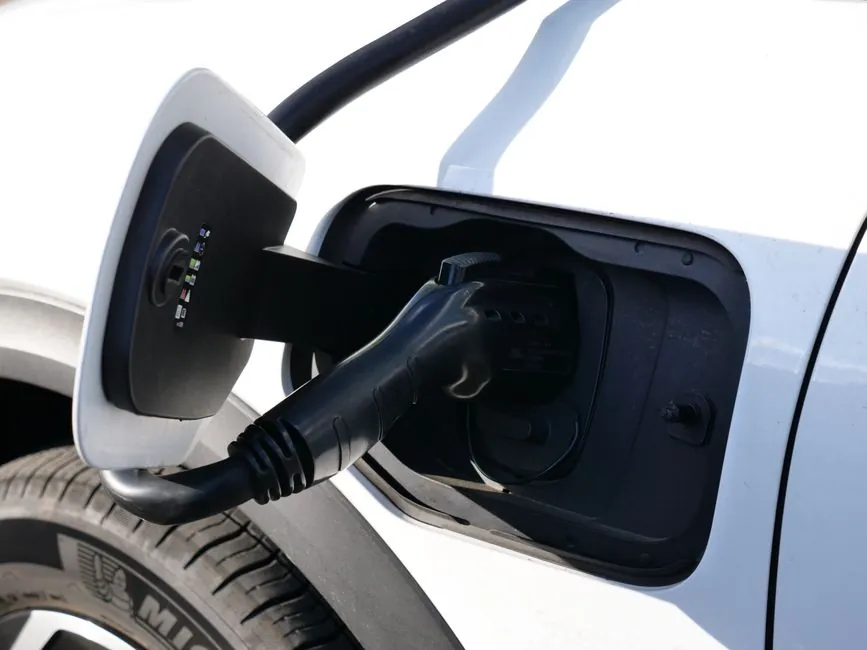
IndustryARC models the global electric vehicle market at $951.90 billion by 2030, expanding at a 13.70% CAGR across the 2024-2030 window, with battery-electric vehicles (BEVs) projected to grow at a 42.51% application CAGR through 2025 [S1].
On-road EV stock is forecast to climb from 3 million units in 2017 to 125 million units by 2030, per the IEA, a forty-fold increase that reshapes battery cell demand, motor volumes, and downstream stationary storage supply [S1].
Battery Chemistry, Cell Demand, and Pack Architecture Through 2036
IDTechEx's "Li-ion Batteries and Battery Management Systems for Electric Vehicles 2026-2036" report tracks cell, pack, and BMS demand across cars, buses, vans, trucks, and micro-EVs, with chemistry benchmarking across NMC, LFP, sodium-ion, and solid-state variants [S3]. The common propulsion chemistries in service today are sealed lead acid (SLA), NiMH, and Li-ion, with Li-ion capturing the bulk of new passenger and commercial programs [S1]. BEV dominance is attributed to lower per-kWh cost, higher energy density, lighter pack mass, and stronger charge-discharge efficiency versus hybrid platforms [S1].<p>For process engineers sizing cell and pack lines, three forward signals matter: LFP cost-down continues to compress NMC share in entry segments, sodium-ion pilots are entering low-range micro-EV duty cycles, and BMS suppliers are absorbing functional-safety requirements that previously sat in the vehicle ECU. IDTechEx's parallel coverage on pack sensors and remote monitoring indicates that state-of-health telemetry is becoming a bill-of-materials line item, not an option, particularly for fleets with depot return profiles.
Electric Motors: Rare-Earth Reduction, Axial Flux, and In-Wheel Architectures
IDTechEx's "Electric Motors for Electric Vehicles 2026-2036" report covers global motor markets, axial flux, in-wheel topologies, thermal management, rare-earth reduction, and granular regional forecasts for cars, micro-EVs, buses, vans, and trucks [S4]. Permanent-magnet motors remain the efficiency leader, but rare-earth price exposure has pushed OEM and Tier-1 designs toward ferrite-assisted and externally-excited synchronous topologies.
Axial flux machines deliver higher torque density per kilogram and shorter axial length, a fit for low-floor bus and van platforms where packaging is constrained. In-wheel motors eliminate the driveshaft and differential hardware but add unsprung mass and brake-system integration work. China exported electric motors valued at $12.90 billion in 2017, a baseline figure that reflects motor manufacturing scale rather than 2026 trade flows [S1].
Regional Mix: APAC at 37.36% of Global EV Demand
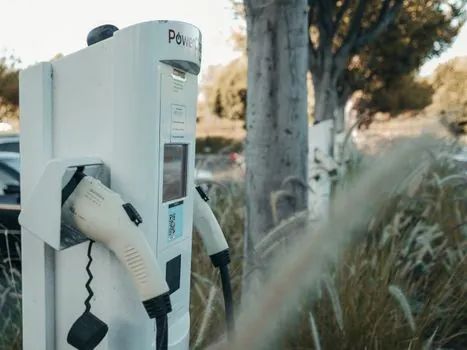
APAC held 37.36% of global EV demand in 2018, with China accounting for more than 99% of global electric bus and two-wheeler stocks in 2017, per IEA data cited by IndustryARC [S1]. China also consumed more than 50% of the 1 million-plus electric cars sold globally in 2017, with domestic sales reaching roughly 580,000 units, a 72% year-on-year increase [S1].
For sourcing managers, the regional concentration matters in two ways. First, APAC OEM density shortens prototype lead times for motors, controllers, and pack sub-assemblies. Second, APAC two-wheeler volume, electric scooters and light motorcycles, is the highest-mix micro-EV segment and the most price-sensitive, which forces LFP and sodium-ion adoption on a faster curve than in passenger BEV programs. The same IEA dataset puts electric bus count at 370,000 and two-wheeler count at 250 million in 2017, illustrating how off-car segments skew the regional mix [S1].
Second-Life EV Batteries and the 2030 Grid Storage Crossover
A 2022 Nature Communications study, "Electric vehicle batteries alone could satisfy short-term grid storage demand by as early as 2030," tracks at 81k article accesses and 258 citations as of 7 August 2026, placing it in the 99th percentile of similar-age articles across tracked journals [S2]. The core finding: retired EV packs, aggregated and managed as distributed storage, can absorb short-duration grid balancing demand independently of dedicated stationary battery builds by 2030.
For utilities and project developers, this changes the build-vs-buy calculus. A second-life pack is not a grid-tied battery in the new-build sense, but it competes with new Li-ion stationary installations on levelized cost when pack residual capacity is high enough and repurposing cost is contained. The technical gate is state-of-health grading, certification to stationary safety standards, and a contractual chain-of-custody from the OEM through the pack's first automotive life.
Comparison: BEV, PHEV, and HEV Demand Profiles 2024-2030
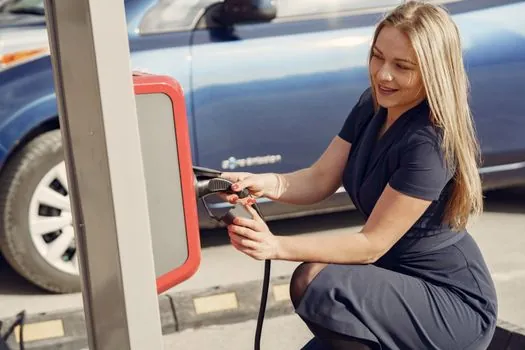
IndustryARC's segmentation places BEV at a 42.51% application CAGR through 2025, the highest of the three propulsion classes, driven by cost-per-kWh, energy density, and charging efficiency [S1]. Hybrid and plug-in hybrid demand grows on a slower curve, sustained by regions with weak charging coverage and by fleets needing range buffer. The common Li-ion, NiMH, and SLA chemistries split by duty cycle: BEVs concentrate on Li-ion, hybrids retain NiMH for some Toyota-class programs, and low-speed micro-EVs continue to use SLA in the lowest price tiers [S1].
On three decision criteria, total cost of ownership favours BEV for high-utilization urban fleets and last-mile delivery, charging infrastructure access favours PHEV in transitional depots, and payload-towing duty cycles still favour hybrid or range-extender layouts. Procurement teams should weight these criteria against local electricity pricing, depot retrofit cost, and residual-value assumptions, not against sticker price alone.
Sourcing Signals and What to Track Through 2030
Three signals are trackable across 2026-2030: the IDTechEx Li-ion 2026-2036 forecast revisions [S3], the IDTechEx motor 2026-2036 forecast revisions by region and topology [S4], and any IEA Global EV Outlook update to the 125 million on-road stock baseline for 2030 [S1]. For build decisions, the next node is the 2027 IDTechEx update covering axial flux, in-wheel, and rare-earth-free motor adoption rates against the 2026 baseline.
Two cross-domain threads are worth watching. First, edge gateways inside depot chargers are now BMS-adjacent, a topic explored in coverage of edge computing gateway spec maps for 2026 industrial architecture and in the broader 2026 edge computing gateway market sizing and growth bands. Second, motor and pack manufacturing capacity is pulling on hydraulic and pneumatic actuator supply chains, the kind of pressure described in the 2026 pneumatic actuator supplier map, which shapes lead times for plant retrofits that feed EV production lines.
Spec-level background on the components involved: electric actuator, electric ball valve, and electric pallet truck.