Chinese tier-1 monocrystalline PERC and TOPCon modules on Made-in-China listed between US$0.08 and US$0.12 per watt FOB in July 2026, with MOQs starting at 50 m² per shipment [S2].
Sinovoltaics' July 2026 webinar series ranks UV-induced degradation, not PID, as the most common PV module defect seen in field inspections over the last 12 months, reshaping QA priorities for new builds [S3].
Cell Architecture Race: TOPCon, HJT, and BC in 2026
Three architectures now share the utility-scale procurement pool. TOPCon (n-type passivated contact) is the volume leader, with bifaciality factors of 0.80–0.85 and bifacial gain commonly specified at 15–25% under albedo-corrected yield modelling. HJT (heterojunction) carries a 2–4% absolute efficiency advantage over TOPCon in production runs but requires Indium Tin Oxide (ITO) sputter targets that constrain the supply chain. BC (back-contact) cells, including HPBC and TBC variants, push front-side efficiency past 25% in module form, but the back-side stringing demands tighter soldering tolerances that drive scrap rates up at lines below 2 GW annual capacity. In competitive tenders, TOPCon typically wins on levelized cost of energy (LCOE) when the capex delta exceeds US$0.015/W, while HJT wins in low-irradiation climates where the temperature coefficient of roughly −0.24%/°C outperforms TOPCon's −0.30 to −0.35%/°C. [S3]
The adoption split is also regional: European tenders continue to favour HJT for residential and C&I rooftop because of the better temperature behaviour, while Middle Eastern and Indian utility-scale buyers default to TOPCon for the lower unit price. For plant designers comparing the three against a pressure transmitter cooling-loop sensor, the architectural choice is rarely driven by controls but by the warranty regime: a 30-year linear power warranty with first-year degradation ≤1% and annual degradation ≤0.4% is now table stakes for utility procurement.
Module Price Bands and What They Buy
Made-in-China listings in July 2026 cluster into three price bands. Tier-1 monocrystalline modules from Chinese gigawatt-scale fabs sit at US$0.08–0.12/W, with TUV Rheinland or TUV SUD certification mandatory for EU-bound shipments. Mid-tier domestic-brand modules (in-house cell, third-party laminate) list at US$0.06–0.09/W, suitable for projects where the EPC absorbs module-failure risk.
For a 100 MW AC project, the per-watt delta of US$0.04 between tier-1 and mid-tier modules translates to US$4 million in capex, but the warranty delta and bankability rating often swing the developer's IRR by 50–80 bps. Procurement teams should validate three numbers per datasheet: nameplate STC power tolerance (Pmax typically ±3%), temperature coefficient of Pmax, and the 25-year linear power output guarantee expressed as a percentage of the nameplate.
Balance-of-System and the EPC Margin Layer
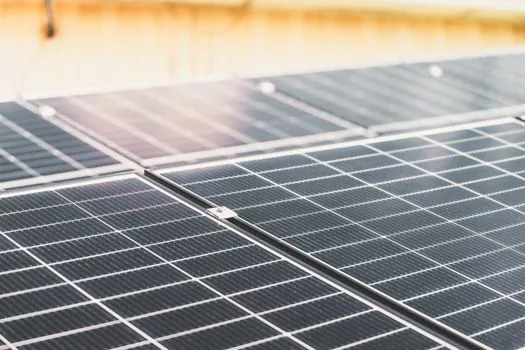
Module costs have fallen to roughly 35–45% of utility-scale EPC capex in 2026, down from 55–60% a decade ago, which has shifted the margin pool to BoS, inverters, trackers, and integration labour. Sinovoltaics' July 2026 webinar agenda lists PV inverter quality inspection, transformer quality inspection, cable quality inspection, and solar mounting structure QA as standalone service lines, evidence that EPC failure cost now concentrates outside the module [S3].
Single-axis trackers have largely displaced fixed-tilt on sites above 5° slope, with backtracking algorithms required to prevent inter-row shading at latitudes above 35°. Central inverters (3–6 MW per skid) dominate utility blocks, while string inverters (50–250 kW) win on sites with heterogeneous azimuth or partial-shading risk. EPCs that pair 1500 V DC architecture with 600–800 V AC medium-voltage transformers can compress balance-of-system cost by 5–8% versus 1000 V DC legacy designs, but only on sites where the industrial valve and flow meter SCADA integration can accept the higher DC fault-loop impedance.
Land-Use, Glare, and the Landscape-Permit Constraint
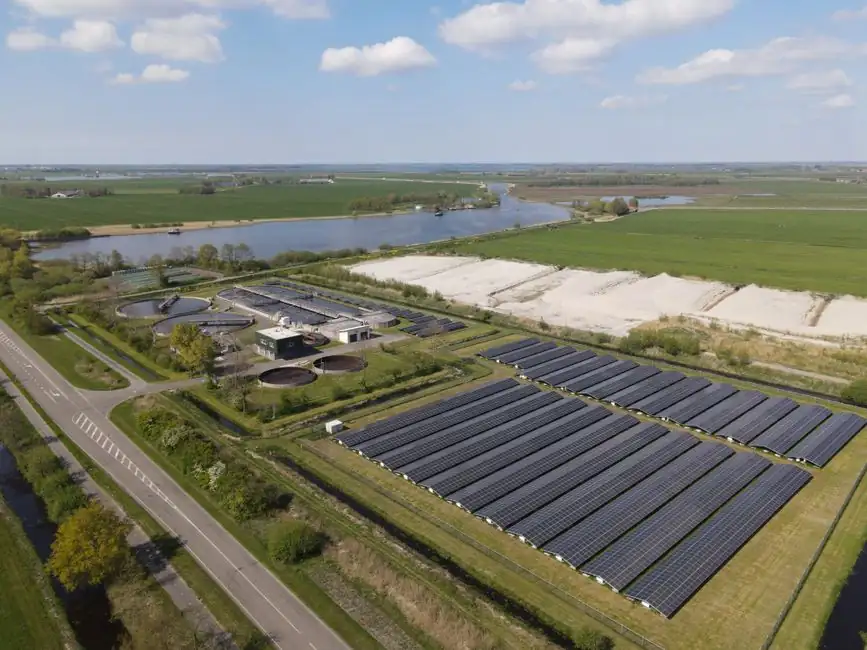
Ground-mounted utility arrays remain the least-cost design for PV at scale, but landscape-impact analysis is now a hard-gate permitting requirement in Andalusia, Germany, and parts of Italy, per a 2015 transdisciplinary design review still cited in 2026 planning practice [S5]. Common rejection causes: glare studies that fail the 10,000 cd/m² threshold at the nearest residential receptor, and agricultural land-class conversion that triggers an Environmental Impact Assessment under EU Directive 2011/92/EU.
The same Scognamiglio review also points to "landscape-integrated" PV as the only mitigation route when a permit is contested, meaning bifacial vertical east-west modules, low-profile fixed-tilt at under 1.2 m above grade, or vegetated buffer strips between array and receptor [S5]. Procurement teams facing a landscape challenge should ask the EPC for a glare model run under SGHAT/Windscreen methodology, an F:ratio of module area to setback distance above 0.20, and a documented community-engagement log.
Bankability, Certification, and the Tier-1 List Question
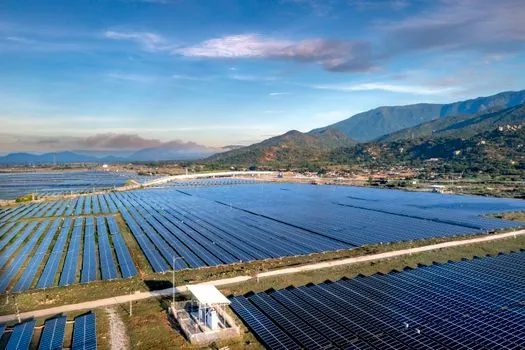
"Tier-1" is a BloombergNEF classification, not a certification, and it is the single most-misused term in 2026 PV procurement. BNEF tier-1 requires that the module maker has supplied own-brand, own-manufactured cells and modules to six different non-affiliated project financings closed in the previous two years. For a 2026 tender, equivalent trust signals include IEC 61215 and IEC 61730 third-party test reports issued by TUV, UL, or JIS, IEC 62941 quality system audits, and a published PID-resistance result under IEC 62804 at 85 °C / 85% RH for 96 hours. Plants whose offtake is a corporate PPA typically add IEC 61701 salt-mist severity 6 for coastal sites and ammonia-corrosion testing per DLG for agricultural sites. [S3]
The reliability signals buyers should track in 2026: (1) the Sinovoltaics PV Manufacturer Ranking report, updated quarterly; (2) UVID testing under IEC 61215-1:2021 ED2 sequence Z; (3) EL imaging at 100% of outgoing modules, not AQL sampling; and (4) a documented Safe Harbor or Supply Integrity Network (SINe) traceability audit [S3]. Plants that fail to specify all four typically see insurance premiums 10–20% higher than the baseline, or face exclusions on the 25-year power warranty.
Where the 2026 Margin Actually Lives
Module ASPs are no longer the place to find alpha. The margin in 2026 sits with EPCs and BESS-integrated hybrid plants, where Sinovoltaics reports a structural shortage of FAT/SAT-capable quality teams in Europe and North America [S3]. Co-located BESS at 1:1 power ratio with 2–4 hour duration is now a default bid requirement in many European capacity-market auctions, and PLC-based plant controllers that hand off active/reactive power between PV inverter, BESS PCS, and grid SCADA under IEC 61850-90-5 are the integration chokepoint.
For 2026 buyers, three trackable signals will shape the next 12 months: Sinovoltaics' next PV Manufacturer Ranking drop, the Q3 2026 BESS asset-management webinar (Webinar 40) outcome on long-term KPIs, and any change in EU CBAM scope that extends the carbon-adjustment levy from inverters and transformers to PV modules. The competitive race is no longer who makes the cheapest panel. It is who can deliver a bankable, monitorable, BESS-ready megawatt package on time, on spec, and on warranty.
Related analysis: EV Charger OEM vs ODM Manufacturing: 2026 Spec Decision Map.