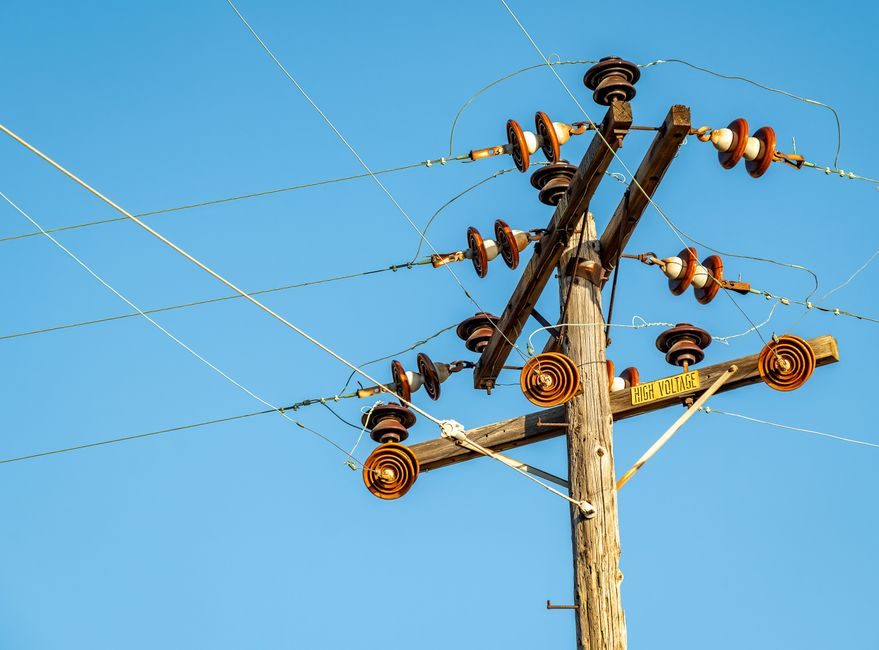
A 25 kVA oil-immersed high-voltage distribution transformer lists for roughly US$500–US$2,000 per piece on Made-in-China wholesale portals, with typical 1-piece MOQ and Wuhan UHV / ZHEJIANG CHBEST power-technology sourcing [S2].
Higher kVA ratings and dry-type or pad-mount enclosures push per-unit pricing into the US$3,000–US$12,000 band at factories such as Taizhou Haitian, Hubei Huayi, and Shandong Xincheng, all of which publish audited price points and ISO 9001/14001/45001 certificates [S3].
What "voltage transformer" actually means in 2026 sourcing
The Chinese supplier base defines a 高压变压器 / HIGH Voltage transformer as a unit that uses electromagnetic induction between a primary and secondary winding on a shared iron core to step low voltage up (or step high voltage down) [S4]. In procurement, the term covers at least four distinct physical products: (1) instrument voltage transformers (VT / PT) for metering and protection, (2) power distribution transformers up to 36 kV class, (3) high-voltage test transformers used for AC/DC withstand and partial-discharge testing, and (4) high-frequency / oil-immersed step-up units for industrial rectifier or furnace duty [S2]. The published 2026 wholesale category on Made-in-China carries 6,000+ SKUs across 2,000+ Chinese factories, with verified price ladders [S3].
Confusion is common: a "voltage frequency transformer" listing on Made-in-China frequently turns out to be a high-voltage test set (Ydq Power "Frequency Withstand Voltage Applied Potential High Voltage Test Transformer", US$700–US$9,000 per set, 1-set MOQ), not a power-frequency distribution unit [S2]. Buyers should match the exact duty — meter, distribution, test, or rectifier — before reading the price column.
Cost driver 1 — kVA rating and voltage class
Per-kVA cost falls steeply as rating rises, but the absolute unit price climbs. Across audited Made-in-China factories in late 2025, a 25 kVA single-phase distribution unit from Guangdong Forui Electric sits at US$900/piece, while a 50 kVA three-phase dry-type from Taizhou Haitian reads US$3,000/piece and a higher-class unit lists at US$10,000/set [S3]. Xuzhou Jinteng prices a comparable oil-immersed unit at US$1,000–US$2,600/piece depending on configuration [S3].
Voltage class — 10 kV, 35 kV, or 110 kV — adds bushings, tap-changers, and insulation coordination that move the BOM. The 25 kVA test-transformer tier (US$700–US$9,000) is a separate price cluster from the 50–2500 kVA power-distribution tier (US$900–US$12,000) [S2][S3].
Cost driver 2 — oil-immersed vs dry-type vs cast-resin
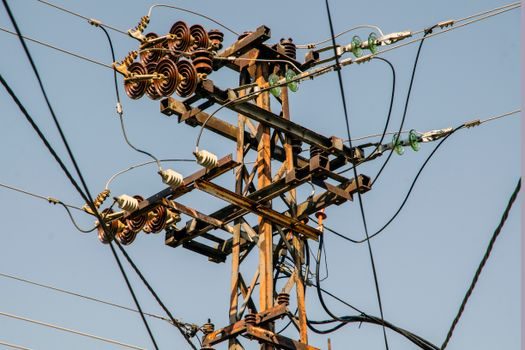
Oil-immersed (ONAN) units are the cheapest per kVA because mineral oil and grain-oriented silicon-steel cores are mature, but they require bunds, fire-safety spacing, and periodic oil testing. ZHEJIANG CHBEST's separated-winding oil-immersed distribution transformer starts at US$500/piece [S2].
Dry-type and cast-resin units eliminate the oil and indoor fire-load premium, but the resin, vacuum-pressure impregnation, and higher-grade insulation (typically Class F or H) lift the same kVA by 30–80% in spot checks on Made-in-China [S3]. The Hubei Huayi HV transformer line at US$3,473–US$3,495/piece is a representative dry-type or resin-cast tier [S3].
Cost driver 3 — certification, losses, and standards tier
Factories with ISO 9001:2015, ISO 14001, and ISO 45001:2018 (e.g. Hubei Huayi Electric Group) command a documented quality premium and tend to publish tighter no-load and load-loss figures in kVA ratings above 100 kVA [S3]. Buyers who need IEC 60076 series, IEEE C57, or DOE 2016/2023 efficiency compliance should expect 10–20% price uplift over the baseline listing, and a longer lead time because Type and Routine test reports are bundled.
For instrument VTs going into revenue metering or protection, additional standards typically apply: IEC 61869 for accuracy class 0.2 / 0.5 / 1 / 3P, and IEEE C57.13. These are not interchangeable with power-transformer standards and carry their own calibration cost. Buyers mapping a 2026 budget should keep the instrument VT as a separate line item, not fold it into a power-transformer RFQ. For a broader look at how voltage and power transformer categories differ in kVA, voltage class, and cooling, the encyclopedia pages are a useful cross-reference.
Cost driver 4 — MOQ, lead time, and Incoterms

Most Chinese factory listings enforce a 1-piece MOQ on standard ratings but quote 5-piece MOQ on custom units, as seen on Currentwise Technology's US$3,000/piece cable-side transformer listing [S3]. Volume breaks at 10, 50, and 100 units typically unlock 5–15% step-downs, with a sharper break once tooling or kVA-specific winding fixtures are amortised.
Lead time from RFQ to ex-works is 15–45 workdays for stock ratings (Xuzhou Jinteng publishes "within 15 workdays" fast delivery [S3]) and 60–90 days for engineered units. Incoterms move the landed cost materially: EXW leaves the buyer holding inland China freight plus 13% VAT rebate logistics, FOB adds ocean freight at roughly 3–8% of unit price for 20–40 ft containers, and CIF / DAP adds another 1–2% plus destination customs duties that vary widely by country.
2026 price ladder by duty
Synthesising the audited 2025–2026 listings into a working price table: (1) 25 kVA oil-immersed distribution — US$500–US$2,000/piece, 1-piece MOQ [S2]; (2) 50 kVA three-phase distribution — US$900–US$2,600/piece, 1-piece MOQ [S3]; (3) 50–500 kVA dry-type / cast-resin — US$3,000–US$10,000/set, 1-piece MOQ [S3]; (4) 1 MVA+ pad-mount or substation class — quote-based, typically US$12,000+/set and custom-engineered [S3]; (5) HV test transformer (Ydq / AC withstand / partial discharge) — US$700–US$9,000/set, 1-set MOQ [S2].
For buyers who want a dry-type transformer cross-reference, the construction and loss-class trade-offs are explained in the encyclopedia entry. A HV test transformer used for cable or insulator qualification is an entirely different procurement track from a 10 kV distribution transformer, even though both appear in the same Made-in-China "voltage transformer" search [S2].
Total cost of ownership beyond the FOB price
No-load and load losses dominate lifetime cost. A 1,000 kVA oil-immersed unit at DOE 2016 Tier-1 efficiency can waste US$2,000–US$4,000/year in no-load iron losses alone at US$0.10/kWh; a Tier-2 or amorphous-core unit cuts that by 60–70% but adds 15–25% to capital cost, paying back in 3–5 years for continuously energised transformers. [S3]
Maintenance, oil testing, and SF6 or dry-type partial-discharge monitoring are recurring opex lines. For buyers also weighing pressure transmitter and instrument-VT integration on the same skid, the same TCO logic applies: capital is 20–40% of the 20-year lifecycle number, losses and maintenance are 50–70%.
What to verify before signing a 2026 PO
Lock the kVA, voltage class, impedance (typically 4–6% for 10 kV distribution), vector group (Dyn11 is the European default, Yyn0 is common in some Asian grids), and tap-changer range (±2 × 2.5% or ±5%) into the technical spec before asking for price — a US$900 listing and a US$3,000 listing often describe very similar kVA ratings with different impedance and loss budgets [S3].
For related cost benchmarks, a voltage transformer selection guide lays out core/scheme trade-offs, while the power monitoring system price and cost guide 2026 covers downstream instruments that pair with the secondary side. For HV test-transformer sourcing specifically, ask the factory for the Ydq series test-report bundle (AC/DC withstand, partial discharge, induced over-voltage) and confirm the kVA × kV product matches the cable or insulator class being qualified [S2].
Trackable signals to watch in the next sourcing cycle: (a) silicon-steel CRGO and amorphous-strip price moves, which set no-load loss cost; (b) IEC 60076 and DOE efficiency tier updates that re-bin existing listings; (c) the spread between EXW and DDP quotes, which captures freight and tariff volatility on China-origin transformer shipments into EU and North American destinations [S2][S3].