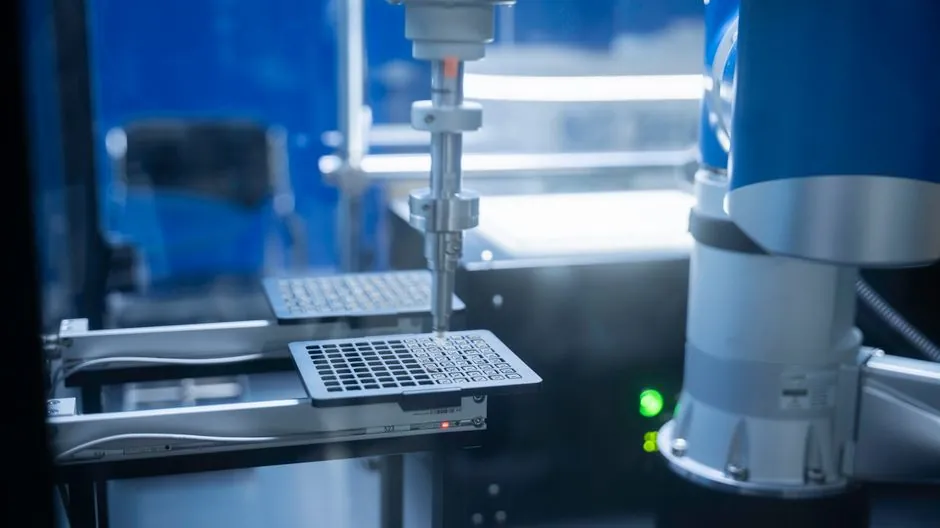
Over 1,400 process steps separate a bare silicon wafer from a finished multi-chip module, and every transition in that chain is a data-loss risk that MES genealogy has to close by binding a unique serial at wafer ID and carrying it through to the module SN [S1].
That genealogy is the difference between a recall that pulls 47 boards from one shift and one that drags 2,300 boards out of 18 months of European field service, a swing in the six-figure range that the IEC-regulated EMS world now treats as a baseline rather than a worst case [S4].
Tracing vs Tracking: Two Genealogies, One Chain
Backward tracing answers "where did this chip come from?" and is mandatory for any customer audit under IATF 16949, EU Regulation 178/2002, 21 CFR Part 11, and the asset identification clauses of IEC 62443 [S2][S4]. Forward tracking answers "what happens next to this device?" and is the operational layer that makes flexible routing, in-line rework, and parallel lot splitting survivable inside a fab that processes thousands of child data points per module lot [S1].
The two genealogies share a single data backbone: the serial number printed at laser marking is the index key that re-binds IQC lot data, SMT pick records, reflow profile, and inspection disposition into one queryable record [S4]. A traveler without a serial is a paper artifact; a traveler with a configurable SN syntax is a database row that any operator can summon with F9 or a single barcode scan [S5].
Three Serialization Levels, Three Recall Scopes
Serial-level traceability records every part with a unique identifier, scans it at every station via DMC, barcode, RFID, or laser marking, and is the level demanded for airbags, steering, brake systems, PCBs, and medical devices [S2]. Batch-level traceability rolls parts into a lot sharing material batch, machine, and time period, and is sufficient for food, beverage, and pharma where individual identification adds cost without recall benefit [S2]. Order-level traceability maps production orders to machine cycles in the MES and is the floor for general discrete manufacturing and metal processing [S2].
The cost of picking the wrong level is concrete: an EMS that archived only reel-level binding forced a customer preventive replacement of 2,300 PLC backplanes, while component-level MES records would have resolved the at-risk population to 47 boards from a single shift [S4]. Same defect, different genealogy depth, six-figure delta.
The Four-Layer MES Data Chain for Wafer-to-Module
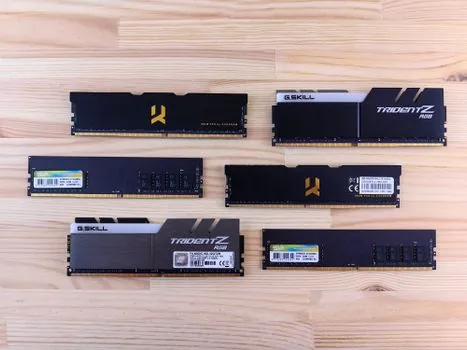
Layer 1 is incoming IQC: every reel and tray is scanned and assigned an internal lot number carrying supplier CoC, manufacturer date code, quantity, and IQC disposition, and no material reaches the floor without a resolved status [S4]. Layer 2 is SMT placement: the machine writes a record per component pick, including feeder slot ID, reel lot, reference designator, board ID, timestamp, and vision alignment offset, with no aggregation at panel or batch level [S4].
Layer 3 is reflow: actual peak temperature (typically ±2°C resolution), time above liquidus, and ramp rate are tied to the board ID and become the primary evidence in any solder joint reliability dispute [S4]. Layer 4 is laser marking: the Smart MES inscribes a unique SN on each board, and that SN is the sole entry point for every post-delivery traceability request, the index that re-binds the upstream three layers into a single queryable record [S4]. A wafer-level die serialization scheme built on RunCard data, where wafer ID and die coordinates survive dicing and packaging, feeds directly into this Layer 4 binding step [S7].
Inspection Nodes That Must Bind to the Serial at Measurement
3D SPI captures paste volume per pad in mm³, area coverage in percent, offset in μm, plus any closed-loop feedback trigger events, and writes them against the board SN rather than archiving them separately [S4]. 3D AOI writes pass/fail disposition, defect images, and re-inspection engineer ID to the same board record [S4].
X-ray inspection binds void percentage per joint, the IPC-7095C threshold reference applied to the call, and the inspection program version number, because a program version change is itself a process change that must be traceable to specific serial numbers [S4]. 3D SPI, 3D AOI, and X-ray are the three nodes most frequently audited in industrial customer reviews, and the binding has to happen at the moment of measurement, not after the fact [S4].
Identification Technologies and the Carriers That Carry Them

At the MES identification layer the physical carrier is interchangeable, but the MES logic is not: DMC, barcode, RFID, FIN, lot, batch, and serial numbers are all valid carriers, and the choice depends on the station environment, the read range required, and whether the part moves through wash or reflow [S3]. A real-time MES will also link the production order to the unique serial so that start, stop, interrupt, set-up, and error events are all posted against one queryable part, not against a shift bucket [S3].
Block and release logic rides on the same serial: a part can be put on hold by any authorized user, routed to a Material Review Board flow, and released only when the hold condition closes, with the hold event itself becoming a queryable genealogy node [S5]. For shop-floor instruments that feed the MES data stream, load cell modules, remote I/O modules, and wireless modules are typical of the acquisition layer that has to survive the same 15 to 25 year industrial equipment lifetime as the genealogy data itself.
Retention, Audits, and the 15-to-25-Year Industrial Floor
Industrial control gear is commonly in service for 15 to 25 years, so the genealogy store has to outlive the MES that wrote it, with 10 years as the industry minimum floor and longer retention for safety-rated control systems [S4]. The audit layer that drives this is Machinery Directive 2006/42/EC technical file requirements, which extend to critical electrical subassemblies, and the asset identification clauses of IEC 62443, which implicitly demand that IACS operators identify the exact scope of a suspect hardware population within a defined time window [S4].
Forward genealogy is the layer most MES installations still under-build: a fab that records where every chip came from but cannot tell you which downstream module it is sitting in after a lot split is halfway through a traceability problem [S1]. Multi-chip modules that contain dozens of dies per package now generate thousands of child data points per lot, and the tracking system that worked for a single-die product collapses under that fan-out [S1]. Engineers sizing a new line should plan data retention against the 15 to 25 year industrial floor, pick a configurable SN syntax that survives supplier and part-number changes [S5], and treat per-die RunCard binding at the wafer ID step as the non-negotiable root of the whole chain [S7].
For related coverage, see Cut-Off Machine Features That Lift Steel Bar Cut Accuracy.