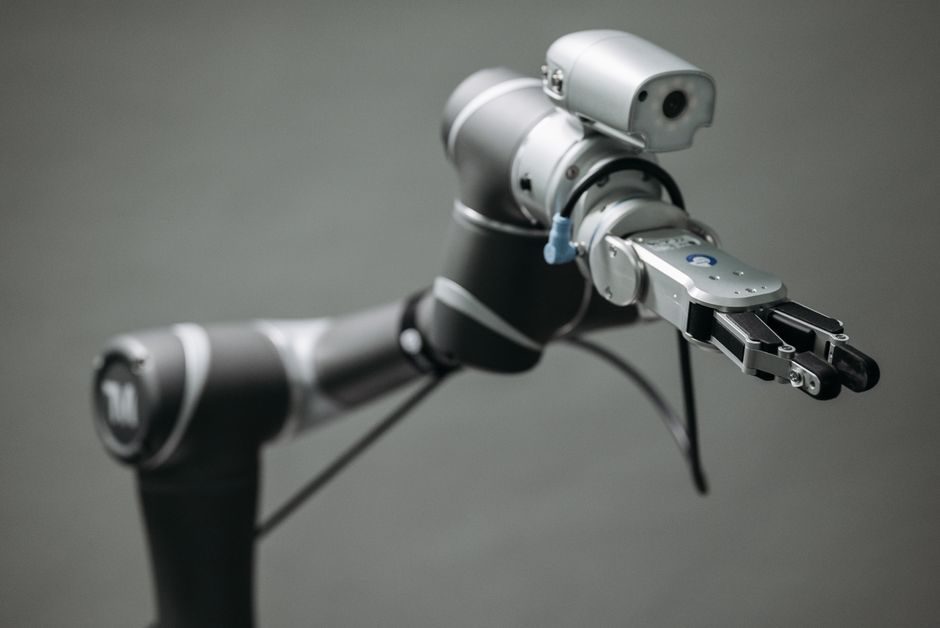
Global warehouse robotics revenue is projected to climb from $6.21B in 2025 to $7.08B in 2026 at a 14.1% compound annual growth rate, before reaching $11.91B by 2030 at a 13.9% CAGR [S2]. The 2026 figure represents a $0.87B year-on-year addition in a single segment that spans parallel robots, mobile robots, and gantry systems serving pick-and-place, transportation, and packaging functions.
North America held the largest regional share in 2025, while Asia-Pacific is the fastest-growing region across the forecast window [S2]. The growth vector tracks the same forces that have reshaped industrial controls — e-commerce fulfillment density, persistent labor shortages, and the cost of retrofitting brownfield distribution centers with programmable logic controllers and modern motor drives. The category is no longer a curiosity; it is a line item in every third-party logistics RFP I have seen this year.
Type Segmentation: Parallel, Mobile, and Gantry Robots in 2026
The 2026 warehouse robotics market is segmented by type into parallel robots, mobile robots, and gantry robots, with parallel and mobile platforms dominating new deployments [S2]. A 2018-2023 IndustryARC baseline had fixed robots — conveyors, gantry systems, palletizers — leading the installed base at roughly 6.7% CAGR and reaching $690.30M in 2020, with mobile robots then occupying a smaller share that has since inverted as AMRs (autonomous mobile robots) scaled across e-commerce [S3].
By function, the three reportable categories are pick-and-place, transportation, and packaging [S2]. Pick-and-place is the most visible use case because it interfaces directly with SKU variability; transportation is where mobile robot fleets earn their keep on multi-aisle routes; packaging sits at the end-of-line and overlaps with industrial valve sequencing on flow-wrappers and case erectors. Each function stresses a different sensor stack — 2D/3D vision for picking, LiDAR and SLAM for transport, force/torque for packing — which is why the BOM cost of a single mobile robot cell is dominated by sensing rather than the arm or chassis.
End-User Breakdown: E-Commerce, Automotive, Pharma, and F&B
End-user segmentation covers e-commerce, automotive, food and beverages, electronics and electrical, metal and machinery, pharmaceuticals, and other sectors [S2]. E-commerce remains the demand engine because order profiles — single-SKU, single-item, next-day — are precisely the cases where human picking throughput collapses fastest, and where an AMR with a goods-to-person rack outperforms a fixed A-frame. The cobot-adjacent demand pool is examined in detail in the Cobot Market 2026 payload tier analysis.
Automotive and electronics-electrical continue to anchor the precision-pick segment, where SCARA-type parallel robots still hold an edge on cycle time. Pharmaceutical and food-and-beverage adoption is gated less by vision capability and more by wash-down ratings, stainless contact surfaces, and validated cleanability. Metal and machinery is the segment where heavy-payload gantries persist because lift capacity and repeatability over long travels matter more than mobility [S3].
Growth Drivers and Market Trends Documented in 2026 Reporting

The Business Research Company attributes the 14.1% 2026 expansion to five factors: growth in e-commerce fulfillment, rising labor shortages, demand for faster order processing, warehouse cost optimization needs, and expansion of distribution centers [S2]. The forecast period to 2030 layers in same-day delivery expectations, omnichannel retail growth, advances in AI vision systems, rising warehouse safety focus, and expansion of automated logistics hubs [S2].
Five specific trends shape the 2026-2030 window: rapid adoption of autonomous mobile robots, growth in goods-to-person automation, integration of AI-driven picking systems, expansion of flexible and scalable robotics solutions, and rising demand for warehouse process optimization [S2]. The humanoid-robot angle — a frequent 2026 headline — is treated as adjacent rather than core; the practical humanoid deployment map is covered in the humanoid robot vendor and spec signal report. For now, the unit economics still favor wheeled AMRs over bipedal platforms for the bulk pick-and-transport workload.
Tariff Impact: Sensor and Subsystem Cost Pressure in 2026
Tariffs have raised the cost of imported sensors, controllers, motors, and robotic subsystems, with the effect most visible in mobile robots and articulated robot systems that source hardware globally [S2]. Asia-Pacific and Europe are flagged as the regions where deployment pacing for mid-sized operators is being adjusted, because hardware cost pass-through cannot be absorbed by integrators at current margin levels. The practical effect: a 2026 cell quote that would have closed in Q4 2025 is now sitting 8-15% higher depending on vision stack and motor sourcing.
This pressure interacts with the value chain documented in older reporting: processors, sensors, communication modules, and actuators feed the integrator, which assembles and tests before distribution to end-user warehouses [S3]. When any one of those layers absorbs a tariff or a supply shock, the integrator margin and the end-customer price both move. For buyers, the procurement leverage in 2026 sits with subsystem standardization — common pressure sensor families, common motor-and-drive pairings, and a single vision supplier across multiple cells — rather than aggressive one-off vendor swaps.
Comparison: Fixed vs Mobile Robots on Five 2026 Decision Criteria
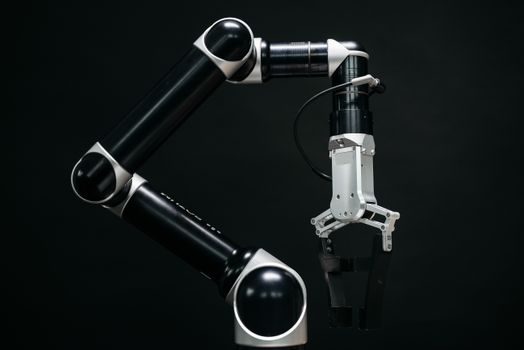
The fixed-vs-mobile decision is the single most consequential spec call for a 2026 warehouse build-out. On five criteria drawn from the 2026 report segmentation and historic install data: (1) throughput ceiling, gantries and SCARAs still win on cycles-per-hour for a known SKU mix; (2) layout flexibility, mobile robots dominate because they can be re-deployed without floor rework; (3) upfront capex per cell, fixed systems historically lower, but mobile fleet TCO converges as software orchestration matures; (4) integration with brownfield flow meter-style material-handling instrumentation, fixed systems plug in more cleanly; (5) scalability across multiple SKUs and seasonal peaks, mobile fleets plus goods-to-person racks scale faster because adding units does not require structural changes [S2][S3].
For a single new greenfield distribution center in 2026, the default stack is a hybrid: fixed gantry or SCARA at receiving and packout, AMR fleet for putaway and picking, conveyor or sortation spine for inter-zone transfer. A retrofit into an existing site flips that — AMRs first, with any fixed additions justified only where cycle time and footprint together force the issue.
Limitations and Open Constraints in the 2026 Forecast
Three constraints bracket the 13.9% 2030 CAGR. First, tariff pass-through on sensor and motor imports can compress integrator margins enough to slow mid-sized deployments in Asia-Pacific and Europe [S2]. Second, the report bundles parallel, mobile, and gantry categories without separately quantifying unit shipment volume — a buyer trying to size a 200-cell fleet still has to triangulate from vendor disclosures. Third, the 2026-2030 forecast assumes continued labor shortage pressure; a softening labor market or a regulatory shift on warehouse working hours would compress the substitution argument that underwrites most ROI models.
Trackable signals over the next two reporting cycles: 2026 AMR unit-shipment disclosures from major vendors, regional tariff adjustments on robotics subassemblies heading into 2027, and any 2026 H2 update to the 14.1% growth figure as e-commerce capex spending normalizes. The 2030 endpoint of $11.91B is a planning number, not a guarantee — and the gap between it and the 2026 $7.08B base is exactly the window integrators and buyers are now negotiating across.