
The global collaborative robot market is forecast at $4.0B in 2026, up from a $2.9B 2025 base, and is projected to reach $17.2B by 2033 at a 23.1% CAGR [S4]. A second research view puts the 2030 ceiling at $7.67B on a 25.60% CAGR over 2024–2030 [S1], and a third extends the long-tail to $27.4B by 2032 at 36.3% [S6].
That spread is the first signal a buyer should track: forecast dispersion itself is a 2026 risk factor. Sizing against the mid-band — roughly $4–7B for 2026 and $15–27B terminal value — is the defensible planning window, since three independent datasets all land inside it [S1][S4][S6].
Payload Tiers: ≤5 kg, 6–10 kg, 11 kg and Above
The standard segmentation is three payload buckets: Up to 5 kg, 6–10 kg, and 11 kg and above [S3]. The Up to 5 kg tier is the highest-volume cell because it covers benchtop assembly, screwdriving, and lab-pipetting work; the 6–10 kg tier covers machine-tending and heavier pick-and-place; the 11 kg and above tier covers palletizing-adjacent tasks where a collaborative robot is still preferred over a fenced articulated cell.
Buyers should size the cell around payload, reach, and cycle time — not the brand sheet. A 6 kg bolt-tightening task with a 1.2 m reach is a different robot class from a 6 kg adhesive-bead application with a 0.9 m reach, even at the same stated payload.
Power-and-Force-Limiting Designs Dominate 2026 Volumes
Power and Force Limiting (PFL) cobots are projected to reach $1.00B by 2026 [S1]. PFL is the type most engineers picture when they hear "cobot": built-in collision monitoring, no external scanners, no sharp corners or exposed motors, and a special robot with power or force feedback at the joints [S1]. Risk assessment is mandatory because the operator can remain within reach during operation [S1].
The other three ISO/TS 15066 collaborative modes — Safety Monitored Stop, Speed and Separation, and Hand Guiding — sit beside PFL as the recognized operating paradigms [S1]. In practice, PFL captures the bulk of new 2026 greenfield cells because it removes the safety-scanner capital cost that a Speed-and-Separation install still requires.
Vertical Demand: Automotive, Electronics, and the Construction Push
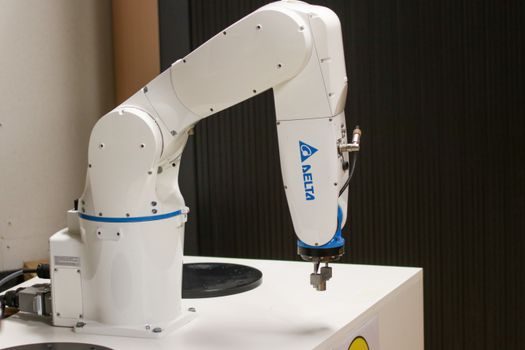
Automotive held a 23% share of cobot demand in 2020 [S1] and 24.61% in 2021 [S3] — the largest single end-user segment, driven by EV investment and digitalization of body-shop subassemblies. Electronics follows as the second pillar because small-payload cobots fit PCB handling and component insertion without the footprint of a SCARA robot cell.
Construction is the 2026 wildcard. A 2025 Delphi study sized the US construction labor gap at a projected need for 663,500 new workers annually, against 1,092 worker fatalities in 2022 — nearly 20% of all US workplace deaths [S2]. That combination of skilled-labour shortage and a fatality rate that is roughly 2× the all-industry average is the macro driver pulling cobots into off-site prefabrication and on-site material handling [S2].
Application Mix: Handling, Assembly, Pick & Place
Across the three most cited forecast reports, the top three application buckets — Handling, Assembling/Disassembling, and Pick & Place — recur in every segmentation [S1][S3][S4]. Welding, Dispensing, Packaging, Testing, Sorting, and Positioning fill the second tier [S1][S3].
For 2026 cell design, the practical question is whether the application is contact-rich (assembly, screwdriving) or contact-light (machine tending, lab automation). Contact-rich cells justify PFL with low stop-time thresholds; contact-light cells can run Speed-and-Separation with light curtains and still meet ISO/TS 15066 — and often at lower robot cost per kilogram of payload.
Competitive Landscape and Supplier Choice

The market is described as fragmented, with key suppliers spanning Teradyne (Universal Robots), Fanuc, ABB, KUKA, Yaskawa, Kawasaki, Mitsubishi Electric, Denso, Omron, Quanta Storage (Techman), HAHN Group (Rethink Robotics), Doosan, AUBO Robotics, and F&P Robotics [S3]. Universal Robots is the volume reference point in the ≤16 kg class; Techman Robot is the reference in the integrated-vision tier.
One industry pricing note worth flagging: the cobot market is projected around $2.14B by 2025 with a stated 31.6% CAGR through 2030, with "price declines" called out as a structural force [S5]. That is consistent with what procurement teams are reporting — average selling price per kilogram of payload is still falling in 2026, but the cycle is slowing as PFL designs with integrated vision saturate the value-engineering curve.
What to Watch: Two Trackable 2026 Indicators
First, the automotive share of cobot demand. If the 23–24.61% band [S1][S3] holds in 2026 reports, EV and battery-cell investment is still the dominant pull; if it falls below 20%, the wave has shifted to general-industry adoption. Second, the 5 kg tier's share of unit shipments. A rising 5 kg share is the cleanest signal that cobots are moving into the long tail of small and mid-sized manufacturers — the segment that historically could not afford a articulated robot cell but can absorb a $25–45K cobot.
Track those two numbers in the next 6–12 months of analyst output; they will tell you, before any 2027 forecast revision, whether the $4.0B 2026 base [S4] is conservative or aggressive.