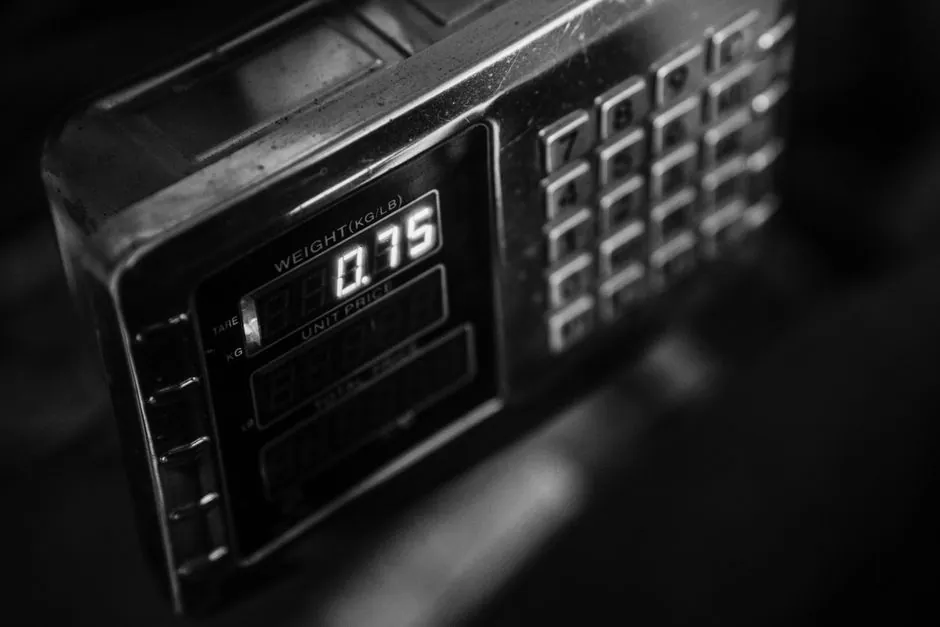
A weighing indicator is the digital brain of any scale, but in a corrosive process area the indicator's enclosure rating, the load-cell body material, and the cell-to-indicator wiring all have to be specified as one corrosion package, not three separate line items [S1].
The compatibility question that actually decides a project is whether the indicator, its junction box, the load-cell housing, the load cell cable, and the cable gland can survive the same chemistry at the same temperature for the same duty cycle; mismatches here account for the bulk of weighing-system failures on chemical, food-acid, and marine sites [S1][S2].
What "corrosion resistance" means on a weighing indicator
For a weighing indicator, corrosion resistance is not a single number on a datasheet; it is the combined performance of the indicator housing (typically stainless 304 for washdown or stainless 316 for chloride exposure), the front-panel gasket, the cable entries, and the internal PCB conformal coating, with the load cell sharing the same chemistry envelope [S1]. Industrial guidance published 2026-08-11 treats corrosion resistance and ingress protection as the two gating criteria above accuracy class for any chemical-area build [S1].
For chemical applications, "appropriate protection" is read by specifiers as IP66 minimum, 316 stainless preferred, hermetically sealed load cells, and PUR or FEP-jacketed cable rather than PVC, with every dissimilar-metal junction called out for galvanic isolation [S1][S2]. The same reference notes that for "demanding applications" customers increasingly require stainless load cell bodies, welded hermetic seals, and indicator housings rated for hose-directed, high-temperature washdown [S1].
Load cell input resistance: the electrical compatibility anchor
The single electrical parameter that gates indicator-to-load-cell fit, before any corrosion discussion, is the load cell input resistance, which a 2026-05-18 load-cell selection guide states is typically 350-400 Ω, and that value must be compatible with the indicator's excitation and input impedance, including any summing box in multi-cell systems [S2].
Beyond the static resistance, the indicator and cell have to share the same bridge sensitivity (mV/V), the same excitation voltage (commonly 5-10 V DC), and the same cable length budget, because long runs in a chemical plant are usually routed through conduit that itself adds corrosion risk at every junction [S2]. Specifiers working from the same 2026-05-18 reference are told to treat input resistance, output at full scale, and the cell's temperature coefficient as the three "must-match" electrical criteria before any environmental decision is taken [S2].
Material stack-up: 304 vs 316 stainless, hermetic seals, and the gland
The pragmatic material ladder for an indicator plus load cell combination in a corrosive plant runs: powder-coated carbon-steel enclosure (dry indoor only); stainless 304 with NEMA 4X / IP66 gasket (mild washdown, food acid splash); stainless 316 with IP66/IP69K (chloride, bleach, salt-fog); and fully hermetically sealed 316 load cell with welded cable entry (submersion, CIP, chemical dosing skids) [S1].
For chemical applications, suppliers specifically recommend stainless load cell bodies, hermetic sealing, and stainless or polymer cable glands instead of brass, because brass dezincifies quickly in ammonia and chloride chemistries [S1]. The 2026-04-13 corrosion reference used for material logic points out that pitting, crevice, and galvanic corrosion are the three modes that hit instruments first, and that the dominant failure points are screw threads, gasket seats, and the cell-to-indicator cable entry rather than the indicator enclosure itself [S3]. For sites where the load cell sees frequent wash cycles, the same source notes that titanium and titanium alloys offer better inherent resistance than 300-series stainless in chloride-bearing media, at a 3-5x cost premium that is rarely justified outside pharmaceutical and high-purity chemical service [S3].
IP and sealing ratings: IP65, IP66, IP67, IP68, IP69K
IP ratings are not corrosion ratings, but on a weighing system they are the cheapest proxy: IP65 protects against low-pressure jets, IP66 against high-pressure jets, IP67 against temporary immersion to 1 m, IP68 against continuous immersion at a stated depth, and IP69K against close-range, high-temperature, high-pressure spray (typically 80°C, 80-100 bar) used in food, beverage, and pharmaceutical CIP [S1].
For chemical applications, "demanding" washdown regimes and outdoor chemical storage typically require IP66 minimum on the indicator and IP67 or IP68 on the load cell, with IP69K reserved for the indicator only when the line is cleaned with hot, high-pressure lances that exceed 70°C water [S1]. Specifiers who overspec to IP69K on the load cell usually pay for it in reduced fatigue life, because the heavier sealing changes the cell's mechanical stiffness and creep behaviour, a trade-off the 2026-08-11 weighing-indicator guide flags but does not quantify [S1].
Immersion and chemical qualification: which test, which duration

Where the chemistry is borderline (concentrated acids, mixed solvents, hot caustic), the indicator and load cell combination should be qualified by a formal immersion test rather than by datasheet promises; the 2026-07-17 immersion-testing reference lists the four governing standards as ASTM D543 (plastics in chemical reagents, 7-180 day exposure), ASTM D471 (elastomer fluid resistance), ASTM D570 (water absorption, 24 h to equilibrium at 23°C), and ASTM G31 (metals, 24 h to 3 months) [S4].
ASTM G31 metal corrosion immersion tests typically run 24 hours to 3 months depending on the expected corrosion rate and the data quality the project needs, with results reported in mils per year (mpy) or g/m²/day and attack morphology called out as uniform, pitting, crevice, or intergranular [S4]. The same reference notes that salt-spray testing under ASTM B117 or G85 is functionally an immersion proxy for coatings, which is the most common way indicator housings and load-cell weld zones are qualified for marine and chlorine-bearing plants [S4].
Hazardous-area compatibility: ATEX, IECEx, and the indicator's role
Where corrosive media are also flammable (solvents, alcohols, fuels), the indicator's corrosion specification has to coexist with hazardous-area approval, and the practical rule on 2026 builds is to specify the indicator for ATEX/IECEx Zone 1 or Zone 2 in parallel with the IP and material choices, not after them [S1].
For chemical applications, suppliers note that the indicator enclosure, load cell, and junction box should all share the same zone classification, because mixed-class systems (e.g. a Zone 1 indicator fed by a non-rated cell) are the most common audit finding on chemical-plant weighing skids [S1]. The same 2026-08-11 reference treats stainless 316 body, IP66 minimum, and ATEX/IECEx Zone 2 as a typical minimum package for solvent and fuel service, with Zone 1 added for areas where an explosive atmosphere is likely in normal operation [S1].
Application fit: where the package works, and where it does not
Stainless 316 indicator plus hermetically sealed 316 load cell plus FEP-jacketed cable plus stainless gland is the right package for chlor-alkali, bleach dosing, hot CIP lines, marine/offshore, and any pharmaceutical washdown that uses sodium hypochlorite above 1% available chlorine [S1][S3]. It is overkill, and a 304 / powder-coated-steel indicator is enough, for dry indoor batching, warehouse floor scales, and pallet weighing away from washdown lanes [S1].
For platforms and low-profile scales in food and pharmaceutical corridors, products like the GRAM Penguin S combine a stainless platform with a hygienic, low-profile geometry, which is the form factor most often paired with a 316 indicator in 2026 builds, because the platform height and the indicator's cable entry are co-designed to keep the washdown spray from pooling at the cable gland [S5]. A full titanium or alloy-C indicator plus load cell combination is reserved for the 1-2% of sites where hot concentrated acids (above 60°C nitric, hydrofluoric, mixed acid) rule out 300-series stainless, and where the 3-5x cost premium is justified by the cost of a single unscheduled shutdown [S3].
Selection checklist and next signals
A defensible weighing-indicator corrosion spec, condensed from the 2026 references, reads: 316 stainless body; IP66 minimum (IP69K only where the line is hot-washed); load cell with 350-400 Ω input resistance matched to the indicator; hermetically sealed cell with stainless or polymer gland; FEP or PUR cable jacket; ATEX/IECEx Zone matching; and ASTM G31 or B117 qualification data on the actual chemistry [S1][S2][S4]. Two trackable signals to watch on 2026-08-24: (1) wider release of indicator lines with integrated Ethernet-APL or IO-Link on 316 bodies, which would change the cable-entry corrosion risk, and (2) more published ASTM G31 datasets on 316L vs 904L indicator housings in mixed-acid service, which would let buyers replace ad-hoc site tests with a published table. For sites standardising on weighing indicators, the same corrosion logic also governs the weighing force chain downstream and any RTD Pt100 temperature compensation wired into the indicator's option board.
Related analysis: Resin Sand Line Selection for Telecom Enclosure Castings.