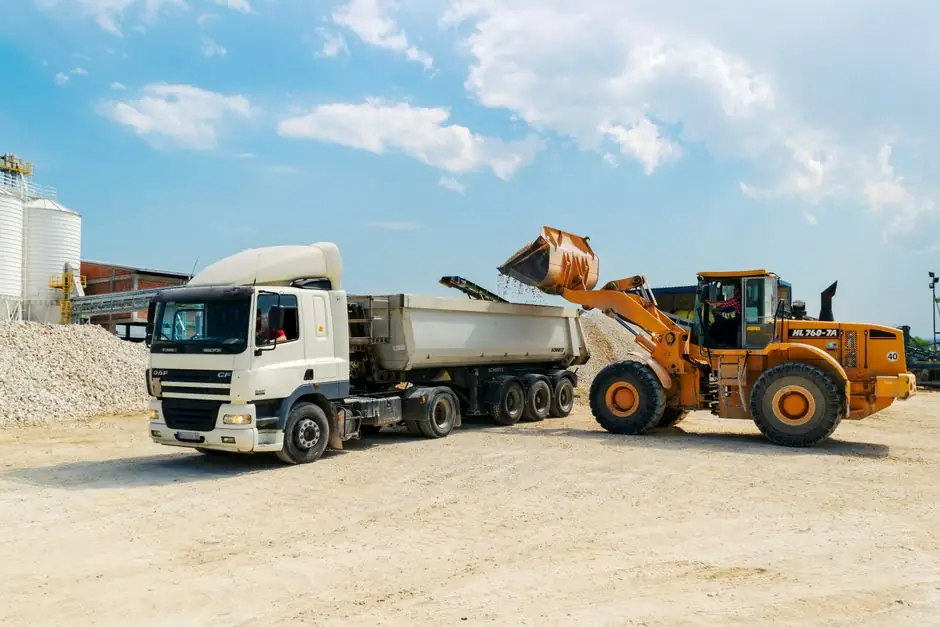
Compact and mid-frame wheel loaders dominate agricultural fleets, with Kramer's agricultural line covering drive outputs from 18.5 kW to 115.0 kW and tipping loads from 1,200 kg to 6,900 kg across eleven models [S1].
At the top end, the Cat 938 Ag Wheel Loader reaches 191 hp gross power with a 35,528 lb (about 16,120 kg) operating capacity, while the entry-level 908 Ag Compact sits at 74.7 hp and 14,617 lb (about 6,630 kg), giving a capacity ratio of roughly 2.4:1 across Cat's three-model agricultural line [S2].
Size Classes and Where Each One Earns Its Keep
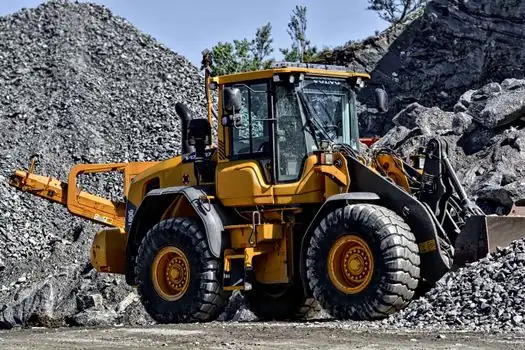
Kramer divides its agricultural wheel-loader line into three practical bands: compact (1.7–4.2 t operating weight, 1,200–2,800 kg tipping load), mid-frame (4.6–6.5 t, 3,650–4,250 kg tipping), and full-size (9.85–11.22 t, 6,100–6,900 kg tipping) [S1]. Compact machines pair with pallet forks, high-tip buckets, and bale clamps on small livestock and mixed farms, where the all-wheel-drive chassis replaces a tractor front-loader for feed mixing, mucking out, and silage face work.
Mid-frame machines (KL36.5 through KL43.8, all at 55.4 kW) cover the bulk of European mixed-cereal and dairy operations, where grain intake, manure handling, and mill-to-silo transport cycle continuously through the day. Full-size KL60.8 and KL70.8 at 100 kW and 115 kW target contractor-scale arable estates and large biogas or feedlot operations, where the 6,100–6,900 kg tipping load clears bulk grain and silage trucks in a single bucket pass [S1].
Engine Power and Hydraulic Output Matching
Power-to-weight and hydraulic flow are the two numbers that decide whether a loader can sustain a full loading cycle without bogging. The Cat 930 Ag Handler runs 170 hp gross with 31,124 lb (about 14,120 kg) operating capacity, and pairs with 2.5–6.5 yd³ buckets, sizing it for 3–5 t truck loading on commercial grain farms [S2]. For a deeper reference on the basic machine anatomy (power, hydraulic, and control systems) see the wheel loader definition and selection guide at wheel loader basics.
A practical rule on agricultural sites: hydraulic lift capacity should exceed the heaviest single load the bucket will pick by 25–30% to keep the machine stable on slopes. The Kramer KL25.5e, the line's battery-electric compact, posts a 2,800 kg tipping load at 3,855–4,160 kg operating weight, illustrating how the 0.65–0.70 tipping-to-operating ratio holds even as the power source shifts from diesel to electric [S1].
Compact Wheel Loader vs Skid Steer: The Real Decision Boundary
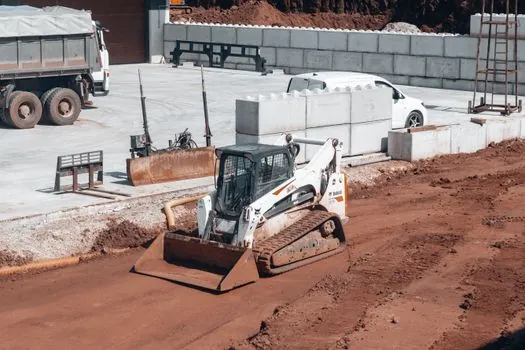
Compact wheel loaders win over skid steers whenever higher capacity, higher travel speed, and longer cycle shifts matter more than zero-radius turning [S4]. Bobcat's compact agricultural line targets demanding customers running mixed livestock and arable work, where the additional travel speed between buildings and the higher bucket capacity per load reduce total machine hours [S6].
Skid steers retain the edge in confined pens, indoor feed rooms, and narrow laneways under 3 m wide, where zero-tail-swing and a footprint under 2 m matter most. For a side-by-side look at the skid-steer class itself, see the skid-steer loader reference. The crossover point in practice is around 1.5–2 t payload: below that, a skid steer is usually cheaper per hour; above that, a compact wheel loader's hydraulic cooling and longer wheelbase pay back the price difference in less engine-on time per tonne moved.
Drive, Transmission, and All-Terrain Behaviour
All-wheel drive is the baseline on every Kramer agricultural model, with articulated steering giving tight turn radii in yards and around feed bunks [S1]. Unlike a tractor with a front loader, where the rear axle carries most of the load and the front attachment is a hydraulic afterthought, a purpose-built wheel loader puts the load between two equal axles, with a low centre of gravity that holds on slopes, in mud, and across soft field entrances [S5].
Cat's agricultural compact (908) and mid-frame (930, 938) add adaptive drive trains that match engine output to hydraulic demand, reducing fuel burn during the light-load transport phases common in livestock and yard work [S2]. For comparison, the closely related backhoe-loader class, which adds a rear excavator arm but loses some lift capacity up front, is covered in the backhoe loader reference.
Cost, Attachments, and Whole-Life Economics
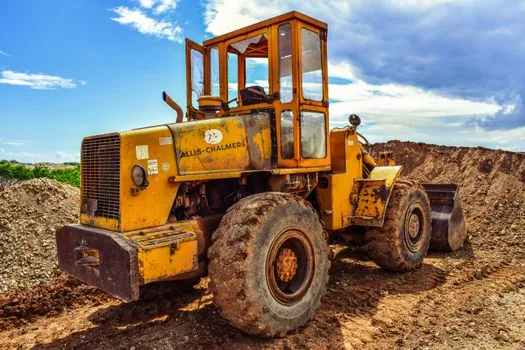
Entry MSRP for a new agricultural wheel loader in 2026 starts around $148,481 for the Cat 908 Ag Compact and climbs to $322,536 for the 938 Ag Wheel Loader, a 2.17× spread across three Cat models [S2]. Bucket capacity scales with frame size: 1–2 yd³ on the 908, 2.5–6.5 yd³ on the 930, and 2.5–6.5 yd³ on the 938, with the 938's extra 21 hp (191 vs 170) and roughly 4,400 lb (about 2,000 kg) more operating capacity justifying the step up for contractors running more than 1,500 loader hours per year [S2].
Attachment flexibility is the second economic lever. High-tip buckets handle low-density silage and loose hay, pallet forks move packed bales and fertilizer bags, and specialised grabs clear manure and bedding [S5]. Choosing a platform that accepts a quick-coupler and a wide attachment catalogue from the OEM reduces the need for a second machine on mid-size farms.
Limitations and Failure Modes to Engineer Around
Agricultural duty cycles punish machines with three specific failure modes: hydraulic contamination from dusty grain and silage, tyre wear from running on broken concrete and gravel laneways, and underbody corrosion from manure pit splash and ammonia exposure. Wheel loaders designed for construction often lack sealed electrical connectors and corrosion-resistant undercarriage coatings, which shortens service life on livestock farms [S5].
The compact battery-electric KL25.5e addresses some of these pain points by removing diesel exhaust from indoor livestock buildings, but its 2,800 kg tipping load limits it to sub-compact duties, and cold-weather range drop in unheated barns during winter feeding cycles remains a real constraint that buyers should pressure-test with the dealer [S1]. For operations weighing an electric compact against a diesel skid steer, the mining dump truck selection map offers a useful cross-industry framework for matching power and capacity to duty cycle, even though the application classes differ.
Procurement Checklist and Sourcing Standards
Before signing a purchase order, validate five concrete data points: (1) engine gross power in kW or hp at a stated RPM, (2) operating weight with the heaviest specified attachment fitted, (3) tipping load at full steer with the standard bucket, (4) bucket range in cubic yards or cubic metres, and (5) warranty terms and service interval hours for hydraulic and engine oil [S2][S3]. Compare these numbers across at least three shortlisted models, and ask the dealer for a payload density chart rather than a single brochure figure, because silage, grain, and manure densities vary from under 200 kg/m³ to over 1,000 kg/m³.
For buyers cross-shopping electric and diesel compacts, the right next step is a side-by-side demonstration day with a high-tip bucket and a pallet fork on the actual farm surfaces (concrete apron, dirt laneway, soft field entrance), logging litres of fuel or kWh per 100 buckets moved. That single test separates brochure claims from working economics, and it is the most reliable signal for whether the selected class will hold up across a full harvest or feeding cycle.