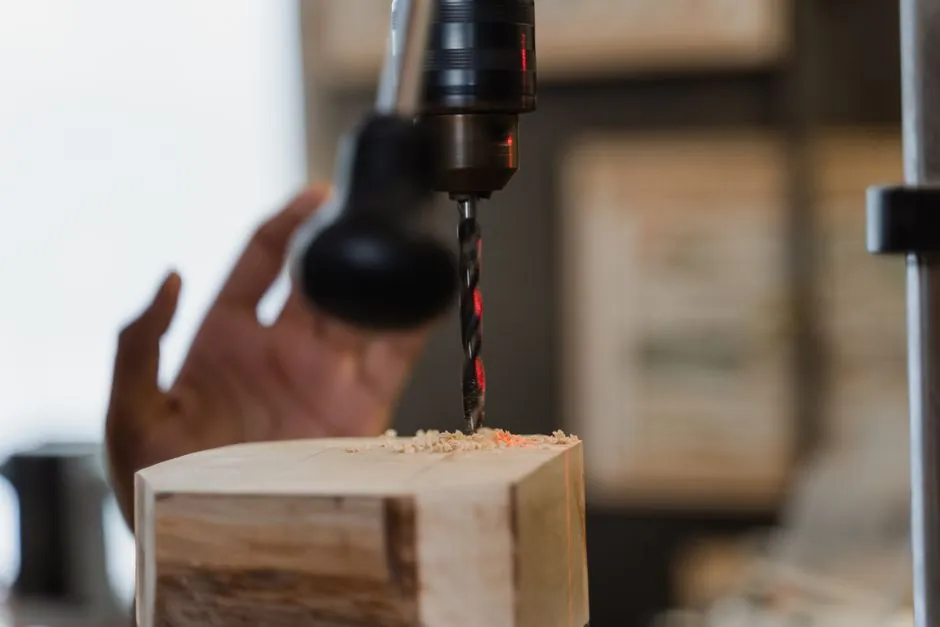
The DTH (Down-the-Hole) rig market in 2026 is a tiered landscape: four multinational OEMs hold the top tier, while Chinese and Indian builders dominate the mid- and entry-level segments, with India-based Vaibhav Engineering alone producing 45-50 machines per year for export to over 20 countries [S3].
A DTH rig uses a pneumatic hammer behind the bit to deliver percussive force while the string rotates, with cuttings flushed up the annulus by compressed air, the method of choice for hard-rock mining, quarrying, water wells, and infrastructure anchoring. For buyers comparing rotary drilling rig platforms against DTH units, the key differentiator is rock hardness: DTH wins above roughly 100 MPa UCS, while rotary/top-hammer setups still serve softer overburden.
What counts as a DTH drilling rig: scope and mechanism
A DTH rig combines a carrier, a feed/rotation head, a high-pressure air compressor, and a downhole hammer-and-bit assembly. The hammer sits directly above the bit at the bottom of the hole, so percussion energy does not decay with depth the way it does in top-hammer drilling, which is why DTH is the standard for blasthole and water-well work below 50 m. [S1]
Most 2026 OEM offerings split into two structural classes: separated DTH rigs (compressor on a separate unit, drill mast on a crawler or truck) and integrated DTH rigs (compressor and mast on one chassis). JK Drilling's published range covers 0-50 m drilling depth and 90-300 mm hole diameter, with an annual output of about 800 machines [S2]. For comparison, the broader construction machinery and equipment category also encompasses jumbos, rotary blast-hole rigs, and bolting rigs that often share carriers with DTH platforms [S4].
Top tier: the four multinational OEMs
Atlas Copco and Sandvik remain the two names most cited as DTH pioneers, with both offering rigs that span shallow to deep-hole applications and back them with global service networks [S1]. Epiroc, the mining and infrastructure spin-off from Atlas Copco, is treated as a separate top-tier supplier in 2026 rankings, holding its own complete DTH tool line covering hammers, bits, pipes, adapters, and breakout benches [S7].
Boart Longyear rounds out the top tier as a long-established name in exploration and production drilling, frequently listed alongside the Swedish OEMs in 2026 manufacturer roundups [S5]. These four tend to set the reference points for fuel efficiency, automation, and operator ergonomics, and they are the default spec for Tier 1 mining houses where uptime and global spares support outweigh purchase price.
Mid and entry tier: Chinese and Indian builders
Chinese builders cluster around Zhengyang Machinery, JK Drilling, Sunward, Sinodrills, and Taiye, with Zhengyang's December 2025 roundup and Taiye's April 2026 top-10 list re-asserting the same four-OEM leadership before adding a long tail of domestic suppliers [S5][S6]. JK Drilling publishes concrete specs: 0-50 m depth, 90-300 mm hole diameter, integrated and separated formats, 19 years of manufacturing experience, and roughly 800 units per year [S2]. Sunward extends the same family with surface DTH rigs, rotary blasthole rigs, face drill jumbos, and a separate DTH tool line of hammers, bits, pipes, and adapters [S4].
On the Indian side, Vaibhav Engineering (established 2013 per the company's current product page) is a representative mid-tier builder, running 136,100 sq. ft. of manufacturing and test space, exporting to over 20 countries, and serving more than 200 customers with a mix of mining exploration rigs, water-well rigs, crawler machines, and DTH hammers and bits [S3]. Hardrockdrills, an ISO 9001 certified manufacturer exporting to 50+ countries since 1955, sits in a similar bracket with API- and CE-marked water-well and borehole rigs [S8].
Selection criteria: hole size, rock hardness, and duty cycle
Buyers should anchor the shortlist to four specs before weighing brand: target hole diameter, target depth, rock hardness (UCS or drillability index), and required mobility (truck, crawler, or skid). JK Drilling's published 90-300 mm / 0-50 m envelope is a useful reference band for general infrastructure and small quarry work [S2]. For larger blasthole and production-drilling duties, the top-tier OEMs are usually the only suppliers offering 200-300+ mm bits at depths past 50 m with the pneumatic capacity to keep cuttings evacuated.
For a structured comparison, the main options line up as follows: (1) Atlas Copco / Sandvik / Epiroc / Boart Longyear for high-utilization mining and quarrying, with global spares and automation packages; (2) JK Drilling / Sunward / Zhengyang for cost-sensitive infrastructure, photovoltaic piling, hydropower, and small-to-mid quarry work, with 90-300 mm hole range and shorter depth ratings [S2][S4]; (3) Vaibhav Engineering / Hardrockdrills for water-well and exploration rigs in the 100-200 mm class, with a focus on crawler mobility and export pricing [S3][S8]. A useful sanity check: if the project sits inside JK Drilling's published 90-300 mm and 0-50 m envelope, a Chinese or Indian mid-tier rig will typically undercut the top four on price by a wide margin; outside that envelope, the OEM tier is usually the only safe answer.
Tools, consumables, and the aftermarket
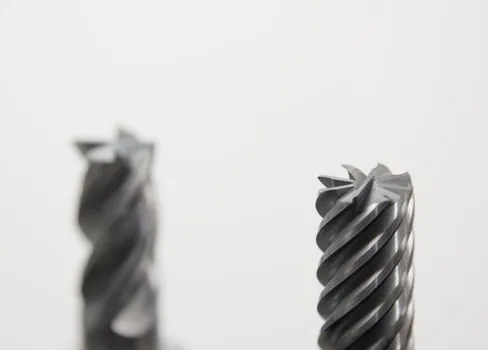
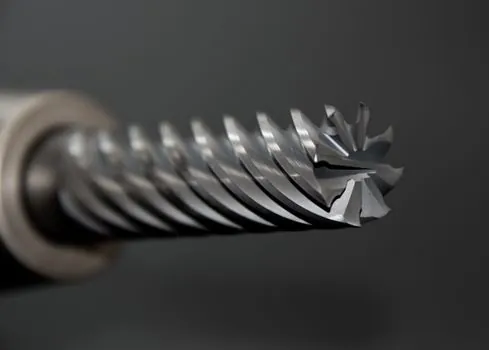
The rig is only half the purchase. DTH hammers, bits, pipes, and adapters are wear parts, and aftermarket support is where mid-tier suppliers most often lose to the OEMs. Epiroc publishes a complete DTH consumables catalogue, hammers, bits, pipes, adapters, plus breakout benches for hammer service, on a single product page, which is the kind of one-stop consumable line that simplifies spares stocking on multi-rig sites [S7]. Sunward mirrors that structure with dedicated DTH hammers, drill bits, pipes, and adapters listed alongside its rig families [S4].
For procurement, the practical rule is: match the hammer air consumption to the compressor on the rig (typically 100-500 cfm at 100-250 psi for the 90-200 mm hammer class, 500-1,200 cfm at 250-350 psi for the 200-300 mm class), and confirm the supplier stocks compatible bits in the thread standard your drillers use (API 2-3/8" to 4-1/2" reg pin, or BR series for older fleets). Without that, even a top-tier rig can sit idle for weeks waiting on a shank adapter or a bit shipment.
Who should buy from the top tier, and who can safely go mid-tier
Top-tier OEMs (Atlas Copco, Sandvik, Epiroc, Boart Longyear) are the right call for: 24/7 production blasthole fleets, hard-rock mines above 150 MPa UCS, deep holes beyond 50 m, multi-country operators who need uniform spares, and projects with strict emissions or automation mandates. They are the wrong call for short-term rental fleets, small quarries under 200 m hole depth, or any buyer whose total budget cannot absorb 30-50% higher unit cost against a Chinese or Indian equivalent. [S5]
Mid-tier Chinese and Indian suppliers (JK Drilling, Sunward, Zhengyang, Vaibhav Engineering, Hardrockdrills, Sinodrills, Taiye) are the right call for: water-well and water-exploration contractors, small-to-mid quarries, infrastructure anchoring, photovoltaic and hydropower piling, and rental fleets where purchase price dominates the business case. They are the wrong call when the site has no local agent, no compressor trained on the hammer brand, and no way to airfreight a replacement hammer within 48 hours.
Limitations, failure modes, and sourcing discipline
Two failure modes show up repeatedly in DTH fleets. First, hammer stalling from insufficient air volume, almost always traced back to compressor undersizing or degraded pipework, not the rig itself. Second, premature bit wear, almost always traced to mismatched hammer-to-bit shank geometry or the wrong button profile for the rock. Both are solved at procurement, not in operation. [S1]
For verification, any 2026 shortlist should cross-check the manufacturer's claimed hole-diameter and depth ranges against an in-service reference, and confirm ISO 9001, CE, or API marking on the rig and consumables where the project requires it [S8]. Industry ranking pages like Ensun's top-100 list and Mordor Intelligence's 2026 drilling-rig market report are useful for mapping the long tail of regional builders, but treat the rankings as lead lists, not endorsements, and verify each supplier on its own test data [S4][S9]. A trackable next signal is the release of revised 2026 OEM automation and electrification packages, which several Chinese builders have flagged on their product roadmap alongside the DTH rig lines [S4].
The underlying component specifications are covered under lamps and light fittings.
This topic is covered further in Rough Terrain Forklift Class VII: 3 Subtypes, 4 Spec Criteria, 2026 Selection Map.