Demolition work shifts a wheel loader's job from clean aggregate handling to abusive, mixed-density debris loading, so size class, bucket choice, and guarding all change relative to a standard earthmoving spec [S1][S2].
The wheel loader market spans compact machines under 10,000 lb up to surface-mining units above 500,000 lb, and demolition usually sits in the 20,000-50,000 lb medium class, with material density and lift height rather than engine power driving most of the selection [S2][S4].
Demolition Workloads Differ From Standard Earthmoving
Wheel loaders are commonly described as efficient at clearing and moving large amounts of debris during demolition projects, including mixed C&D waste, broken concrete, and steel scrap [S1]. On a typical structural demo, the loader cycles between sorting piles, loading out trucks, and feeding a crusher, so bucket penetration and tipping margin matter more than raw travel speed [S2]. A machine that is sized to peak loads rather than average density tends to be overspec for 80% of the day, slower in tight pile work, and harder on the operator [S2]. Buyers should anchor the spec to the most frequent material and lift, not the worst-case slab [S2].
Match Size Class to Demolition Phase, Not Project Size
Compact wheel loaders (9,000-20,000 lb) are well suited to interior gutting, urban sites with narrow access, and work where a skid steer has run out of capacity, since a small loader is one step above a skid steer in size, power, and capacity [S4][S6]. Medium wheel loaders in the 20,000-50,000 lb band are the practical default for general structural demo because they pair fast cycle times with the lift height needed for standard roll-off trucks and hoppers [S4][S7]. Large wheel loaders above 80,000 lb (some reach roughly 590,000 lb) only earn their keep on slab processing, scrap-yard-style debris handling, or feeding high-volume crushers [S4]. For an applied selection walkthrough on earthmoving equipment, see Motor Grader Advantages, Disadvantages, and Selection Criteria.
Safe Operating Load Outranks Tipping Load
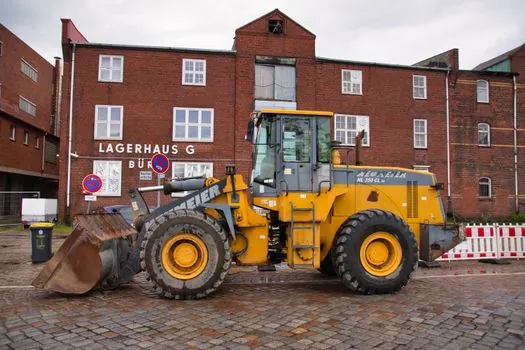
Tipping load defines the rear-wheel lift point, but safe operating load (typically 50% of tipping in a straight-on, level-surface configuration) defines the actual lift envelope that should drive bucket sizing on a demolition site [S2]. Mixed debris with rebar and concealed voids shifts the center of gravity unpredictably, so engineers generally derate against a worst-case loaded bucket rather than trust the brochure number [S2]. A high-lift boom option is worth specifying if the demo rolls into high-sided articulated trucks, since the extra reach at full dump height removes repeated repositioning on a sloped pad [S3].
Bucket and Attachment Choices for Demo Debris
Demolition buckets are typically heavier than GP buckets, with thicker cutting edges, reinforced side cutters, and bottom wear strips rated for impact and rebar contact rather than clean aggregate penetration [S1]. For a clean material stream, a GP or light-material bucket around 0.8-7.0 yd³ keeps a small-to-medium loader productive; for mixed C&D, a 3-6 yd³ demolition bucket on a 20,000-50,000 lb chassis is the typical pairing [S4]. For scrap handling, a grapple or fork attachment swaps in for the bucket carrier, letting the same machine sort steel and load trucks without a second unit on site [S1][S5]. Within the broader machine family, an overview of the wheel loader size classes and attachment carriers is worth keeping open during the spec pass.
Site, Cab, and Durability Specs That Bite on Demo

Pressurized cabs with reversible cooling fans and advanced HVAC matter on demo because airborne dust and silica loading are significantly higher than on green-field earthwork, and that combination directly drives filter service intervals [S3]. High-illumination LED lighting, large unobstructed glass, and integrated mirrors are not comfort items on a demo site; they are how the operator sees a partially collapsed slab edge or a moving crusher conveyor [S3]. Telematics with engine-health, fuel, and payload-weighing feeds let the fleet manager catch a missed service before a hydraulic line fails inside a hot slab cut, and load-sensing hydraulics vary flow on demand rather than bleeding it across the valve bank [S3]. Comparable operator-cab and visibility tradeoffs are documented for the backhoe loader class, which is the common second machine on a structural demo package.
Selection Comparison: Compact vs Medium vs Large for Demolition
Compact (9,000-20,000 lb) loaders fit urban demo with low ceiling heights and 8-12 ft access gates, with bucket capacities clustered at the low end of the 0.8-7.0 yd³ range and 60-100 hp typical [S4][S6]. Medium (20,000-50,000 lb) loaders cover the bulk of structural work, with 150-300 hp common, demolition buckets in the 3-6 yd³ band, and enough reach for standard 13 ft 6 in sidewalls on roll-offs [S4][S7]. Large (80,000 lb and up, up to ~590,000 lb) loaders are used for slab reduction, scrap-yard feeding, and crusher load-out, with peak horsepower reaching roughly 1,739 hp on the largest Cat mining-class chassis [S4]. The pairing for a typical mid-size structural demo is therefore one medium loader on debris plus a compact unit on interior strip-out, not a single large machine running back and forth across the site [S4][S7].
What a Wheel Loader Will Not Do on a Demo
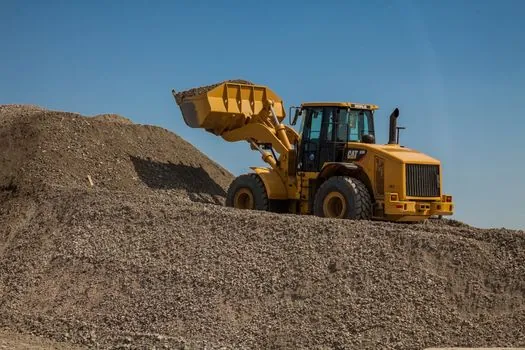
Wheel loaders are not breakers, and selecting one in place of a dedicated demolition hammer or high-reach excavator package is a common mis-spec; the loader's role is material movement and load-out, not primary structural fracture [S1]. A skid steer loader is the cheaper tool for tight interior work, and the wheel loader is only justified once cycle time, lift height, or bucket density pushes past the skid steer's envelope [S4][S6]. On sites with mixed loading and lifting duty, a backhoe loader or telehandler can replace a second wheel loader and is worth evaluating in the same selection pass [S4].
Track the next revision of OEM demolition-bucket cut-out geometry, the 2026 telematics standard around automated payload weighing, and any post-2025 updates to site-tier guarding specs from the major OEMs [S3][S5].