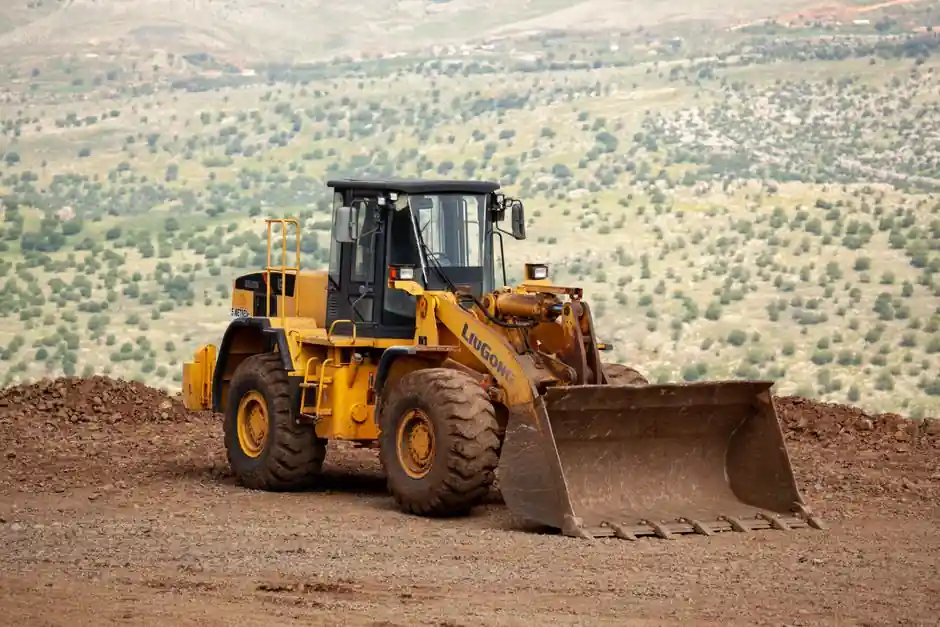
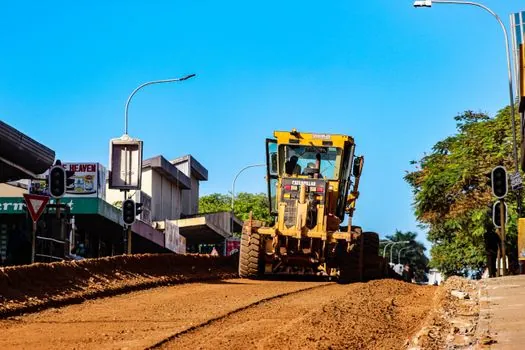
A motor grader is a long-wheelbase machine with a centrally mounted, hydraulically adjustable moldboard used for fine grading, snow removal, ditching, and surface finishing on roads, runways, and gravel surfaces [S2][S3].
The machine pairs a high-horsepower diesel engine (commonly 215-300 hp in mainstream models) with articulated steering and a circle-turn moldboard that can shift, tilt, pitch, and reverse direction, giving operators millimeter-level control over the cut [S3][S5].
Operating Principle and Core Components
Three assemblies define every motor grader: a rear tractor with engine and cab, a long frame that bridges short surface irregularities, and a drawbar-circle-moldboard group that carries the cutting edge under the centerline of the machine [S2][S5].
The moldboard is the working tool and can be adjusted for height, angle, pitch, and reverse direction through hydraulic control from the cab, which is why graders can hold tight tolerances on gravel and base course where bulldozers leave ridges [S3][S5].
Articulated steering lets the rear tandems track the front wheels, reducing turning radius and improving stability when the operator offsets the front wheels to side-cast material away from the working lane [S2].
Advantages: Precision, Versatility, and Long-Term Cost
Precise blade control produces less soil disturbance than a tracked dozer, which matters on finished subgrade, landscaping, and airport runway work where over-excavation is expensive to repair [S1][S2].
Attachment flexibility is a structural advantage: rippers, snowplow blades, rotary brooms, rear-mounted blade extensions, and scarifiers mount to the same chassis, turning a single grader into a year-round maintenance tool [S3].
Efficiency gains over manual methods and loaders are well documented, with one equipment guide noting that graders "cover large areas faster with improved precision" than hand tools or dozer-only spreads, and the same source ties that efficiency to lower labor and material expense on long road projects [S3].
Current production graders span 215 hp to 300 hp net power with blade pull from 31,066 lbs to 49,500 lbs, a band wide enough to match a municipal road crew and a highway contractor with the same machine class [S3].
Disadvantages: Skill Demand, Cost, and Limited Push Capacity
Motor graders are widely considered the hardest heavy equipment to operate because the operator must coordinate blade angle, pitch, height, and frame articulation simultaneously, a skill that takes months of seat time to develop [S5].
Acquisition cost is higher per unit than a comparably powered dozer, and the long wheelbase plus articulated frame make transport between job sites more involved, a non-trivial factor for rental fleets and short-duration contracts [S3][S6].
On bulk earthmoving, a grader is the wrong tool: a dozer pushes rocks, demolition debris, and overburden with a heavy steel blade on track undercarriage, while a grader's lighter moldboard and tire footprint lose to dozers in drift distance, traction on soft ground, and cycle time per cubic yard [S1].
For very fine grading tolerance on airport pavements, contractors increasingly spec automated machine guidance, which adds capital cost and calibration overhead, but it does not remove the underlying need for a trained operator to set the moldboard [S3].
Motor Grader vs. Bulldozer: Decision Criteria Compared
Selection between a motor grader and a dozer comes down to four measurable criteria: ground pressure, finish tolerance, push volume, and operator skill required [S1].
A tracked dozer spreads its weight across metal treads, holds traction on muddy or sandy surfaces, and moves far more cubic yards per pass, but it leaves a rougher surface and disturbs more subgrade material [S1].
A grader rides on rubber tires with a long wheelbase that bridges small depressions, holds tighter grade tolerances, and side-casts with the moldboard angled across the frame, but it cannot match a dozer for raw material displacement [S1][S5].
Job-site rule of thumb drawn from the same comparison: specify a dozer for clearing, ripping shale or asphalt, and pushing heavy loads over long drifts; specify a motor grader for fine grading, ditch cutting, road maintenance, and snow removal where finish quality drives the spec [S1][S2][S5].
Application Map: Where Graders Earn Their Keep
Road construction and maintenance is the dominant use case, covering subgrade leveling, base course shaping, and ongoing surface reshaping to remove potholes, ruts, and washboarding on gravel roads [S2][S4].
Airport runways and taxiways demand precision grading to aviation-industry tolerances, a workload where the moldboard's fine adjustment and the long frame's bridging action outperform dozer blades [S2].
Secondary but commercially important uses include canal and ditch construction, shoulder widening, slope cutting, material mixing and windrowing, and snow removal with either a dedicated snowplow blade or an angled moldboard [S2][S5].
For broader construction machinery and equipment fleets, graders slot between excavators and dozers on most road-building critical paths, doing the finish work after bulk earthmoving is complete and before pavers or compactors move in [S3].
Buying, Sizing, and Fleet Signals to Track
New graders suit buyers who want the latest controls, a known maintenance starting point, and long-term fleet use; used graders fit short-duration contractors who can absorb higher wear risk in exchange for lower upfront cost [S6].
Sizing should start from blade pull and net power, not engine displacement alone, because the working tool, not the engine, sets production rate on a grader: the 31,066 lbs to 49,500 lbs blade-pull range across mainstream models maps directly to material density and travel speed [S3].
Two signals worth tracking through 2026: adoption of integrated grade-control systems on mid-size graders, and rental-fleet replenishment cycles, both of which move the new-versus-used pricing gap that procurement teams build into their capex models [S3][S6].
The underlying component specifications are covered under lamps and light fittings.
For related coverage, see Power Mixer Installation: Mains, Ventilation, and Speaker Wiring Rules.