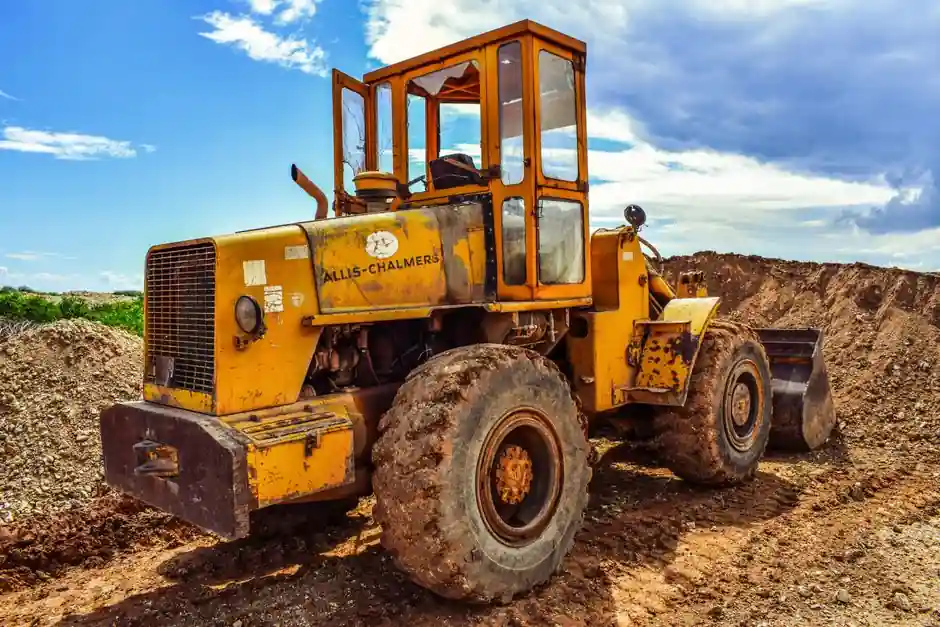
A mid-size articulated wheel loader in the 2.0–3.0 yd³ bucket class, mated to a 12–14 ft snow pusher, is the dominant specification for commercial snow removal on parking lots larger than 5 acres, with field-reported throughput gains of roughly 5× over a 9 ft V-plow truck [S2].
For 40+ acre facilities in regions averaging 60 inches of annual snowfall, single-unit coverage is at the limit of practical recovery, and fleet planners routinely specify two mid-size units to maintain service levels during back-to-back storm cycles [S1][S2].
Size Class and Bucket Capacity for Plowing Duty
Wheel loaders split into four production size bands: compact, small, medium, and large, with bucket capacity scaling from roughly 1.2 yd³ in compact units to over 5 yd³ in large production machines [S4]. For winter duty the 2.0–3.0 yd³ mid-size class is the practical sweet spot: heavy enough to push a 14 ft pusher through wet, dense snow, yet still roadable on a standard tag-along trailer for inter-site moves [S3][S6].
Compact loaders in the 1.2–1.8 yd³ range are well matched to plazas, drive lanes, and tight lots where agility outweighs raw capacity, while machines below 1.0 yd³ cannot develop the rim pull to keep a wide pusher loaded through a continuous cut [S6]. Field experience on airport ramps and super-center lots points to the 2.5 yd³ class as a versatile compromise: it carries a 12 ft pusher comfortably and an 11 ft straight blade plus wing for narrow-road applications [S3].
Attachment Selection: Pusher Width vs Machine Mass
Snow pusher width is governed by machine weight class rather than bucket capacity, and the widely used ratio is roughly 1 ft of pusher width per 1,000 lb of operating mass, which is why a 14 ft pusher pairs naturally with a 14,000–16,000 lb mid-size loader and a 16 ft unit steps up to a 544/644 class chassis [S2]. Pro-Tech and other OEMs offer folding pushers in the 18–20 ft range for JD 644-size machines, but transport width then dictates a separate logistics plan [S2].
Attachment choice also depends on the snow profile. Reversing snow plows are the right pick for heavy volumes of ice and compacted snow on roadways, while fixed box pushers are the default for open lot stacking because they retain the load without spillage on the windrow side [S4]. For pushers running 84 in and up on long, wet runs, width alone matters more than host machine size, and 96 in units are common regardless of chassis class [S8]. Snow blowers, angle brooms, and salt dispensers are all viable on a hydraulic quick-coupler interface, so the chassis decision should be made first and the attachment fleet built around it [S1][S9].
Traction, Drivetrain, and Tire Spec
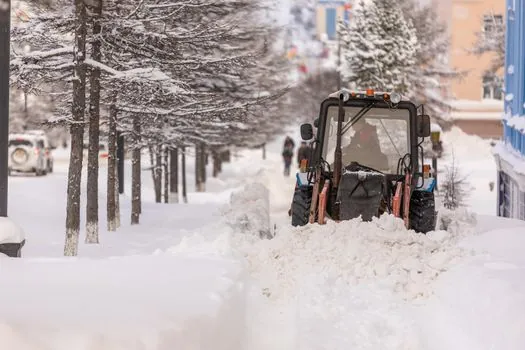
Four-wheel drive articulated steering is the baseline traction package, and on-demand differential locking is the feature operators reach for when a loaded pusher breaks traction on a polished asphalt surface [S4]. Tires are the more frequent failure point than the differential itself: a good winter tread on a 23.5–25 size tire makes a larger difference in uptime than the presence or absence of a manual diff lock on machines of the 644J class [S2].
Heated cabs, automotive-style ergonomics, and side-door access are not comfort luxuries, they are productivity features on a 12-hour winter shift where operators enter and exit the cab repeatedly for hand work around parked vehicles [S4]. Electronically controlled transmissions and variable-displacement hydraulic pumps have become standard on current production models, and they directly govern how cleanly engine output is matched to the variable load of a pusher working through a windrow [S4].
Site Constraints: Pavement Load and Maneuvering Radius
Pavement bearing capacity is a hard constraint that overrides bucket size in some applications: lots with thin asphalt over poor subgrade will not accept a fully loaded 644-class machine, and a smaller 524/544-class unit is the practical ceiling on those surfaces [S2]. A mid-size articulated loader still turns inside the wheelbase of a typical dump truck, which is what allows a single machine to clear a Wal-Mart super-center lot in coordination with pickup trucks doing the windrow and stacking [S2][S3].
For sites where the loader must also serve summer dirt or aggregate duty, the 2–3 yd³ class is the most adaptable: it fits a standard tag-along trailer, holds resale value across both snow and earthmoving markets, and accepts the same coupler pattern as a skid steer for light attachments [S3]. This dual-role capability is the reason fleets standardize on the 544/644 size class rather than stepping up to a 950/966, which only pays off when the workload is continuous, not seasonal.
When a Wheel Loader Is the Wrong Tool
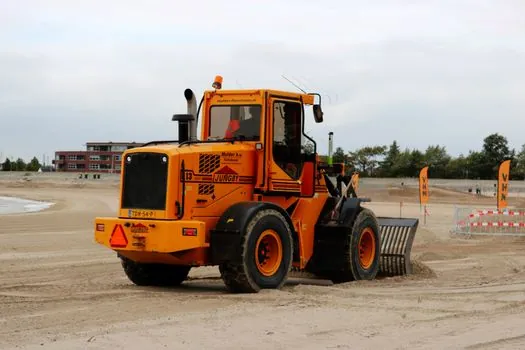
For sites under 1 acre, or for pedestrian-priority sidewalks, a compact wheel loader is over-spec and a pickup or tractor with a dedicated plow is faster to deploy, simpler to maintain, and cheaper per operating hour [S5]. For storm cycles under 2 inches, the mobilization cost of a 14,000 lb loader outweighs the throughput benefit, and pickup plows are the right economic answer [S5]. The wheel loader wins on three conditions: large open area, high cumulative snowfall, and the need to stack snow into remote piles rather than windrow it to the lot edge.
Articulated 4WD is not a substitute for proper winter tires, and no drivetrain will keep a loader productive on glare ice without a complete wheel package. Operators who spec for traction should budget tire replacement on a 2–3 season cycle, not as a one-time line item. A skid steer loader is the cheaper alternative for sub-5-acre sites, but it cannot match the rim pull or the pusher width of a mid-size wheel loader on a 10+ acre lot, and that productivity gap widens sharply as snow density increases.
Sourcing, Standards, and Trackable Signals
Volvo, Caterpillar, Komatsu, Case, Kawasaki, and Doosan all build competitive machines in the mid-size class, and the deciding factor at most fleet operations is dealer proximity and parts availability rather than a single published specification advantage [S1]. Field reports name the Cat 920, JD 544/644, and Cat 950/966 as consistent performers, with the 544 cited as the most versatile across snow and dirt duty [S2][S3].
For spec sheets and current production options, the OEM rental channel is the cleanest single source, with Cat Rentals publishing attachment and traction guidance directly for winter applications [S4]. Operators planning a 2026 fleet refresh should track two signals: dealer service radius (a 5-mile dealer is a real uptime advantage per field reports [S1]) and the availability of folding pushers in the 18–20 ft class for transport-restricted routes. For broader machine-class context, a look at the wheel loader selection map for demolition shows that the same 2.0–3.0 yd³ class is also the default for non-winter heavy work, which is why this size band holds resale value across the year. A backhoe loader is the closer fit when trenching and snow duty share the same machine, but it does not match a purpose-built wheel loader on continuous pusher work.