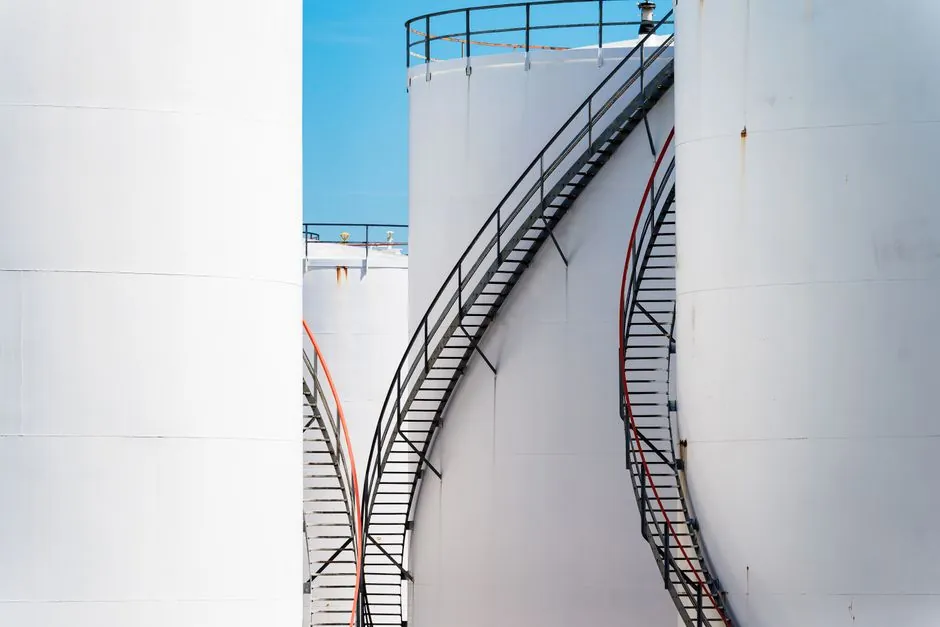
Mounting an ISO tank container to a road chassis is governed by a fixed 7-step sequence (preparation, truck positioning, lifting, securing, piping, testing, documentation) and the 800 lb/sq. ft. base-load foundation gate that separates sand pads from reinforced concrete [S1][S5].
This guide consolidates OEM procedures from CIMC, Snyder, Poly Processing, USA Tank, and Chemtainer into the decision points a process engineer or fleet operator actually has to clear on site: torque on twist-lock fasteners, water-test dwell time, immersion-heater stand-off, and confined-space entry rules [S1][S2][S3][S4][S5].
Step-by-step truck-mount procedure for a 20 ft ISO tank
Step 1 is preparation: crane or forklift, gloves, hard hats, correct bolts, and a pre-lift inspection of both chassis and the tank container for transit damage, with any defect noted on the bill of lading before unloading is attempted [S1][S4]. Step 2 is positioning the truck on flat, stable ground, in neutral, parking brake set, with clearance for the crane to maneuver the container over the mounting points [S1].
Step 3 is the lift itself: a crane or forklift raises the ISO tank container, and the operator centers it over the chassis so the corner castings line up with the twist-lock receivers; manufacturer lifting guidelines must be followed to avoid frame distortion [S1]. Step 4 is securing: bolts or clamps are torqued to the OEM spec at the four corner castings, and the operator must use a calibrated wrench rather than guessing by feel [S1][S4].
Piping, valve connections, and leak/pressure test acceptance
Step 5 connects the inlet and outlet valves plus any hoses or steam-heating coils, with every joint leak-checked before load; CIMC specifies tight, leak-free joints as a hard precondition to road movement [S1]. Step 6 is the test phase: a hydrostatic or pneumatic pressure test confirms the system holds the design pressure, and a separate water-fill leak test of at least 5 hours verifies fitting integrity on a stationary tank [S1][S4][S5].
Step 7 is documentation: installation certificates, torque records, test sheets, and the driver's pre-trip inspection file are signed and archived before the unit leaves the depot [S1]. Poly Processing reinforces the same gating logic in its 40-page installation and operation guide, which lists recommended torque values, IMFO flange assembly, B.O.S.S. fitting, and bellows transition fitting procedures as separate signed-off steps [S3].
Foundation, base load, and the 800 lb/sq. ft. threshold
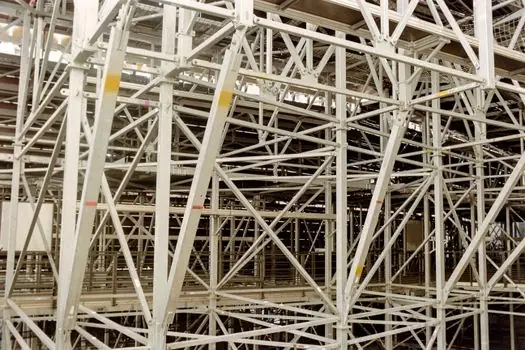
Both USA Tank and Chemtainer draw the foundation line at 800 lb/sq. ft. of base load: below that, a compacted bed of sand, pea gravel, or fine soil is acceptable when seismic and wind are not in scope; at or above 800 lb/sq. ft., a reinforced concrete pad becomes mandatory [S4][S5]. A reinforced concrete pad is the optimal base in all cases because it provides full, even support with no bottom deflection [S4].
Steel support stands are allowed but must sit on a concrete base and be bolted down to resist wind, seismic loads, agitation, and accidental contact, since the stand pads concentrate the loaded weight onto small footprints [S4][S5]. Tanks must be sited where they remain accessible for future removal, and rectangular tanks taller than 18 in. generally need side support, with high-specific-gravity or elevated-temperature contents triggering support on smaller tanks as well [S4][S5].
Fitting torque, expansion joints, and what fittings must not carry
Plastic screw-on bulkhead fittings are designed for hand tightening only; over-torque is the single most common leak path and voids warranty on both Poly Processing and Chemtainer tanks [S3][S4][S5]. Piping, valves, and accessories must be independently supported, because no tank fitting is rated to carry pipe weight, and an expansion joint is required to absorb the differential expansion between the piping run and the tank shell [S4][S5].
Immersion heaters must be spaced a minimum of 3-4 in. from the wall, both manufacturers agree on the 3-4 in. stand-off, to prevent local hot-spot softening of the polyethylene or polypropylene liner [S4][S5]. For a related installation decision where hoisting and quick-coupling drive most of the labour cost, see this crane selection spec map for 2026 site fits.
Operational limits: atmospheric only, no vacuum, no pressure

Polyethylene and polypropylene tanks covered by these OEM guides are rated for atmospheric chemical storage only; vacuum service collapses the shell and pressure service can rupture a bulkhead fitting, so neither is permitted under any USA Tank or Chemtainer warranty [S4][S5]. Snyder's industrial tank resource hub lists heat-trace manuals (HTD 2025, CaloriQue 2024) and ultrasonic level indicator manuals as the supporting documentation expected alongside an atmospheric storage installation [S2].
Confined-space entry is treated as a hard stop: nobody enters a tank without following proper permit and atmospheric-testing procedures, and the same rule applies to dome work where a portable ladder, scaffold, or personnel lift with fall protection is required in place of standing on the dome [S3][S4][S5]. Below 40 degrees F the tank becomes impact-sensitive, so handling and impact risk must be reassessed in cold-weather installations [S4][S5].
Comparison: ISO chassis-mount vs stationary atmospheric tank installation
First, mobility: the ISO chassis-mount must add Steps 2-4 (truck positioning, crane lift, twist-lock torque to chassis) which a stationary pad does not need [S1][S4]. Second, foundation: a stationary tank at 800 lb/sq. ft. base load forces reinforced concrete, while a road chassis transfers load through the truck frame to the road surface [S1][S4][S5]. Third, test scope: an ISO road unit adds a pressure test on top of the 5-hour water leak test that a stationary atmospheric tank already requires [S1][S4][S5].
For tank cleaning chemistry and liner selection that follow the install, this rail-industry reagent guide covers the next downstream decision. Where in-line IBC tank handling is part of the same depot workflow, the receiving, inspection, and confined-space rules cited above carry over without change [S2][S4].
Signals to track after installation
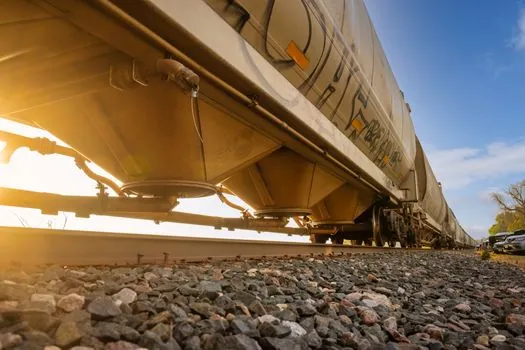
Two trackable signals confirm a clean install: the signed torque record at every corner casting plus the 5-hour water-test log with no weep at any fitting, both filed against the tank serial number [S1][S4][S5]. A third signal, the OEM heat-trace manual revision year (Snyder lists HTD 2025 or later, CaloriQue 2024 or earlier), flags which heating-coil procedure was used and is the version auditors look for first [S2].
Spec-level background on the components involved: linear guide.