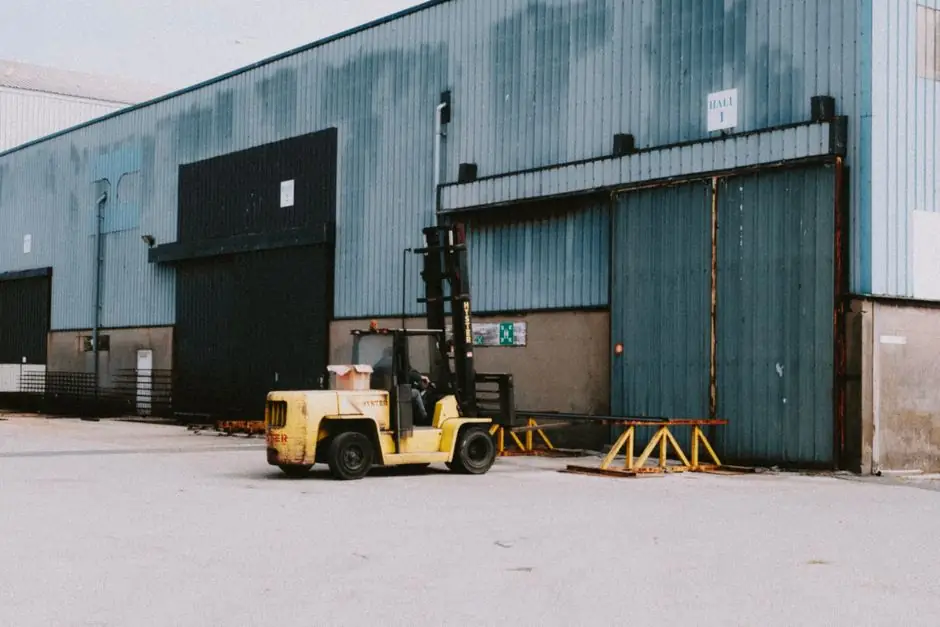
Rough terrain forklifts built for 2026 road work typically span 2-ton to 10-ton load ratings, with 4-wheel drive, diesel engines, and 270-320 mm of under-chassis clearance at the lowest point [S3][S8].
On a road job the forklift rarely sees finished concrete on day one; it moves rebar, geotextile rolls, drainage pipe, kerb stone, and bagged cement across subgrade, fill, and wet-cut surfaces [S2][S5].
Drivetrain and Tyre Configuration
4-wheel drive with large, aggressively treaded pneumatic tyres is the default for active road subgrade, where ruts and mud are daily conditions [S3][S6]. Pneumatic or foam-filled tyres give better traction than cushion tyres on crushed stone, dirt, or soft shoulder work [S3]. Cushion-tyre forklifts are restricted to finished concrete and asphalt warehouse floors; on grass or wet fill they bog down fast [S4].
2-wheel drive rough terrain units still exist, mainly in the 2-3 ton class for yard duty on firm crusher-run surfaces, but they are not the right tool for a moving road alignment after rain [S7]. For hauling trailers, kerb pallets, and pipe across mixed surfaces, the 4WD configuration with truck-sized pneumatic tyres is the conservative pick, even at higher acquisition cost [S4].
Engine, Hydraulics, and Lift Reach
Diesel is the dominant powerplant for outdoor road work because of higher torque, longer run time per tank, and tolerance for dust and temperature swings; LPG and gasoline appear mostly on lighter yard machines [S3]. Lift height is set by mast type: standard, duplex, or telescopic, with forward reach required for loading dump trucks and placing materials above pipe trenches [S3].
For a typical 2026 road package, a 5-6 ton rough terrain forklift with a duplex mast giving 4-6 m of lift covers most kerb, manhole ring, and geotextile handling. Reach above that pushes the spec toward a telehandler, which is a different machine class and covered separately in the rough terrain forklift spec map [S2].
Ground Clearance, Stance, and Stability
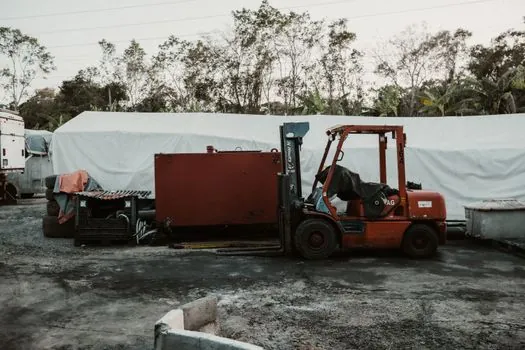
Under-chassis clearance is the single most abused number on a forklift data sheet. A genuine rough terrain forklift should clear 270-320 mm at its lowest point, which protects the steering linkage and hydraulic lines on stony subgrade [S8].
Wide stance and heavy frame are what keep the load level when one wheel drops into a rut or climbs a windrow of fill [S5]. On slopes of 1 in 4 or steeper, a wider machine with a load-backrest and tilt correction is non-negotiable; the standard warehouse forklift geometry is not built for that duty cycle.
Selection Criteria Map for Road Construction
For road work, the dominant decision criteria are ground clearance, drive configuration, mast reach, and load rating; auxiliary criteria are tyre type, cab protection, and service access [S3][S5][S8].
On a 2-ton class rough terrain unit, expect roughly 270 mm clearance, 2WD or 4WD option, 3-4 m lift, and pneumatic tyres; a 5-ton unit typically runs 300+ mm clearance, 4WD, 4-6 m lift, and a heavier frame; a 10-ton class unit moves into dedicated pipe and steel yard duty, often with a longer wheelbase and reinforced mast [S3][S8]. Brands active in the North American dealer channel include Sellick, Manitou, and Combilft, with 4WD diesel as the common thread [S1].
Safety, Cab, and Operator Considerations
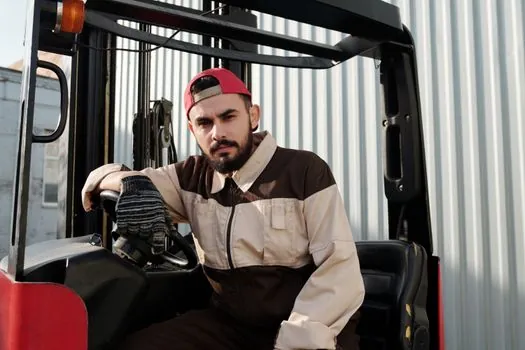
An enclosed or semi-enclosed cab is worth specifying on road jobs because dust from grading, bitumen fumes from adjacent paving, and weather exposure erode operator focus over a 10-hour shift [S3][S5]. Load sensors, tilt alarms, and stability systems are not optional accessories on uneven ground; they are the difference between a routine lift and a tip-over [S3].
Operator visibility from an elevated seat with clear sightlines to the fork tips is the design feature most often stripped on budget models. For a road site with frequent truck loading, the elevated position is the cheaper safety upgrade compared to adding cameras and sensors later [S5].
Limitations and When Not to Use a Rough Terrain Forklift
Rough terrain forklifts are not substitutes for a road roller on compaction, a telehandler on long forward reach, or a forklift with cushion tyres on a finished warehouse floor. A 5,000 lb pneumatic-tyre forklift can still get stuck in soft ground with ruts, so calling it off-road is a stretch [S4].
For pipe handling deeper into a trench, for long boom reach onto truck beds, or for lifting above 6 m, a telehandler or rough terrain crane is the right tool. A 12,000 lb rough terrain forklift also needs a low-loader to move between sites, not a utility trailer, so transport cost belongs in the rental decision [S4].
Standards, Sourcing, and Total Cost Reality
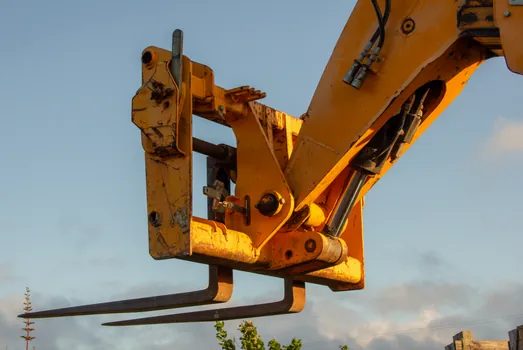
Rough terrain forklifts are not governed by a single product standard in the way pressure instrumentation is; instead they sit under general machinery safety directives and operator training rules in the buyer's jurisdiction. Buyer-side checks are frame integrity, hydraulic hose condition, tyre wear depth, brake and parking-brake function, and engine hours on the hour-meter [S2][S4].
On the construction tools and equipment side, the machine has to be supported by a dealer with parts and service in the region, since downtime on a road job is measured in lane-closure hours, not workshop days [S1][S3]. Matching the spec to the site, rather than to the brochure, is the cheapest upgrade available.
Trackable signals for the next planning cycle: dealer-reported 4WD diesel take-up in the 5-10 ton class for 2026 highway packages, and any movement of cab and stability-system content from optional to standard equipment on the major OEM lines. For sites staging timber, drainage, and bulk bag work alongside heavy plant, also review forestry forklift spec maps when adjacent logging or clearing scope is in the package.