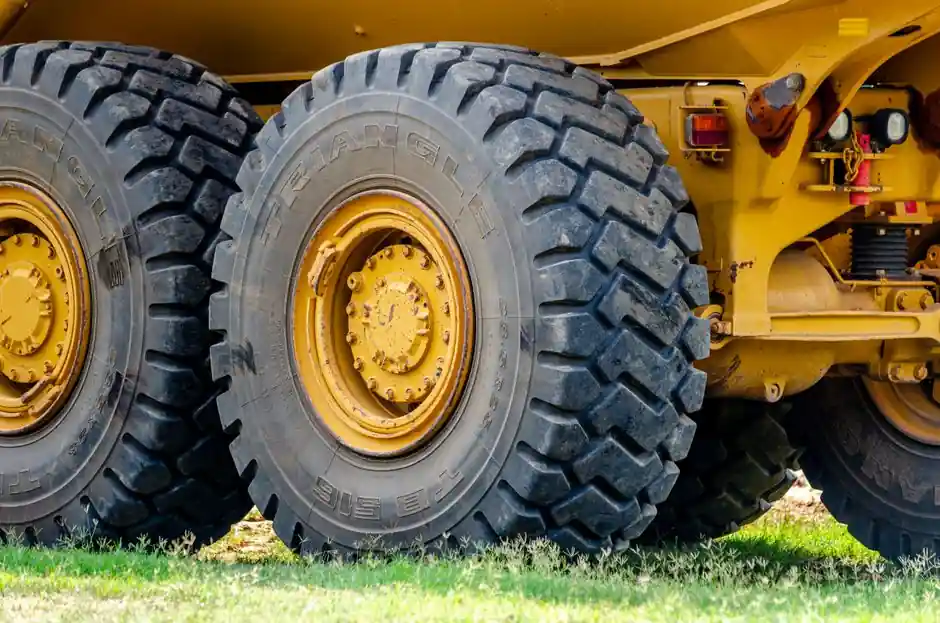
Aerial work trucks specified for pipeline right-of-way and station work in 2026 are running 4x4 diesel chassis paired with telescopic or articulating booms in the 37-118 ft working-height band, with insulated or non-insulated options chosen against the live-line or de-energized task [S1][S2].
Pipeline spreads are still mobile and often off-pavement, so the chassis and the boom have to be decided together rather than as two separate purchases. Front-mount, rear-mount, and overcenter configurations all exist, and the choice hinges on whether the truck is climbing a steep weld bench, working beside a stringing truck, or setting up at a station site with overhead conductors [S1][S2].
Boom Type and Reach: Telescopic vs Articulating vs Overcenter
Telescopic bucket trucks, often called "squirt" or "stick" booms, give the longest straight-line horizontal reach because the boom has no knuckle and telescopes along a single axis, which is the configuration crews pick when a pipeline crosses a limited-access right-of-way [S2].
Articulating-telescopic units (knuckle/squirt combinations such as the Terex LT40 or Versalift VST-7500-E108) fold at a knuckle and then extend, which lifts the bucket up and over obstructions and cuts tail swing on the offside, a real productivity gain on tight compressor-station pads [S2]. Overcenter articulating booms go a step further by carrying the bucket past the truck's centerline, which extends side reach for tree-line work, valve manifolds, and aerial work platform applications where the truck cannot be parked directly under the work point [S2].
Working-height examples documented in current upfit catalogs run from a 37 ft Versalift bucket in a service body up to 75 ft on an Elliott H70 front-mount, 90 ft on an Elliott rotating-platform unit, and 82-118 ft on the Bronto Skylift S-XDT line, so a 37-75 ft range covers most pipeline day-to-day work while 90+ ft units are reserved for station piping and bridge crossings [S1].
Drivetrain, Chassis, and Off-Road Duty
Diesel takes bucket trucks with hydraulic lifts into the heavy-duty arena, and pipeline contractors specify two-wheel drive for paved station access, four-wheel drive for rough right-of-way work, and all-wheel drive for the worst terrain, matching the chassis to the spread rather than buying the most expensive option by default [S2].
Medium-duty chassis dominate the Canadian pipeline-contractor fleet, and Work Truck West explicitly builds service trucks, picker decks, lube trucks, and mechanic trucks on medium-duty platforms for picking and laying pipe sections, lubricating carriers, and maintaining off-road equipment, which is the same operating envelope an aerial unit shares on a spread [S3].
For pipeline right-of-way work in 2026, the practical baseline is a 4x4 diesel on a medium-duty single- or tandem-axle chassis with a front- or rear-mounted boom, an underframe outrigger package, and a body that can carry tooling, grout, or pipe-facing equipment; that is the same configuration utility-line contractors use, and pipeline crews inherit the supply chain and the service network from them [S3].
Insulation Class and Live-Line Work
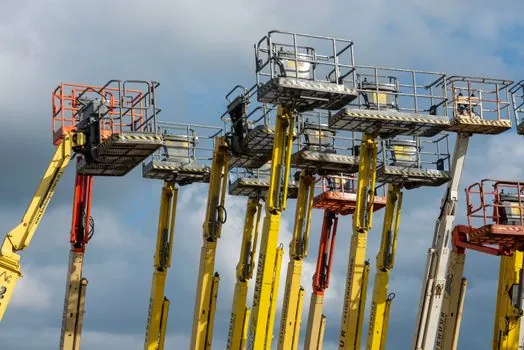
Insulated booms are the right pick whenever the bucket will approach energized overhead conductors at valve stations, metering skids, or where a pipeline parallels a transmission line, and the boom's dielectric rating (commonly 46 kV or higher in ANSI/IEEE-rated categories) is the spec to verify rather than the marketing label "insulated" [S1][S2].
Non-insulated booms are the lighter, cheaper, and longer-reach option for de-energized pipeline work, cross-country construction, and most coating, welding, and inspection tasks where overhead conductors are not within reach, and pairing a non-insulated boom with a chassis that has lower curb weight is the standard way to maximize payload and reach on a single-axle truck [S1].
For aerial work platform work in substations and on shared corridors, the platform itself can be optioned with material jibs, welder leads, and 120 V outlets, so the same truck can carry a welder, a generator, and a gas bottle up to the work point without a second support vehicle on site [S1].
Options That Change Productivity on a Pipeline Spread
Platform-mounted material jibs and turret-mounted winches turn an aerial truck into a light crane, and the Elliott H70 is published with a 5,900 lb platform winch at 75 ft working height, which is enough to lift a stringing bevel machine, a section of pup joint, or a valve bonnet up to a working welder without a separate picker truck on the right-of-way [S1].
Boom tower elevator options, rotating work platforms, and platform widths up to 192 in. are documented for Elliott, Bronto, and Versalift upfits, and any of them is a real productivity multiplier when two welders, a fitter, and an inspector all need to work at the same elevation on a tie-in [S1].
For pipeline contractors running seasonal spreads, telematics and IoT integration on new AWP trucks is now a procurement line item, with fleet management features tied to utilization, geofence, and battery or engine health; the broader market expects telematics to be standard on most electrified and hybrid AWP truck deliveries through 2026 [S4].
Market Size, Electrification, and the 2026 Procurement Signal
The global AWP truck market was valued at USD 19,700 million in 2026 and is projected to reach USD 40,800 million by 2033 at an 11.2% CAGR, with North America holding a 32% regional share on the back of rental fleets, safety compliance, and high-rise construction [S4].
Electric units are forecast to take a 58% share of the AWP market in 2026, and the next-generation battery packs are rated for 40% longer runtime than 2025 models, 80% charge in two hours, operation down to -20°C, and more than 3,000 charge cycles, which is enough to put a quiet, emission-free unit on a hospital, school, or urban-residential pipeline tie-in where diesel would be a noise and emissions problem [S4].
For pure cross-country pipeline spreads, diesel still wins on range and refuel time, but contractors working urban gas-distribution renewals and station retrofits are now specifying hybrid or full-electric AWP trucks with 110 V or lithium platforms as a default, not an upcharge; a similar shift is visible in the parallel aerial work platform forestry segment, where boom reach and ground pressure are the deciding specs [S4].
Selection Criteria Compared: Telescopic vs Articulating vs Overcenter
On four decision criteria, the three boom styles line up as follows for 2026 pipeline work. Reach: telescopic wins for straight-line horizontal distance, articulating-telescopic is the compromise, and overcenter wins for side reach past the truck centerline. Maneuverability on tight pads: articulating-telescopic wins, because the knuckle lets the boom fold up and over a manifold and reduces tail swing on the offside. Live-line capability: all three are available in insulated ratings, so the deciding factor is dielectric class, not boom style. Productivity (fewer repositioning events per shift): articulating and overcenter win, because they fold around obstructions the truck cannot drive under, which is the same logic used in aerial work platform demolition selections where boom geometry beats raw height [S2].
Pricing and lead time follow a different ranking, and the more specialized the boom (overcenter plus rotating platform plus material jib plus winch), the longer the lead time and the higher the upcharge, so a fleet spec that mixes one overcenter unit with two standard telescopic units is the common 2026 procurement pattern on a mid-size spread [S1][S2].
Safety, Standards, and Crew Operation
Aerial lifts are used as a safer, mobile alternative to scaffolding and ladders on construction sites, and the operational rules fall under OSHA 29 CFR 1926.1400 and 1910.67 for boom-supported elevating work platforms, with the practical requirements being pre-shift inspection, outrigger verification, ground conditions check, and fall-protection on the platform [S5].
Bucket trucks reduce fall hazards from ladders and scaffolding, and crews using them have documented project-timeline reductions of up to 30% on high-rise and infrastructure work because the lift repositions faster than scaffolding can be struck and re-erected, which transfers directly to faster pipeline tie-ins and station retrofits [S4].
On pipeline work, the common failure modes are soft-soil outrigger punch-through, boom contact with overhead conductors on shared corridors, and overloading the platform with crew plus materials; the practical controls are ground-bearing plates, dielectric-rated booms on shared corridors, and platform load charts that account for the crew, the tools, the material jib, and the welder leads together [S1][S5].
What a Pipeline Contractor Should Specify on the PO
The 2026 baseline spec for a pipeline AWP truck is: 4x4 medium-duty diesel chassis, single or tandem rear axle, 37-75 ft working height (90 ft for station work), telescopic or articulating-telescopic boom, insulated or non-insulated class chosen against the live-line scope, platform-mounted material jib, 5,000-5,900 lb platform winch, rotating platform on station-spec units, and telematics prep for fleet integration [S1][S2][S3][S4].
Two signals worth tracking through the rest of 2026: AWP truck OEM electrification announcements (Dingli E series, Zoomlion Green Line, Genie ePower are the public product lines cited as adopting the new 40%-longer-runtime battery packs), and any OSHA or provincial safety updates that change dielectric ratings or outrigger requirements for boom-supported elevating work platforms on shared utility corridors [S4].
Component reference pages worth checking: aerial work truck, aerial work platform, and pipeline pump.
See also our earlier report, Diaphragm Wall Grab Selection for Pipeline Construction: Depth, Soil, and Panel-Size Map.