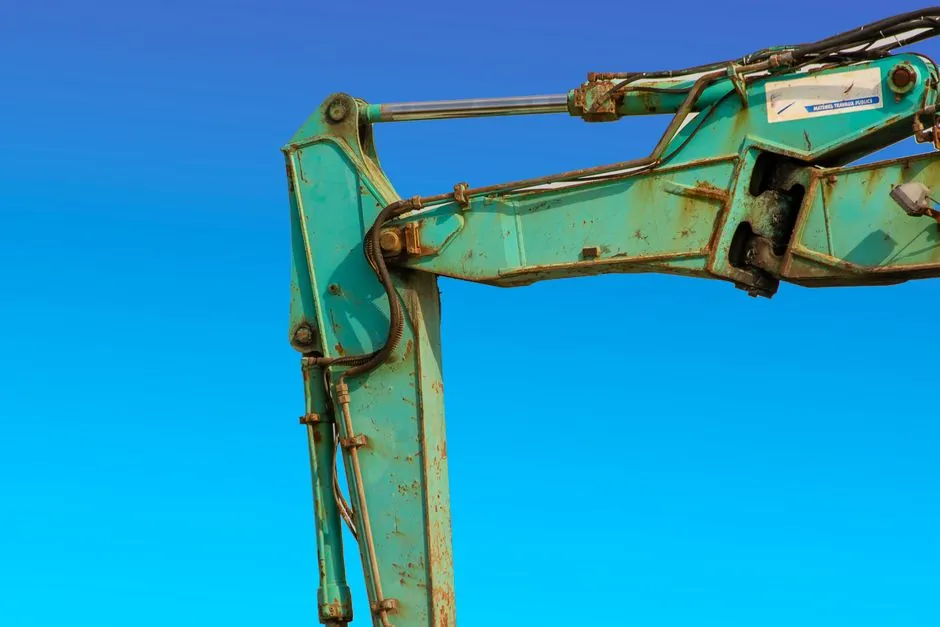
Outriggers and dozer blades are the two stabilising systems on a wheeled excavator, and the configuration (blade plus two outriggers, four outriggers replacing the blade, or a rear blade with independent outriggers) directly sets lifting capacity, swing clearance, and set-up time on a job [S1][S2].
Dozer blades come standard on both mini wheel and tracked excavators to enhance stability when lifting heavy or uneven objects, while outriggers work as hydraulic legs that spread and level the machine before digging starts [S1][S5][S7].
Two Stabiliser Architectures on Wheeled Undercarriages
A wheeled excavator sitting freely on its tyres has less inherent stability than a comparable crawler because tracks provide a larger, more stable footprint, so manufacturers compensate with axle locks, dozer blades, and outriggers; buyers can choose two or four stabilisers depending on the lift work profile [S3].
Outriggers are operated hydraulically from inside the cab and can be individually controlled to level the machine on uneven terrain or slopes, which makes them functionally equivalent to four levelling legs rather than a single pushing tool [S1][S5]. A dozer blade, by contrast, is a front- or rear-mounted plate that can backfill, level, and react horizontal digging force, with the trade-off that it occupies the space where a stabiliser leg would otherwise deploy on smaller platforms [S1][S4].
Configuration Options and Their Trade-offs
Mini wheel excavators can be equipped with a front dozer blade plus two rear outriggers, or with four outriggers where two of them replace the blade entirely, and this choice is the single biggest spec decision on a compact wheeled chassis [S1].
On larger platforms, an independently operated set of outriggers combined with a rear stabiliser blade, such as the layout on the Wacker Neuson EW65, is a common factory configuration that anchors the machine with the widest possible footprint [S2]. When deploying outriggers or dozer blades, a wheeled model typically matches the exact breakout force, digging depth, and lifting capacity of a comparable crawler, which is the engineering justification for using stabilisers instead of switching to tracks [S3].
Weight Penalty of Each Stabiliser
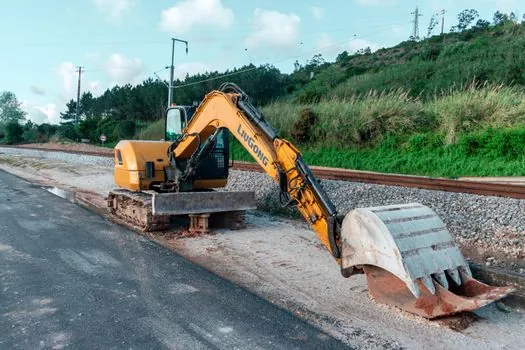
Stabiliser mass is real, and it shows up on the shipping spec sheet, not just the option list; for the Cat M315D Stage IIIB wheeled excavator, the dozer blade option weighs 750 kg, the outrigger option weighs 960 kg, and the standard counterweight is 3,500 kg, with an optional 3,900 kg counterweight available for heavier lift packages [S6].
The 960 kg outrigger pack versus the 750 kg blade pack, a 210 kg delta, is small relative to the 3,500-3,900 kg counterweight, but it is enough to swing transport planning on a single-axle low-loader [S6]. Operators planning a road-going move should treat the stabiliser set as a declared mass on the type plate rather than a free option.
Selection Criteria by Use Case
For urban and roadway work, a wheeled excavator needs at minimum a rear blade plus outriggers to anchor the machine when digging aggressively, because the bucket can pull the machine forward on paved surfaces where tyre bite is low [S3].
For public works and roadside vegetation control, a wheel excavator equipped with a mower or mulcher and capable of 23 mph roading speed benefits from a dozer blade for shoulder grading, while a four-outrigger configuration trades backfilling ability for a wider, more level working base on sloped ground [S3][S5].
For soft ground or finished surfaces, tyre footprint pressure is the deciding factor, and the blade plus outrigger layout lets the machine weight be spread across four contact patches plus the blade edge, lowering average ground bearing pressure compared with a track machine of equal class [S1][S5].
How the Two Systems Work Together During Digging
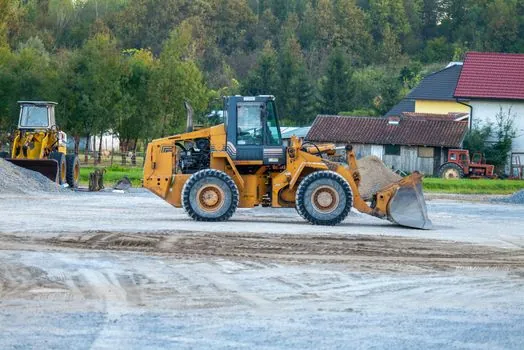
Outriggers are designed to work like legs, helping to spread out the weight of the machine, while the dozer blade stabilises the machine during digging applications and can replace a secondary machine when levelling or backfilling material [S1][S5].
In a typical lift cycle, the operator first lowers the outriggers to level the chassis, then drops the dozer blade to lock the front of the machine against the ground; this sequence lets the upperstructure swing a load without rocking the undercarriage on its pneumatic tyres [S1][S2][S7]. For municipal crews running one machine in a single traffic lane, that combined anchor pattern is what allows the wheeled platform to deliver crawler-class lift charts at 20+ mph roading speeds [S3].
Standards and Compliance Anchors
No ISO or SAE standard number governs the choice between a dozer blade and outriggers on a wheeled excavator; the decision is driven by the machine's rated lift-capacity chart, which is published per model and assumes a specific stabiliser set deployed [S3][S6].
Buyers should match the spec sheet's declared stabiliser configuration (blade, two outriggers, four outriggers, or rear blade) to the lift chart they intend to work to, and treat any field substitution, such as removing the blade to fit a rear grader attachment, as a change that voids the published lift numbers until the manufacturer re-issues a chart [S3][S6]. The original Deere & Company patent US4501334A, filed July 7, 1983, codified a dozer blade plus boom-mounted stabiliser wheel as the basic wheeled-excavator stabiliser arrangement, and the modern two-blade/four-outrigger options are direct evolutions of that disclosure [S4].
Track the Cat M315D 3,500-3,900 kg counterweight window and the EW65-class rear-blade-plus-outrigger layout as the reference points for 2026 wheeled excavator spec sheets, and watch for OEM updates that re-state lift charts with the 960 kg outrigger pack deployed. For related undercarriage decisions, the Troughed vs Flat Belt Conveyor comparison covers a different earthmoving subsystem but uses the same stabiliser-versus-throughput trade-off framing.
Spec-level background on the components involved: excavator, pressure transmitter, and flow meter.