
A cupola furnace is a vertical-shaft, coke-fired melting unit that produces cast iron in a continuous charge-and-tap cycle, with a refractory shell, tuyeres, and a drop bottom for slag and iron discharge [S1]. Telecom enclosures are almost always made from sheet aluminum, sheet steel, or stainless plate formed and welded into cabinets, not from cast iron components.
This article, written for process engineers and sourcing teams sizing foundry capacity, breaks down when a cupola is the wrong tool, when a melting furnace of another type still works, and the few narrow sub-components inside a telecom cabinet where cast iron does show up.
Cupola Fundamentals: Iron Output, Not Aluminum
A cupola runs on a bed of metallurgical coke with limestone flux and a forced-air blast through tuyeres, melting a charge of pig iron, scrap, and returns to give liquid iron at roughly 1,400 to 1,550 degrees Celsius with a typical melt rate in the 2 to 15 metric tons per hour band for small foundry units [S1]. The product is a high-carbon, high-silicon iron, and the tapped slag, commonly called cupola slag, is Fe-rich and has been studied as a pozzolan or aggregate substitute in concrete, with documented use as a partial cement replacement and as fine or coarse aggregate [S2].
Telecom enclosure lines, by contrast, form 1.0 to 3.0 millimeter sheet aluminum, 1.2 to 2.5 millimeter cold-rolled steel, or 304/316 stainless plate into rack, wall-mount, or pole-mount cabinets. None of those base materials come out of a cupola. A cupola also cannot melt aluminum economically: the iron-saturated environment, the high FeO activity in the slag, and the tap temperature band would dissolve and contaminate any aluminum charge rather than recover clean, low-Fe melt.
What a Cupola Actually Feeds vs What a Cabinet Needs
For lighting, decorative castings, and CI pipes, the cupola furnace is still a common low-cost continuous melter, and a related article covers that workflow in detail for lighting fixture production. For telecom enclosures, the unit operations are stamping, bending, robotic or manual MIG/TIG welding, powder coat or anodizing, and gasketting to an IP rating. The molten-metal step, if any, is restricted to small iron or aluminum sub-parts: padlock hasps, hinges, cable gland nuts on legacy heavy-gland designs, cast mounting feet, and grounding lugs. Each of those is typically a stand-alone casting run, not the main enclosure body. [S2]
A useful sanity check is the material yield. Cupola-cast grey or ductile iron parts such as hinges and hasps weigh 0.05 to 0.6 kilograms each. A single telecom enclosure line producing 200 to 800 cabinets per shift needs only 10 to 200 kilograms of small castings per cabinet run, far below the 2 to 15 t/h melt band of a small cupola. Producers normally feed this from a crucible furnace batch run, an induction furnace coreless unit, or a small reverberatory, then tap only what is needed into the casting cell.
Selection Criteria: Is a Cupola Even on the Shortlist

Run the four filters below before specifying cupola capacity for a telecom-enclosure plant. If any answer is "no," pick a different melting furnace topology. [S3]
First, base material: if the cabinet body is sheet metal, no cupola is required for the body. If the program also includes cast iron sub-components, run a separate castings line, do not push the cabinet takt through a cupola. Second, alloy range: a cupola handles cast iron grades (grey, ductile, malleable) and limited high-carbon Fe alloys only. It cannot deliver the low-carbon 304/316 stainless or the 1xxx/3xxx/5xxx/6xxx aluminum grades used in cabinet bodies. Third, run size: cupolas become economic above roughly 1 to 2 metric tons per hour continuous flow, with shift campaigns measured in 4 to 12 hours. A 200-cabinet shift at 0.1 kg of castings per cabinet, 20 kg total, is two orders of magnitude under that threshold. Fourth, slag and emissions: cupola slag is Fe-rich and requires disposal or downstream valorization as a cementitious or aggregate substitute [S2], and off-gas carries CO, NOx, and particulate that need cleaning. Inside a telecom-cabinet factory, the local permitting cost usually rules out a new coke-fired cupola.
Comparison: Cupola vs Crucible vs Induction vs Holding for Cabinet Plants
For a typical telecom-enclosure line, the decision matrix below is the one process engineers actually use. The four criteria are base-metal compatibility, minimum economic run size, surface finish need on cast parts, and the ability to swing alloy without cross-contamination. [S2]
A cupola furnace scores well on continuous iron-only flow at 2 to 15 t/h with low fuel cost per ton, but poorly on alloy swing (long reline, Fe-saturated slag), surface finish (as-cast iron skin, scale), and minimum run size (penalized below 1 to 2 t/h). A crucible furnace is the opposite: it handles 50 to 500 kg batches, swings between aluminum, copper, and iron with crucible swap, and is the standard pick for short prototype runs of small castings. A holding furnace is not a melter, it holds tapped metal at 660 to 720 degrees Celsius for aluminum or 1,350 to 1,500 degrees Celsius for iron at precise setpoint, useful only after a primary melter. An induction furnace, either coreless or channel, gives the cleanest alloy swing, the tightest temperature control, and electromagnetic stirring, and dominates modern iron foundries running 0.5 to 6 t batches.
For a telecom-cabinet plant, the practical stack is: induction or crucible for the small castings line, plus a separate holding furnace if the castings cell feeds a continuous pouring station. The cupola only enters the picture if the plant is co-located with a 5 to 50 t/day iron foundry that supplies hasps, hinges, and grounding lugs to multiple downstream lines, and even then only as the upstream melter, not as part of the cabinet body flow.
Real Use Cases: Where Cupola-Grade Iron Still Touches a Cell Site
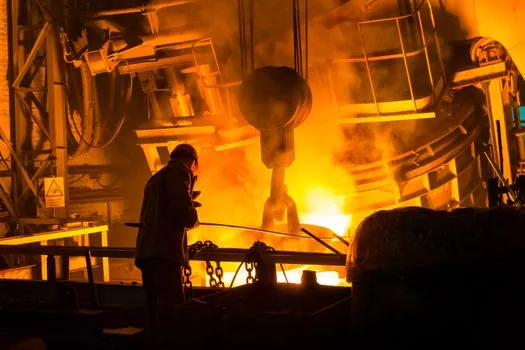
Three sub-components inside or around a telecom enclosure are still commonly cast iron. Padlock hasps and heavy-duty hinges for outdoor cabinets, often grade FG 220 grey iron or 65-45-12 ductile. Cable gland bodies on legacy IP66/IP68 designs with cast housings. Ground bar and lug supports, where a cast iron boss provides mechanical anchoring of the M10 or M12 stud. [S2]
Each of these is a part-level buy or a small captive line, not a main production flow. A mid-tier enclosure plant producing 1,000 cabinets per month typically needs 0.3 to 1.5 metric tons per month of these castings, well below the cupola economic floor, so the sourcing decision is normally: buy from an outside foundry, or set up a 100 to 250 kilogram crucible or induction cell on site. Choosing a new cupola just for the castings is the option that consistently loses the financial review.
Failure Modes and Constraints if a Cupola Is Forced In
Three failure modes repeat when a cupola is misapplied to a cabinet plant. First, alloy mismatch: the Fe-saturated slag and reducing atmosphere cannot be turned down to make 304 stainless or 6061 aluminum, so any attempt to "share" the cupola with the body line fails metallurgically, with high carbon pickup and oxide inclusions. Second, throughput mismatch: the minimum continuous run of 4 to 8 hours at 2 t/h, 8 to 16 metric tons of iron per shift, overshoots the cabinet line's casting demand by 50 to 500x, leaving 90 percent of tapped metal as recirculating inventory. Third, environmental cost: a coke-fired cupola emits CO at 2 to 6 percent of stack volume, plus NOx and PM10, and the slag must be landfilled, sold as aggregate, or reused as a partial cement replacement, with documented experimental work on [S2] showing performance tradeoffs against ordinary Portland cement.
Sourcing Standards and Specifications for the Castings That Do Exist
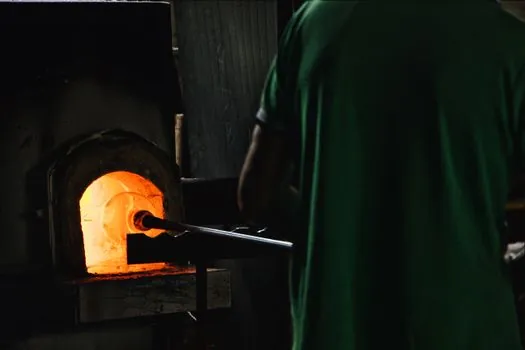
For the iron parts that do ship with a telecom cabinet, the spec is what controls, not the melter type. Grey iron hasps typically reference ASTM A48 with a class 25 to 40 tensile target. Ductile iron hinges and lug bosses reference ASTM A536 with grades 65-45-12 or 80-55-06. Surface finish for outdoor cabinets is normally a powder coat over shot-blasted cast iron, and gasketting on cast gland bodies is EPDM or nitrile per UL 50 or IEC 60529. None of these specifications requires a cupola as the upstream melter; the iron can come from induction, cupola, or channel furnace and still meet the same ASTM grade, provided the chemical composition and section size are controlled. [S2]
Track the following signals in the second half of 2026 to confirm the trend: 1) new telecom-enclosure tender documents continuing to specify sheet-metal bodies with no reference to a primary foundry step, and 2) enclosure-component suppliers such as Foshan-based metal processing equipment vendors expanding induction furnace and holding furnace offerings rather than cupola furnace product lines [S3], with Indian casting suppliers in Howrah continuing to list cupola alongside their pollution-control and ladle accessories [S4] for the legacy grey and ductile iron market.