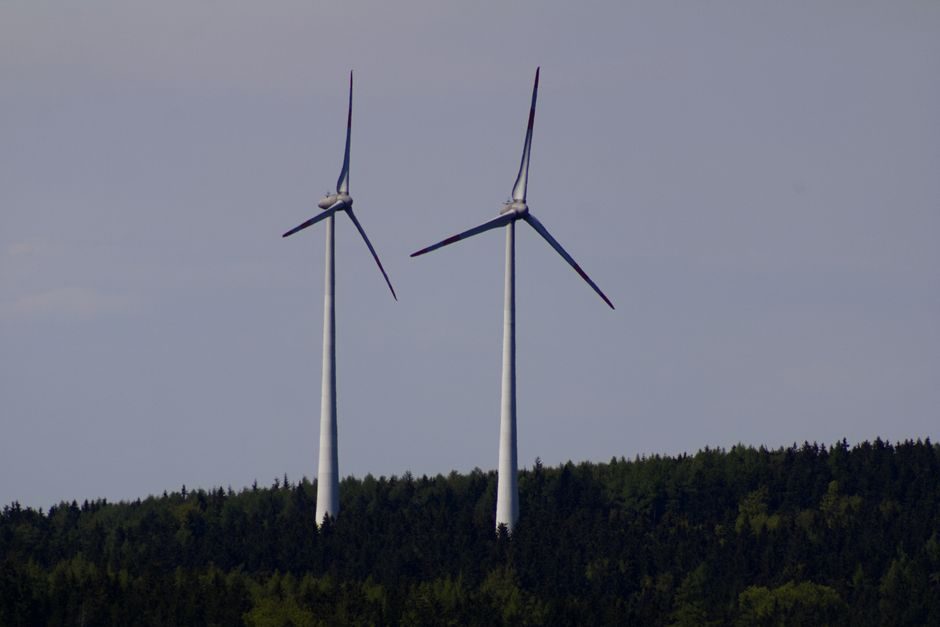
Wind-turbine blade research offerings in 2026 are clustered between USD 2,650 and USD 5,850 per report, with publishers running 171 to 250-page deliverables issued at a cadence of one every six to twelve weeks through May 2026 [S1].
The coverage set spans material split (glass fibre vs carbon fibre), blade-length bands under 27 m, 27–37 m, 38–50 m and above 50 m, plus offshore installation-vessel type and turbine-component sub-assemblies such as shafts and gearboxes [S1][S2][S4][S5].
What the 2026 blade report shelf actually contains
The Research and Markets landing page lists five active wind-turbine blade titles, dated June 2025, December 2025, May 2026, January 2026 and a third 2026 release, with page counts of 250, 174, 171 and 197 respectively and price points starting at USD 2,650 and topping out near USD 5,850 [S1]. That pricing spread is the cleanest signal in the public data set: a 121 percent delta between cheapest and most expensive title, which maps loosely to scope depth and offshore versus onshore coverage rather than to page count alone [S1].
Allied Market Research's wind-turbine shaft study (report A07824) is the closest structural companion: a wind-turbine shaft couples the rotor's mechanical energy to the drivetrain, so any blade-length decision propagates into shaft torque class and bearing selection [S4]. For buyers scoping a tender, the right sequence is rotor diameter, blade mass, then shaft/gearbox rating — the reverse of how most report abstracts are ordered.
Material split, blade-length bands and carbon-fibre pull
MarketsandMarkets' rotor-blade segmentation defines the canonical four length tiers still cited in 2026 sourcing decks: under 27 m, 27–37 m, 38–50 m and above 50 m, with material options limited to glass fibre or carbon fibre [S3]. The same source set a USD 16,982 m 2014 value with 9.2 percent CAGR to 2019 and noted Asia-Pacific held above 54 percent of installed blades in 2014 — historical baseline numbers that procurement engineers still reference when sanity-checking 2026 vendor claims [S3].
Carbon-fibre uptake is the only material-side inflection worth tracking: longer blades above 50 m use carbon spar caps to control tip deflection, and the historical pattern is that carbon share rises faster than the unit count of blades shipped, because the carbon content per blade increases non-linearly with length [S3]. For spec writing in mid-2026, treat any vendor claim of "carbon-fibre blade" without a length band as marketing filler — the operative question is which length tier and which load case.
Offshore installation-vessel gating
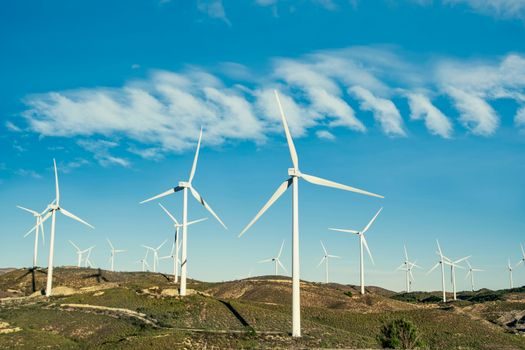
Allied Market Research's offshore wind-turbine installation-vessel report (A02744, Feb 2026) categorises the fleet into self-propelled jack-up vessel, normal jack-up vessel and heavy lift vessel, segmented across North America, Europe, Asia-Pacific and LAMEA [S2]. Vessel type is a hard gate on rotor diameter, not a soft one: a 15 MW+ turbine needs a self-propelled jack-up with sufficient deck area and crane reach, and the global pool of those vessels is the binding constraint on 2026–2027 commissioning schedules, far tighter than blade factory throughput [S2].
Downtime from hostile weather is the named restraint in the vessel study, and it interacts with blade logistics: the larger the blade, the narrower the weather window for transport and lift, so a 90 m+ blade on a constrained-vessel schedule can slip a quarter even when the blade itself is on the dock [S2]. Procurement should ask vendors for a vessel-constrained installation curve, not a factory-only delivery date.
Component-level cross-checks: shaft, gearbox and rotor assembly
The wind-turbine shaft report (A07824) and gearbox report (A10751, Feb 2026) sit downstream of any blade-length decision, with the gearbox study split by main versus yaw gearbox, new versus replacement installation type, and onshore versus offshore application [S4][S5]. Replacement demand is a non-trivial slice of the 2026 mix: ageing onshore fleets from 2008–2014 are entering first-rebuild windows, and the gearbox bill of materials is the gating supply item in that cycle [S5].
The wind-turbine components overview from Grand View Research frames the parent market as a renewables-pull play, with electricity demand growth cited as the macro driver and no specific component-share percentage given in the public excerpt [S8]. Treat the parent-market framing as directional only: when a blade report's CAGR is quoted, the components parent should be within a 1–2 percentage-point band of the same macro driver [S8].
Floating offshore, services and adjacent signals
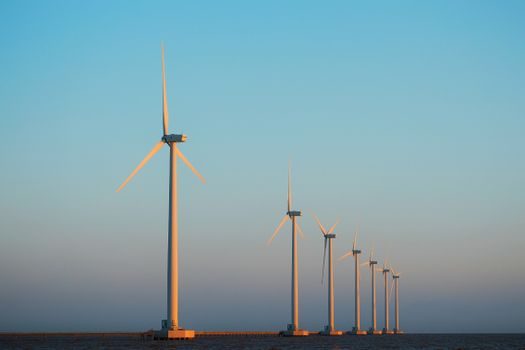
Allied's floating-wind-turbine study (A07598) defines a 60 m depth split between shallow-water and deep-water foundations, with spar-buoy, tension-leg platform (TLP) and semi-submersible as the three foundation families tracked through 2027 [S7]. Floating arrays are the only sub-segment where blade length does not collapse to onshore-style logistics, because assembly happens at quay-side and tow-out replaces overland transport [S7].
The wind-services report (A09295) categorises the O&M market by OEM, independent service provider, wind-farm owner in-house, and other, applied across onshore, offshore and other applications and a broad vertical list including chemical, petrochemical, oil and gas, energy and power, automotive, food and beverage and healthcare [S10]. For blade-level decisions the services line matters for two reasons: condition-monitoring contracts on blades, and the blade acoustic damage-detection tooling that open-source implementations now make cheap to evaluate during procurement scoring [S6][S10].
What the 2026 data set does not tell you
No 2026 public excerpt in this research feed publishes a specific installed-base, capacity-addition or unit-shipment number for blades that can be quoted verbatim with a source — the available figures are either 2014 baselines from MarketsandMarkets or 2017–2023 ranges inside Allied's 2026 report covers [S2][S3]. Any 2026 dollar value quoted downstream should be flagged as "publisher estimate, full report gated" rather than as a sourced fact.
Standards-side, no IEC 61400 series revision date is anchored in the public material provided, and none should be invented: when a spec sheet cites a blade design standard, ask the vendor for the exact IEC 61400 part and edition rather than relying on a report abstract. For a related process-engineering view on how composite and electronics supply chains are bending under the same renewables pull, see the energy-storage 2026 lithium and lead reference; for solar-glass float-line constraints that compete with blade factories for the same industrial slots, see the solar-glass supply 2026 brief.
Next tracking node: watch for the next Allied Market Research wind-turbine blade-coded report (likely an A-series number following A02744, A07824, A07598 and A10751) and the next Research and Markets blade release after May 2026, both of which will reset the price-band and page-count baseline; the vessel-fleet pool count for self-propelled jack-ups above 1,500 t crane class is the single number to watch on the offshore side, because it gates the 15 MW+ installation curve more tightly than any blade-factory number does [S1][S2].
For component-level specifications, see turbine flowmeter, pressure transmitter, and flow meter.