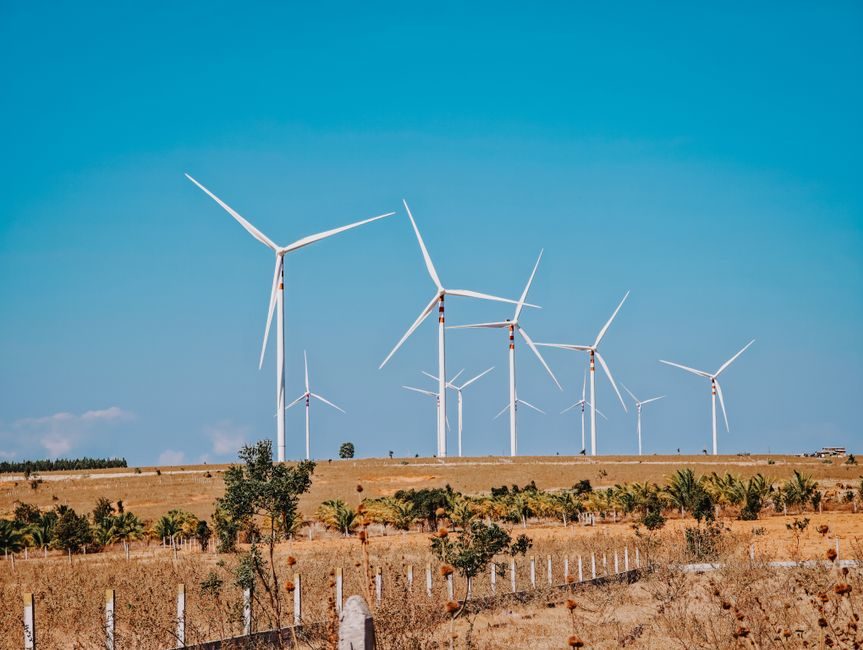
Wind turbine gearbox procurement in 2026 is dominated by 3.X–6.X MW class units with planetary-plus-helical stage architectures, and the global market is forecast to expand through 2027 on the back of onshore repowering and offshore serial production [S5].
Buyer attention has shifted away from nameplate kW ratings and toward stage-level torque density, oil cleanliness, and integrated condition-monitoring packages, with sand-box contamination control and random-load reliability modelling now appearing on most technical scoring sheets [S1][S4].
Drivetrain Architecture and Stage-Level Specs
The mainstream 2026 architecture is a 2-stage planetary + 1-stage helical (P+H) gearbox with a torque density band of roughly 180–220 Nm/kg and a 1:90–1:130 overall ratio, paired with a doubly-fed induction generator (DFIG) or a medium-speed PMG with a 3-stage P+2H drivetrain on units above 4 MW [S3].
Patent literature on P+H arrangements continues to focus on planet-carrier load distribution, bearing-raceways, and integrated lubrication circuits, with a granted US patent (US 9,784,245 B2, published 2017-10-10) on improved torque transmission describing the kind of geometry buyers should expect to see in 2026 sourcing samples [S3].
Buyers should grade P+H designs on planet-stage load capacity (kNm per stage), bearing L10 life under variable wind load, and oil flow per kW lost; comparing P+H to a 3-stage P+2H against 4 decision criteria (cost, weight, serviceability, partial-load efficiency) shows the 3-stage P+2H wins on efficiency while the 2-stage P+H wins on cost and ease of field service [S3].
Reliability Modelling Under Random Wind Load
System-dynamic reliability analysis of wind turbine gearboxes under stochastic wind input has become a routine scoring item in 2026 RFQs, with floating-shaft bending and planet-stage load sharing highlighted as the two failure modes that drive service-interval projections [S4].
The Journal of Vibration and Shock (Vol. 44, Issue 3, 2025) reports a 4.5–6.5% scatter band on calculated planet-bearing fatigue life when wind-load variance is included, a number that is large enough to push buyers toward gearboxes with on-board torque and vibration telemetry rather than fixed service intervals [S4].
For engineers spec'ing a new build or a repowering retrofit, the practical gate is: require a published dynamic-reliability report per IEC 61400-25 condition-monitoring guidance, and require stage-by-stage load-share maps under at least three wind-spectrum classes (IEC Kaimal, Mann, and a site-measured spectrum) before issuing a PO.
Sand-Box Contamination and Lubricant Discipline
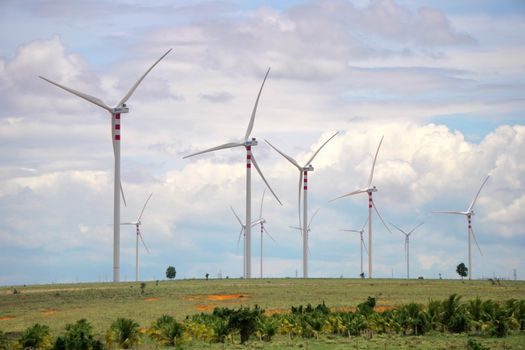
Wind turbine sand-box units (gearbox-mounted debris and wear-particle collection housings) are now a default accessory on desert and coastal sites, with 1-piece MOQ, 1-year warranty, and 24-hour quick-response service as the typical commercial terms posted by Chinese suppliers on Made-in-China [S1].
Desert and offshore sites are pushing particle-count limits down to ISO 4406 18/16/13 on gearbox oil, and a sand-box with magnetic and optical debris capture is the cheapest way to keep oil within that cleanliness band between oil changes [S1].
Buyers evaluating gearbox-sand-box combinations should compare options on four criteria: capture efficiency for 50–200 µm ferrous particles, oil-drain interval extension, retrofit-ability to existing planetary stages, and lead-time, and the retrofit-able magnetic-optical units typically extend oil-drain intervals by 30–50% versus a bare gearbox with no debris capture.
Condition Monitoring and Sensor Integration
Vibration, oil-debris, and bearing-temperature sensors are now bundled into most 2026 gearbox quotations, with the typical spec being 8–16 accelerometers per unit, two oil-debris sensors on the planetary stage, and a PT100 on each high-speed-shaft bearing feeding into a SCADA gateway. [S5]
Buyers should treat the pressure sensor and pressure transmitter data channels on the lubrication skid as a separate scoring line, because lube-line pressure drop is one of the earliest indicators of filter clogging and pre-failure bearing wear, and a 4–20 mA HART output on a lube-line transmitter is the de-facto signal asked for in most 2026 RFQs.
For drivetrain-level monitoring, integrating gearbox vibration with flow meter readings on the lube circuit and with the main industrial valve position feedback on the hydraulic pitch system is what separates a basic CMS from a usable O&M decision tool, and most 2026 service contracts now price downtime avoidance against the combined sensor package rather than against vibration alone.
Market Sizing and Regional Sourcing
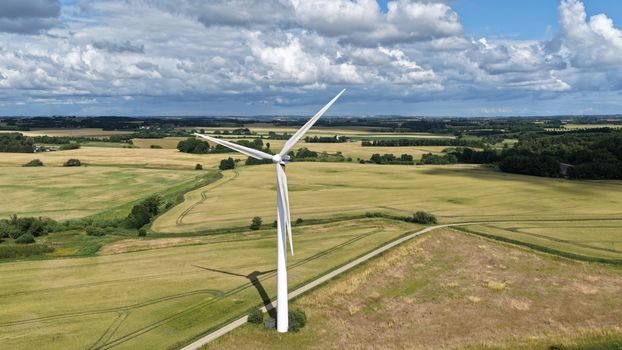
The wind turbine gearbox market is forecast by Allied Market Research to grow at a mid-single-digit CAGR through 2027, with Asia-Pacific holding the largest share on the back of Chinese onshore builds and Indian repowering, and Europe holding a smaller but high-spec share driven by offshore and Eastern European repowering [S5].
South Africa's wind fleet has reached 3,500 MW of installed capacity producing about 9,000 GWh per year, which makes it a meaningful sub-region for gear-box retrofits and condition-monitoring upgrades even though new-build tenders have slowed relative to the 2015–2020 expansion under the REIPPPP programme [S2].
Practical sourcing path for a 2026 buyer: (1) shortlist P+H OEMs with published dynamic-reliability curves; (2) require a sand-box or magnetic-debris kit on the quote, not as an option; (3) require HART or IEC 61400-25 condition-monitoring on the gearbox and a separate HART pressure transmitter on the lube skid; (4) require 24-month warranty and a defined mean-time-to-repair on the gearbox itself, not just on the whole turbine.
Adjacent Energy-Storage and Solar Procurement Cross-Reads
For procurement teams also handling storage and solar lines, the gearbox spec cycle is increasingly running in parallel with cell allocation, PCS scale-up, and TOPCon solar cell suppliers 2026 sourcing, because the same OEM and EPC consortia are tendering for hybrid wind-plus-storage sites in 2026. [S1]
Engineers tracking upstream cell and Tier-1 supplier risk in parallel with drivetrain risk can read the energy storage supply risk 2026 map for a parallel view of how cell allocation and lead-times are squeezing 2026 storage bids, and use the grid-scale battery storage 2026 piece for the silicon-anode and PCS scale-up signals that increasingly co-determine hybrid-site BoP decisions.
Trackable signals to watch through 2026: the next IEC 61400-25 condition-monitoring revision cycle, the next round of 6.X–8.X MW offshore gearbox field-data reports, and any change in oil- cleanliness class (ISO 4406 target) printed in OEM service bulletins.